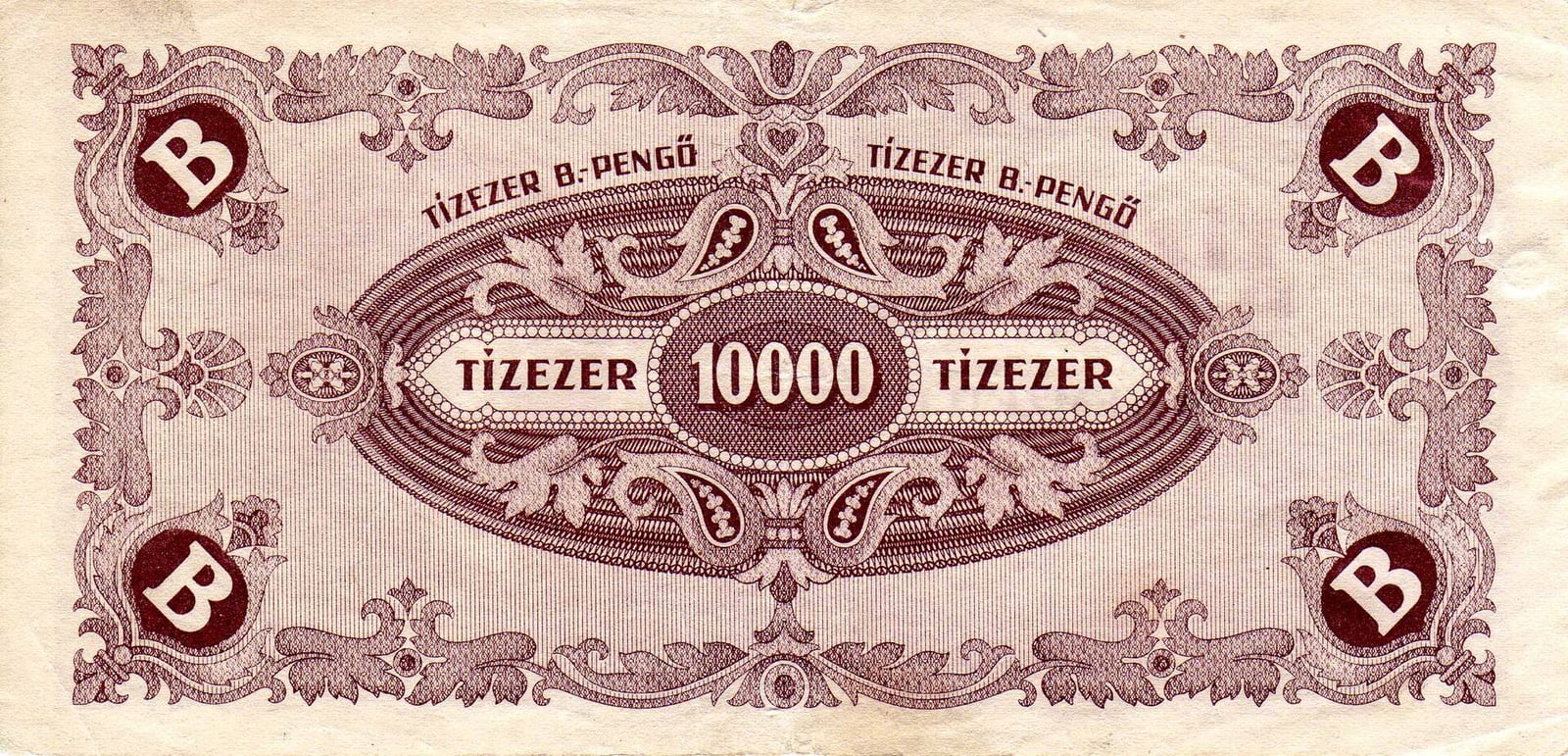
Hungary Suffers the Worst Inflation on Record
Prices doubled about every fifteen hours as the pengő collapsed after the war.
On 1 January 1927, Hungary introduced the pengo to replace the depreciated post-World War I korona. Named after an old term for the ringing sound of silver coinage, the new money was meant to project financial stability. The League of Nations supported the underlying stabilization effort, and the currency was legally defined against fine gold, even though notes could not be converted directly into metal. During its first few years, the pengo possessed high reserve coverage and ranked among the most reliable currencies in the region, weathering the initial pressures of the Great Depression.
The strains of World War II completely undermined that monetary foundation. As state spending mounted, the central bank came under direct governmental control and printed money to meet budgetary demands. Precious metals quickly vanished from circulation, followed by standard alloys like bronze and cupro-nickel, which were replaced with steel, zinc, and aluminium. In the final phase of fighting, the Szalasi regime printed uncovered notes first in Budapest and then in Veszprem, while the occupying Soviet military distributed separate military vouchers. With the domestic economy devastated, revenue minimal, and heavy reparations pending, the post-war authorities relied on note printing as a form of taxation to maintain state activity.

Keep reading in Yester
Coming soon to the App Store
Keep following the story

Sources
Image: Magyar Nemzeti Bank (Hungarian National Bank)