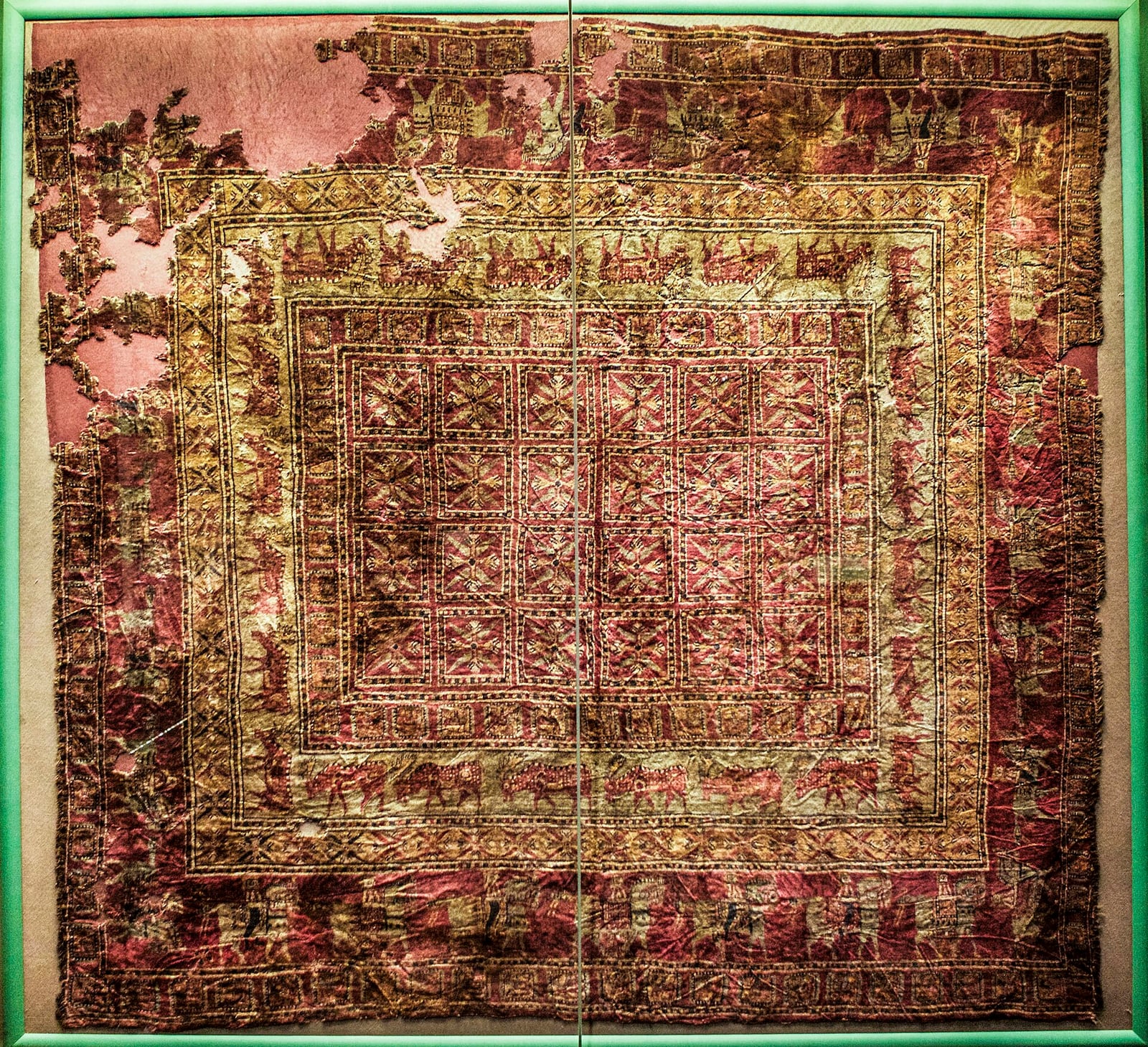
Frozen Tombs Preserve the World’s Oldest Pile Carpet
Ice in Altai burial mounds kept tattooed bodies, felt hangings and a knotted rug intact.
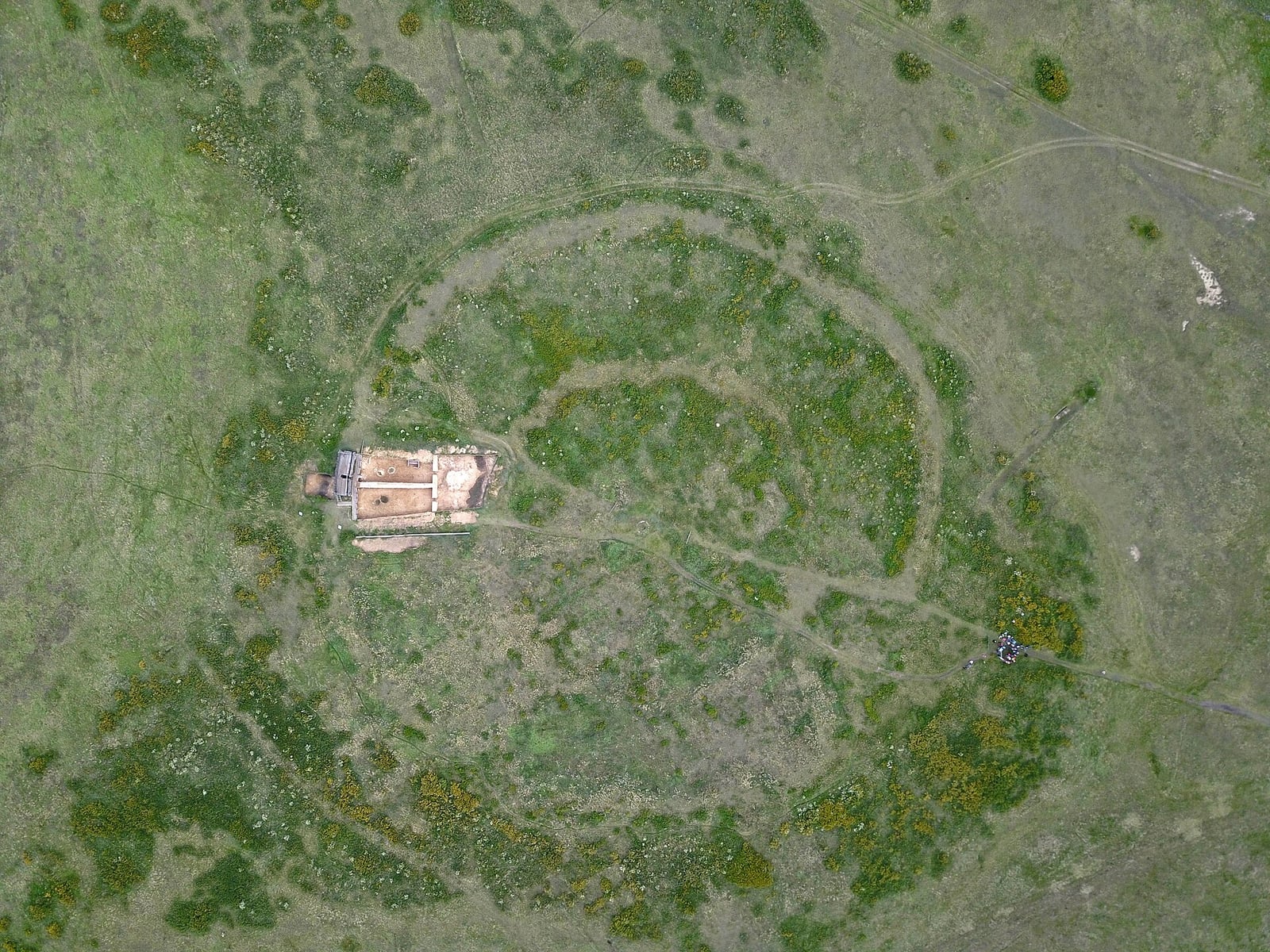
High in the Altai Mountains, an exceptional combination of seasonal climate and tomb architecture sealed the burial chambers of Iron Age nomads in subterranean ice. The Pazyryk culture flourished between the sixth and third centuries BC across regions spanning modern southern Siberia, Kazakhstan, and Mongolia. Preceded by the Arzhan culture of the eighth and seventh centuries BC, these pastoralists left behind substantial burial mounds known as kurgans. Because no domestic settlement sites belonging to the culture have been identified, archaeologists view them as a thoroughly nomadic equestrian society tied to the broader eastern Scythian world.
The freezing process within the earthen and stone kurgans began shortly after burial, preventing the normal decay of organic material across more than two millennia. While ancient tombs across Eurasia typically yielded only bones, ceramics, and weathered metals, sites such as Pazyryk, Tuekta, Katanda, and Shibe revealed uncharacteristic preservation. Excavators uncovered embalmed human bodies, sacrificed horses with their soft tissue intact, wooden carriage components, and complex fabric ensembles. Among the human remains was an embalmed male adorned with elaborate zoomorphic tattoos, as well as the well-preserved female burial frequently referred to as the Siberian Ice Princess on the Ukok Plateau.

Keep reading in Yester
Coming soon to the App Store
Keep following the story
Sources
Image: Ninara from Helsinki, Finland