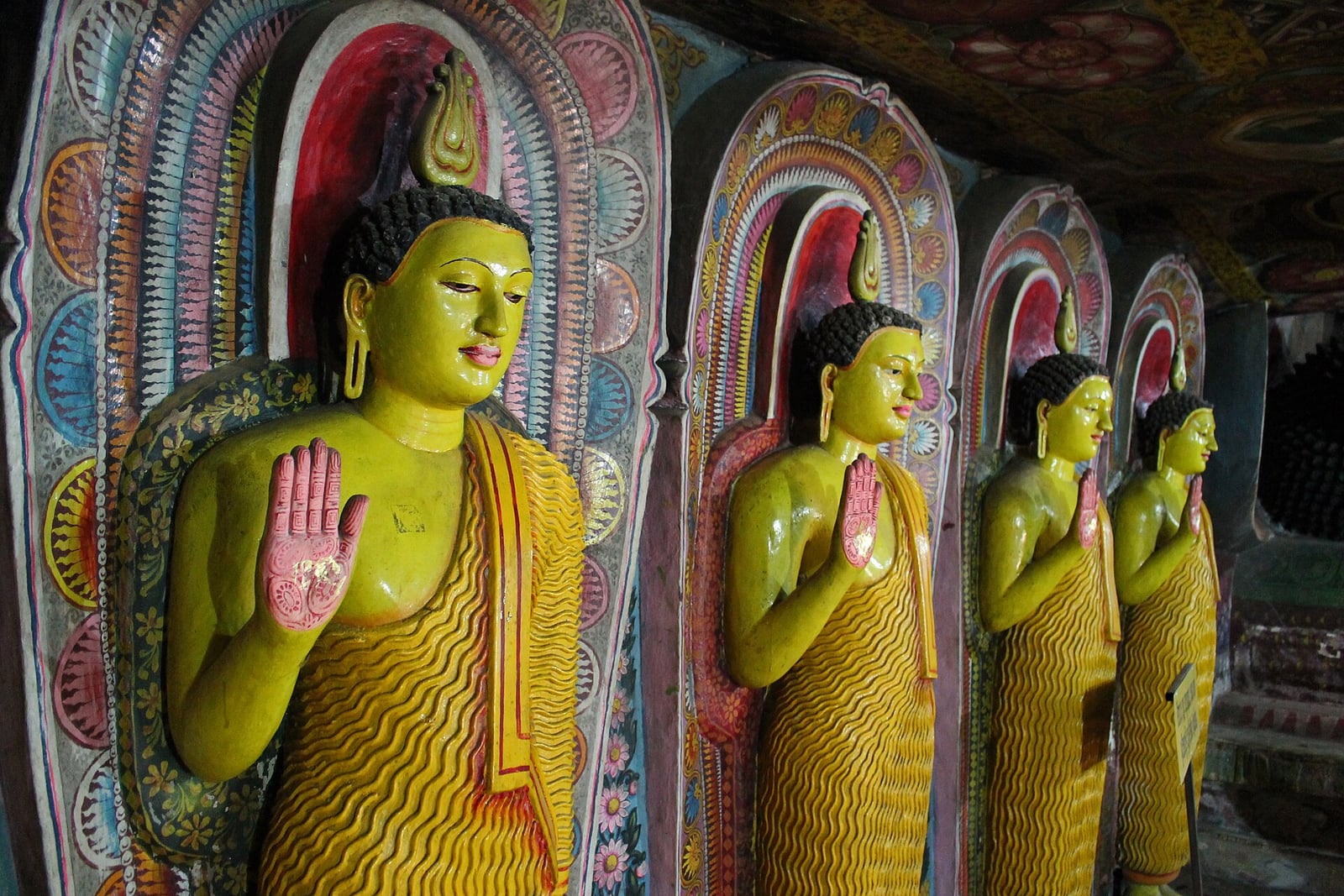
Monks in Sri Lanka Write Down the Buddha’s Teachings
Fearing famine and war, monks at Aluvihare put the oral Pali Canon onto palm leaves.
During the first century BCE, Buddhist monks in Sri Lanka gathered at the Alu Viharaya temple to commit their sacred scriptures to writing. According to the island's chronicles, this work took place during the reign of King Vattagamani Abhaya in the first century BCE, a period of famine and South Indian invasion. For centuries following the passing of Gautama Buddha, his discourses, monastic regulations, and doctrines had been maintained exclusively through memorization and communal chanting. By inscribing these teachings onto palm leaves, the monastic assembly created what became the most complete surviving collection of early Buddhist scriptures, known today as the Pali Canon.
Traditional accounts trace this literature back to the First Buddhist Council in Rajgir, held shortly after the Buddha's death. At that assembly, close disciples were said to have recited the monastic discipline and the sermons, which were approved by the community and passed down through lineages of specialized reciters known as bhanakas. The material eventually reached Sri Lanka during the era of the Indian emperor Ashoka, where it continued to be preserved orally by the Theravada school. Monks reinforced their memory through regular chanting, treating the preserved texts as the authoritative word of the teacher, even though the recitations also incorporated teachings attributed to disciples.

Keep reading in Yester
Coming soon to the App Store
Keep following the story
Sources
Image: istolethetv