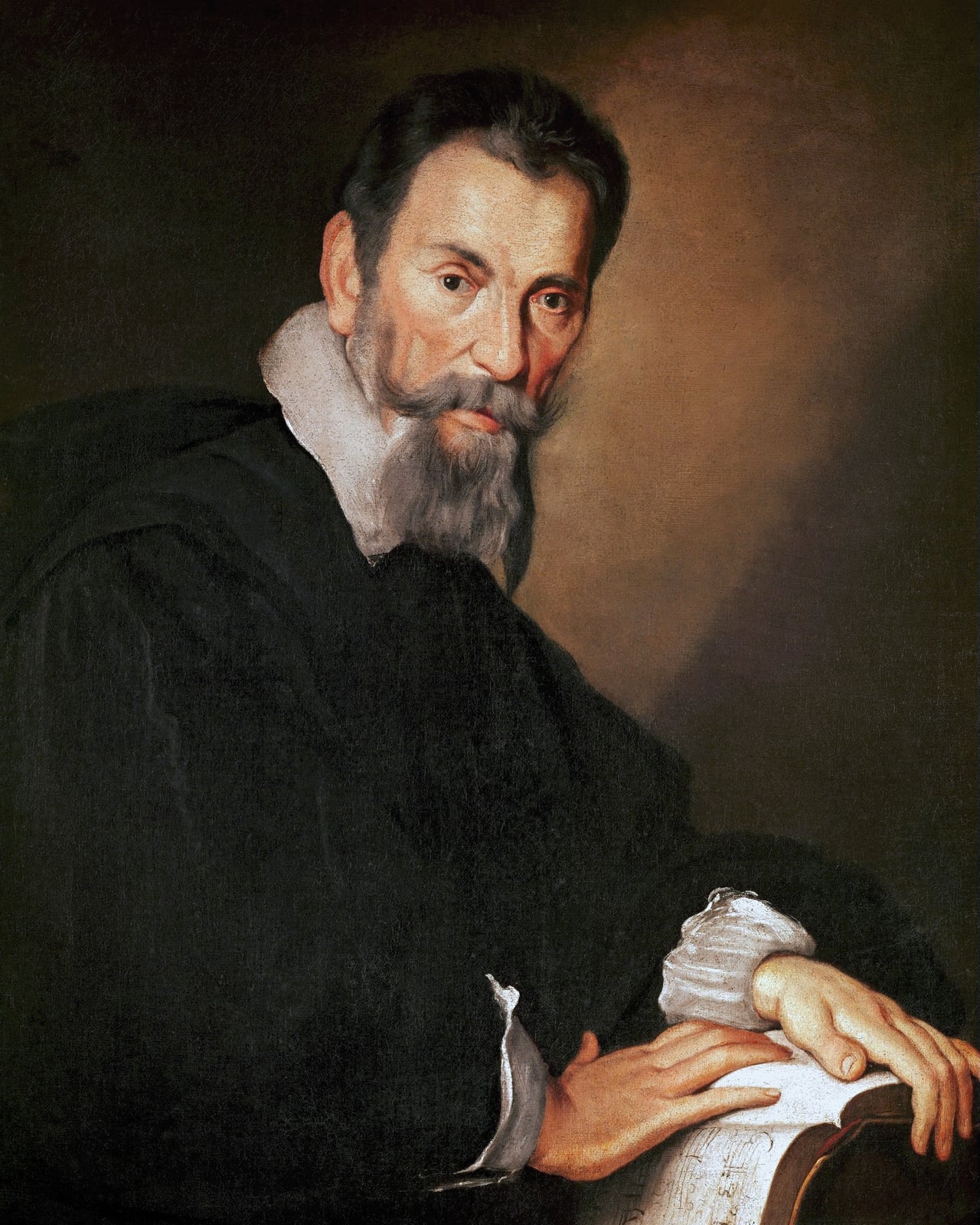
Monteverdi’s Orfeo Premieres in Mantua
An early opera told the story of Orpheus through song.
On 24 February 1607, an aristocratic audience gathered in the ducal palace of Mantua for the annual Carnival to witness a musical experiment. Sponsored by Prince Francesco Gonzaga and produced under the auspices of the Accademia degli Invaghiti, the performance was staged in a private room belonging to Duke Vincenzo Gonzaga's sister Margherita. Letters written on the eve of the premiere noted the novelty of a drama in which every actor would sing throughout. The work, titled L'Orfeo and described as a favola in musica, was composed by Claudio Monteverdi, the court's maestro della musica, to a libretto written by the diplomat and lawyer Alessandro Striggio.
Court spectacles had previously featured music in the form of the intermedio, a theatrical interlude performed between the acts of spoken plays. In the late sixteenth century, Florentine musicians had begun expanding these interludes into continuous sung drama, producing Jacopo Peri's Dafne and Euridice. Monteverdi, who may have witnessed Peri's Euridice alongside Duke Vincenzo in Florence in 1600, took those early attempts at monody and recitative and blended them with polyphonic traditions, madrigals, dances, and instrumental forms. The resulting piece did not merely recite verse to melody; it harnessed the full spectrum of Renaissance and nascent Baroque musical resources to serve stage drama.

Keep reading in Yester
Coming soon to the App Store
Keep following the story
Sources
- L'Orfeo (C. Monteverdi) (Encyclopaedia Universalis)
- Opera: le renouveau de l'opera baroque, 3. Monteverdi, le texte (Encyclopaedia Universalis)
- First Performance of Monteverdi's La Favola d'Orfeo (EBSCO Research Starters)
- L'Orfeo, season 2021/2022 (Opera national du Rhin)
- Monteverdi Orfeo, Hindemith 1954, review (MusicWeb International)
- L'Orfeo
Image: Bernardo Strozzi