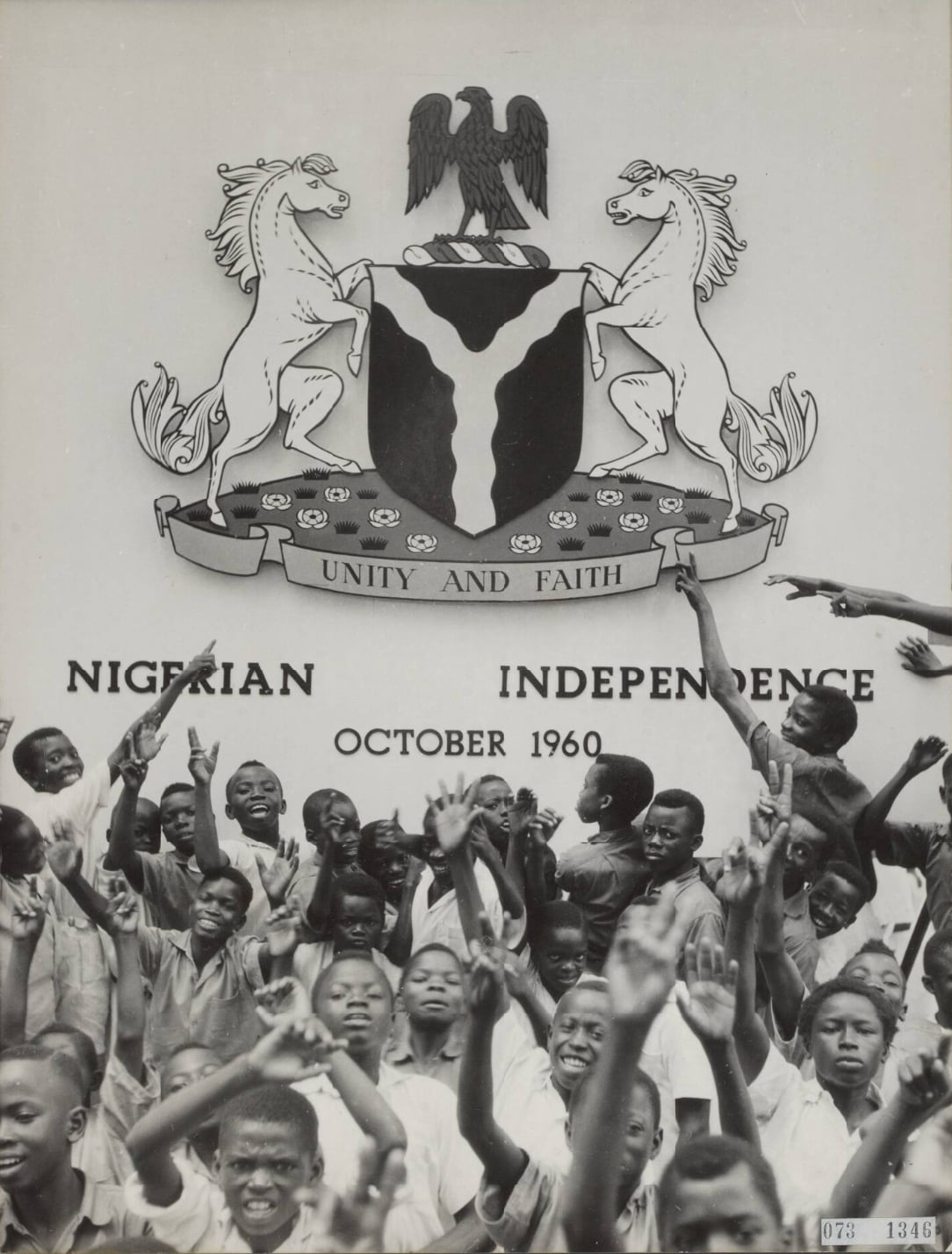
Nigeria Becomes Independent
Africa’s most populous country gained independence from Britain.
On 1 October 1960, the Federation of Nigeria achieved formal independence from the United Kingdom. The handover brought together an immense and diverse population into a single sovereign state, operating under a Westminster parliamentary model. British monarch Elizabeth II remained the nominal head of state at the outset, while Abubakar Tafawa Balewa assumed executive leadership as prime minister. In November 1960, Nnamdi Azikiwe replaced the outgoing British colonial governor-general, completing the transition of high constitutional offices into Nigerian hands.
The new nation encompassed ancient societies with varied political and cultural traditions. In the northern savannas, the historic Hausa city-states had formed the core of the Sokoto Caliphate during the nineteenth century. To the south and east lay kingdoms such as Benin, Oyo, and Nri, each possessing extensive lineages of governance and artistic heritage. British colonial control had consolidated gradually through military expeditions, coastal protectorates, and corporate rule under the Royal Niger Company. In 1914, British administrators formally joined the Northern and Southern Nigeria Protectorates into a single entity, governed primarily through indirect rule alongside traditional local rulers.

Keep reading in Yester
Coming soon to the App Store
Keep following the story
Sources
Image: Unknown author Unknown author