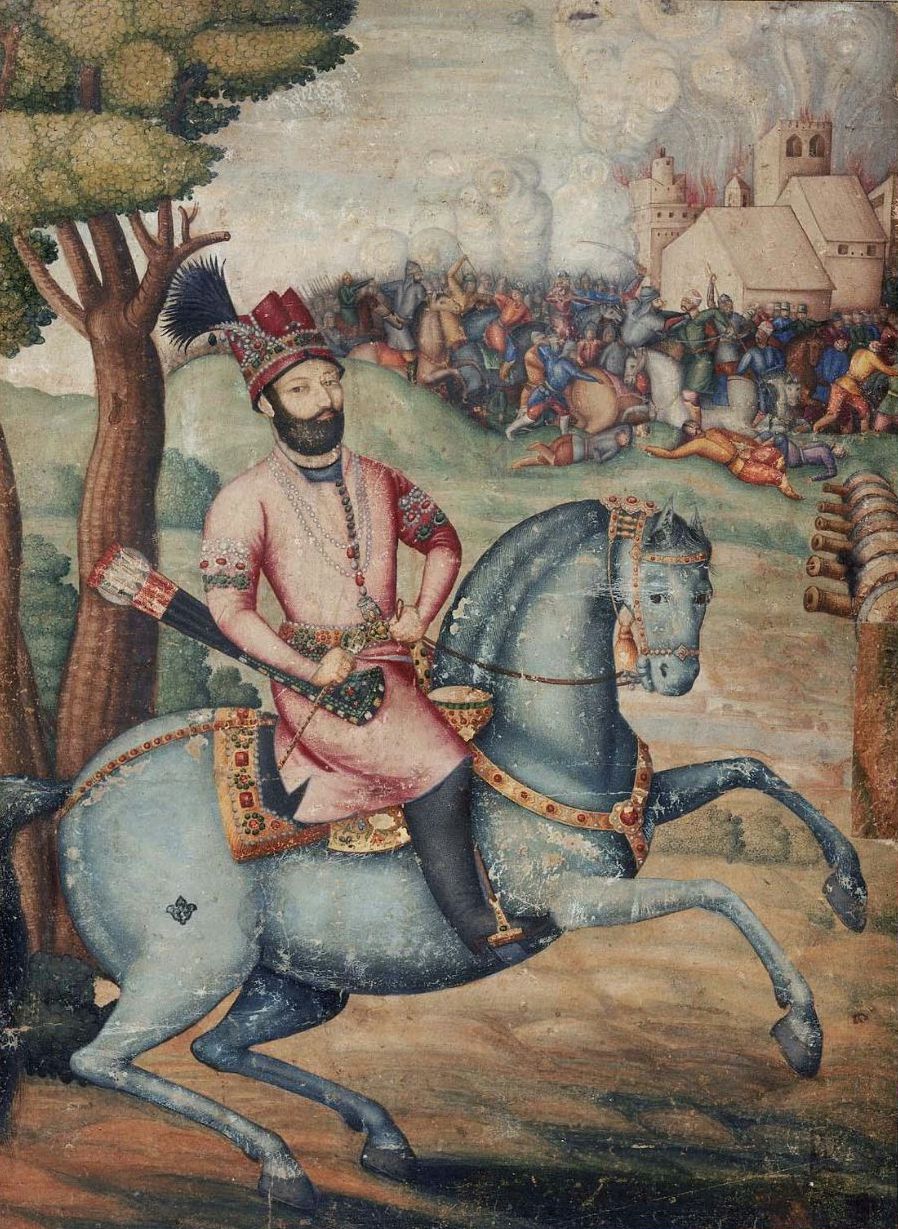
Nader Shah Sacks Delhi
A Persian conqueror carried the Peacock Throne back to Iran.
In May 1738, Nader Shah, the founder of the Afsharid dynasty of Iran, crossed the frontier into northern India. Modern historians interpret the invasion primarily as a drive to relieve severe domestic financial pressures. Iran had experienced protracted fiscal crisis and warfare, and Nader needed capital to sustain his military forces before renewing conflict against the Ottoman Empire. Meanwhile, the Mughal Empire had fragmented into semi-independent realms under Emperor Muhammad Shah, making its wealthy agricultural domains an attractive target for external conquest.
Nader moved eastward through territory held by the Afghan Ghilji tribe, capturing Kandahar and then advancing toward Kabul. Although he initially maintained that he had entered Mughal territory merely to pursue fleeing Afghans, imperial resistance escalated following the interception and murder of an Afsharid envoy. Nader took Kabul in June 1738 and sacked Jalalabad in September. Advancing into the Punjab, his seasoned army outflanked a Mughal provincial force of twenty thousand poorly trained levies at the Khyber Pass before seizing Peshawar.

Keep reading in Yester
Coming soon to the App Store
Keep following the story
Sources
Image: possibly by Muhammad Ali ibn Abd al-Bayg ibn Ali Quli Jabbadar