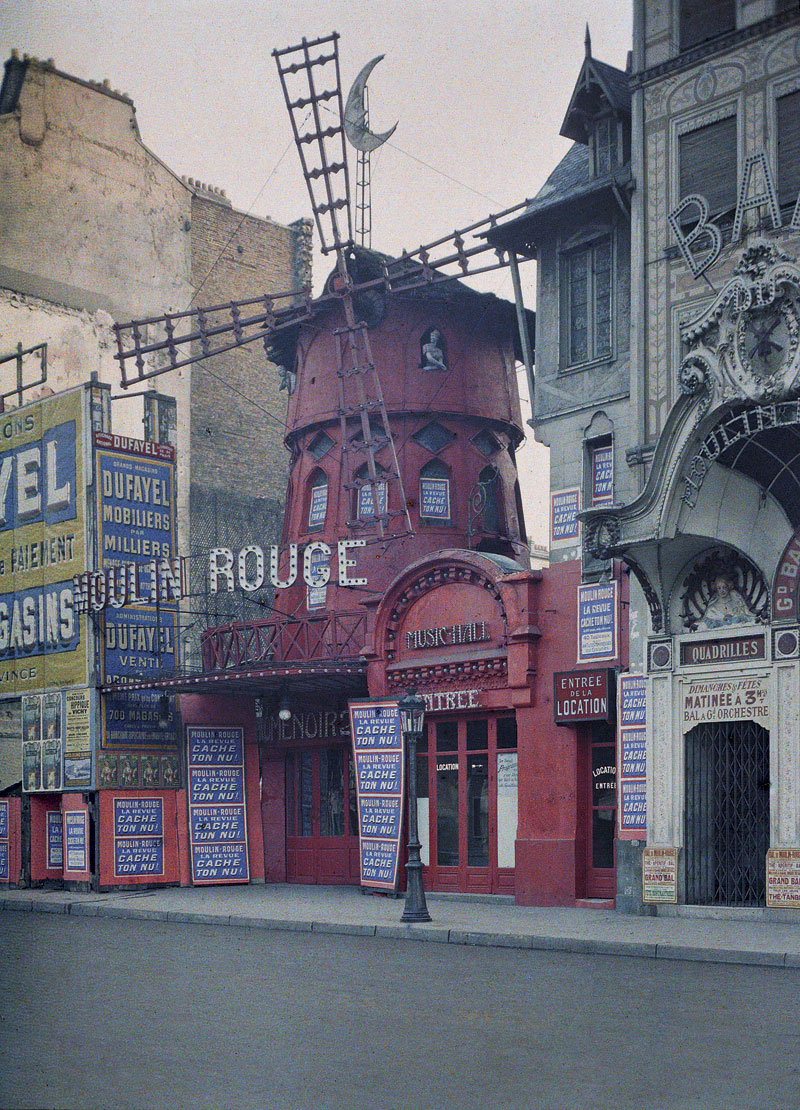
The Moulin Rouge Opens in Montmartre
A cabaret under a red windmill made the cancan famous and drew Toulouse-Lautrec.
On 6 October 1889, the Moulin Rouge opened its doors at the foot of the Montmartre hill in Paris. Co-founded by the entrepreneur Joseph Oller and his manager Charles Zidler, the establishment emerged at Place Blanche on the Boulevard de Clichy. Conceived as an outdoor garden cafe-concert known initially as the Jardin de Paris, it featured an expansive garden dominated by a colossal decorative elephant. Oller and Zidler designed the complex to draw prosperous Parisians upward into Montmartre, encouraging an unprecedented mingling of diverse social groups, from local artisans and laborers to bourgeois visitors and foreign tourists.
The venue quickly established itself as a centerpiece of Belle Epoque entertainment, aided by innovative auditorium architecture that allowed rapid changes of setting. Nightly performances, running alongside champagne service, combined circus acts, novelty performers such as Le Petomane, and regular dance concerts. Central to this success was the can-can, a high-tempo dance adapted from the quadrille that became the cabaret's defining feature. Among the prominent dancers who shaped the venue's reputation were figures such as Jane Avril, Valentin le desosse, and La Goulue, whose commanding presence drew prominent guests, including the Prince of Wales in October 1890.

Keep reading in Yester
Coming soon to the App Store
Keep following the story
Sources
Image: Stéphane Passet (d. 1942)