Ford’s Moving Assembly Line Remakes Car Production
Faster production made a car affordable to millions of buyers.
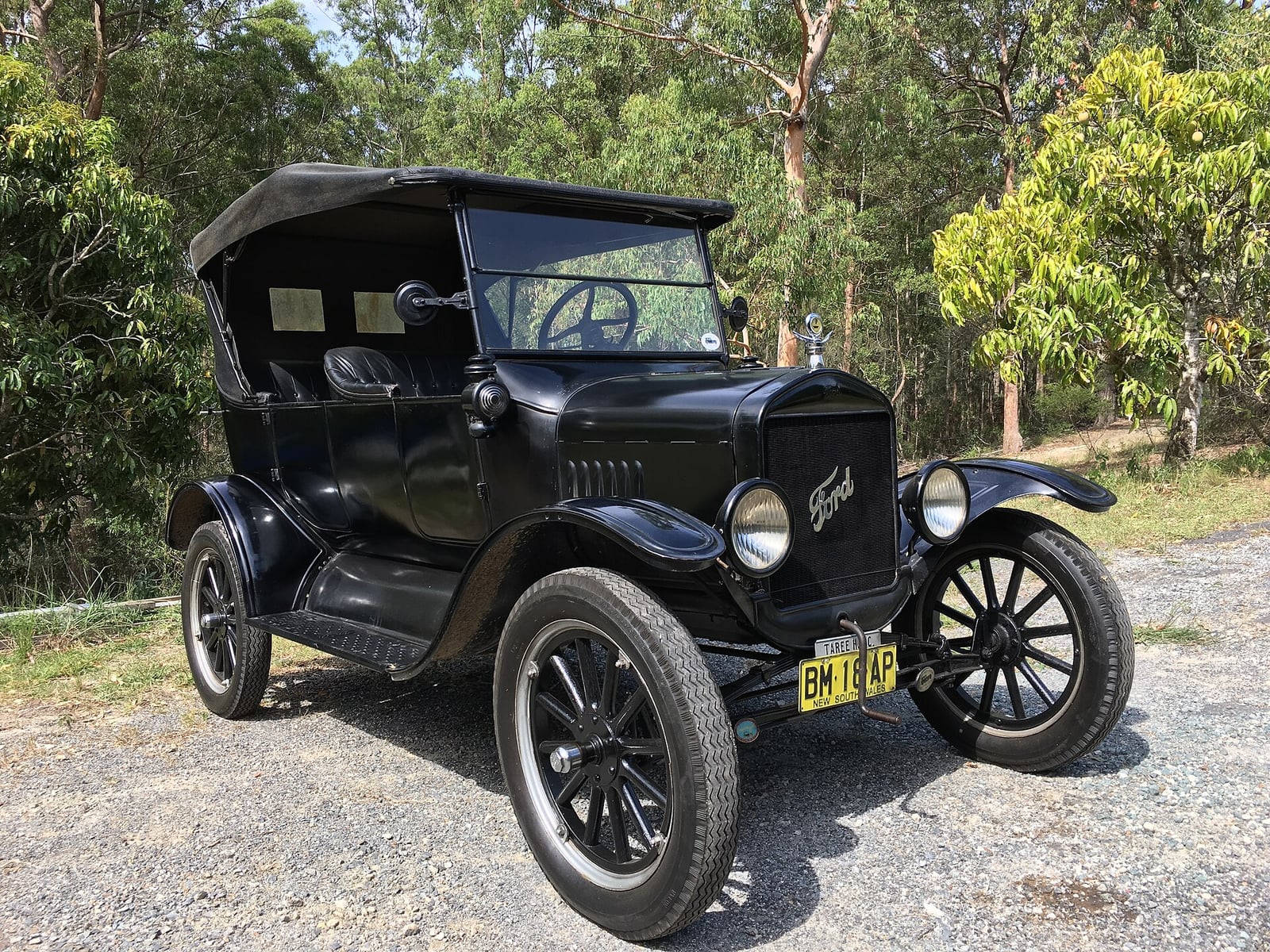
The introduction of the Ford Model T in 1908 altered the commercial landscape of personal transportation. Earlier motorcars, produced since the 1880s, were generally expensive, scarce, and prone to breakdown. Developed in a secret experimental room by a small team led by Henry Ford, with C. Harold Wills in charge of drafting and design, the Model T targeted a broad middle class. Built initially at the Ford Piquette Avenue Plant in Detroit, Michigan, the car drew a flood of orders from advance publicity months before production began. Demand quickly strained the facility's traditional manual assembly methods, where just eleven vehicles were built in October 1908, the first month of production.
To meet this overwhelming interest, Ford shifted manufacturing in 1910 to a dedicated industrial complex in Highland Park, Michigan. Ford engineers adapted the disassembly-line principle of meatpacking slaughterhouses to building automobiles. On October 7, 1913, Ford introduced the moving assembly line to the plant. The moving line at Highland Park transformed throughput, and within about a year further improvements cut the labour needed to assemble a car to 93 man-minutes.

Keep reading in Yester
Coming soon to the App Store
Keep following the story
Sources
Image: ModelTMitch