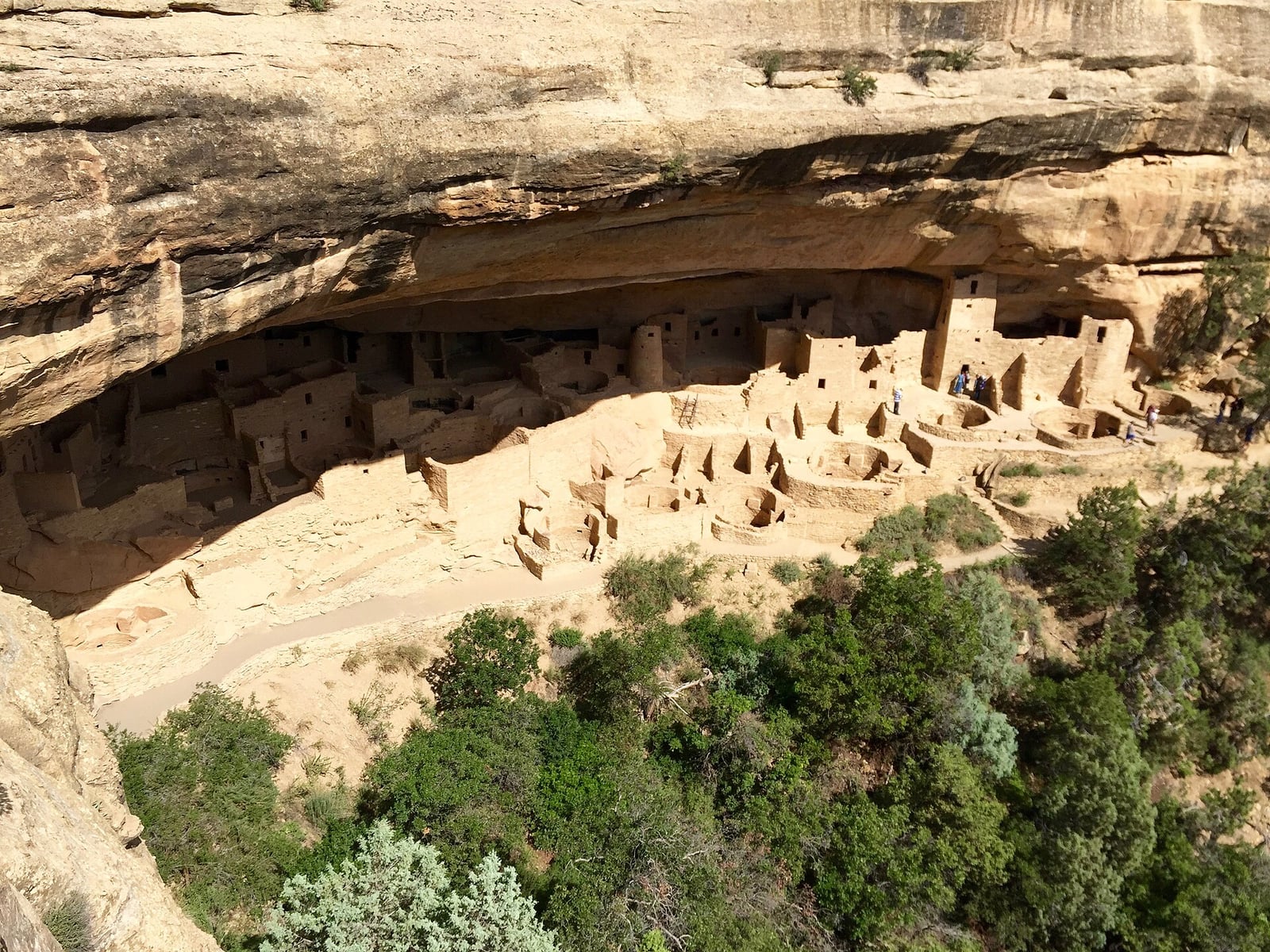
Ancestral Puebloans Build the Cliff Dwellings of Mesa Verde
Stone villages were tucked into alcoves in canyon walls.
By the closing decades of the twelfth century, the Ancestral Pueblo people of southwestern Colorado shifted their communities into sheltered alcoves high on canyon walls. For hundreds of years, farming families had lived primarily on the open mesa tops in modest homesteads near their agricultural plots. As regional populations concentrated and environmental pressures increased, builders began constructing multi-story stone complexes beneath overhanging cliffs. These settlements, including prominent locations such as Cliff Palace and Long House, featured tight clusters of domestic rooms, plazas, and circular subterranean chambers known as kivas.
This architectural transition reflected centuries of cultural adaptation in the Mesa Verde region. Emerging from earlier Archaic and Basketmaker traditions, Pueblo communities had transitioned from nomadic foraging to sedentary farming centered on maize, beans, and squash. The adoption of pottery, bows and arrows, and above-ground masonry architecture allowed settlements to store surplus yields and accommodate growing clans. During the height of regional exchange, settlements participated in wider networks connected to the great houses of Chaco Canyon, adopting masonry styles and building check dams, terraces, and reservoirs to capture runoff.

Keep reading in Yester
Coming soon to the App Store
Keep following the story
Sources
Image: w_lemay