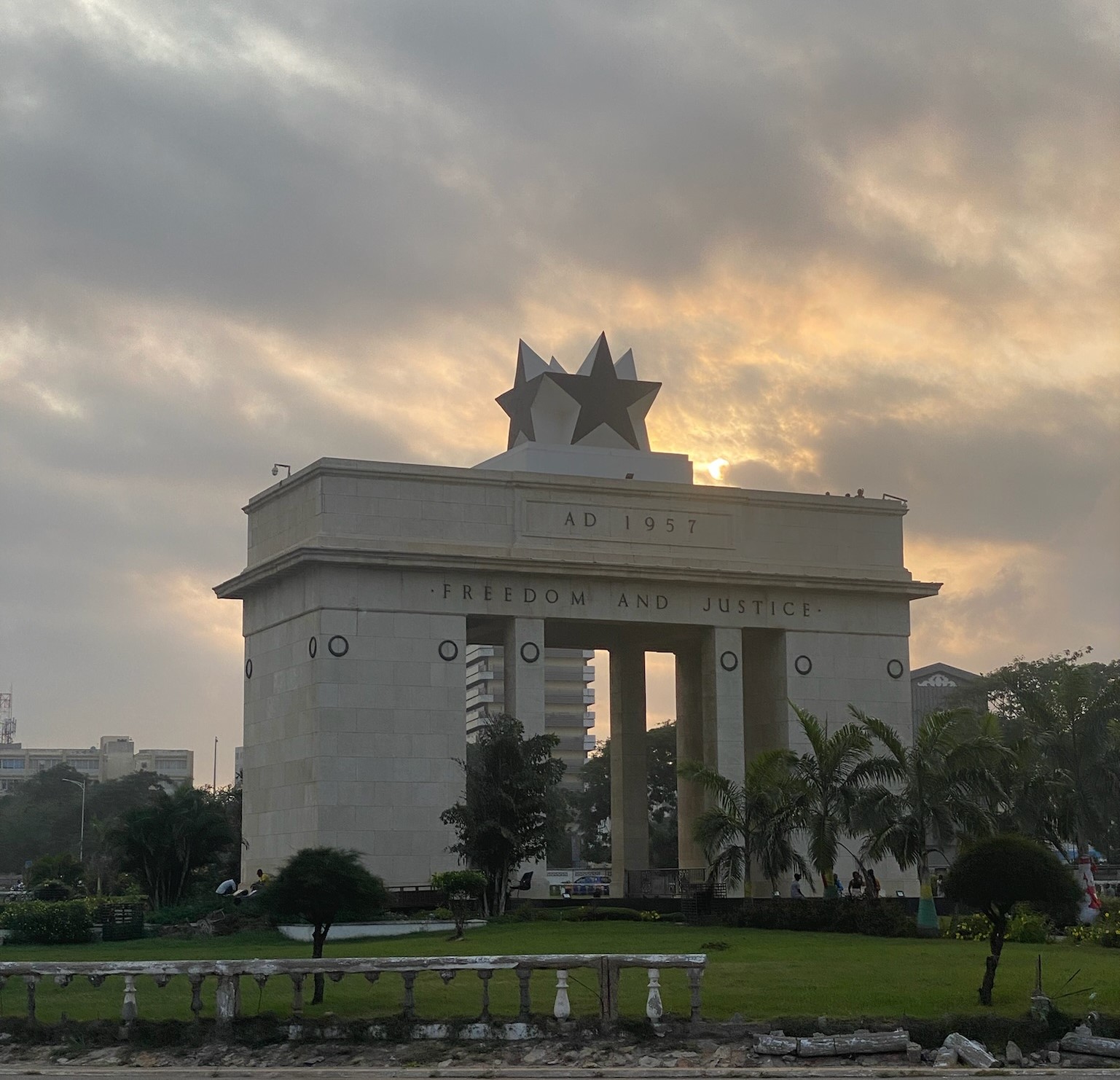
E. T. Mensah Spreads Highlife Across West Africa
A bandleader made highlife the sound of a decolonizing region.
Emmanuel Tettey Mensah, known across West Africa as E. T. Mensah, was born in May 1919 in the Ussher Town district of Accra. Raised during the colonial period in the Gold Coast, he gained his initial musical education in primary and secondary schools in Accra. At age twelve, he took up the flute in a government school ensemble, and by 1932 he played piccolo and flute under teacher Joe Lamptey in the Accra Orchestra. As his skill progressed, he learned the alto saxophone, balancing his musical studies with professional training that eventually qualified him as a pharmacist, a career that for a time competed with his music.
During the late 1930s, Mensah collaborated closely with his elder brother Yebuah, who led his own dance orchestra in the colony. Together they established the Accra Rhythmic Orchestra, a dynamic ensemble that secured local acclaim when it won the Lambeth Walk Dance Competition in 1939 at the King George Memorial Hall. This early success established Mensah's reputation among Gold Coast urban audiences, who were cultivating a distinct appetite for modern dance styles and jazz-inflected popular songs during the interwar era.

Keep reading in Yester
Coming soon to the App Store
Keep following the story
Sources
- A broadcaster's tribute to Highlife King, E.T. Mensah, by Benson Idonije (Glendora Review, vol. 1 no. 4, via Michigan State University African Journals archive)
- Legend of the week: E.T. Mensah (MyJoyOnline)
- Jazz Ambassador Louis Armstrong, Ghana 1956 (Georgetown University Library)
- Reliving West African highlife (Mail & Guardian)
- Best of The Beat on Afropop: E.T. Mensah, Highlife and History (Afropop Worldwide)
- E. T. Mensah
Image: Bambiwa