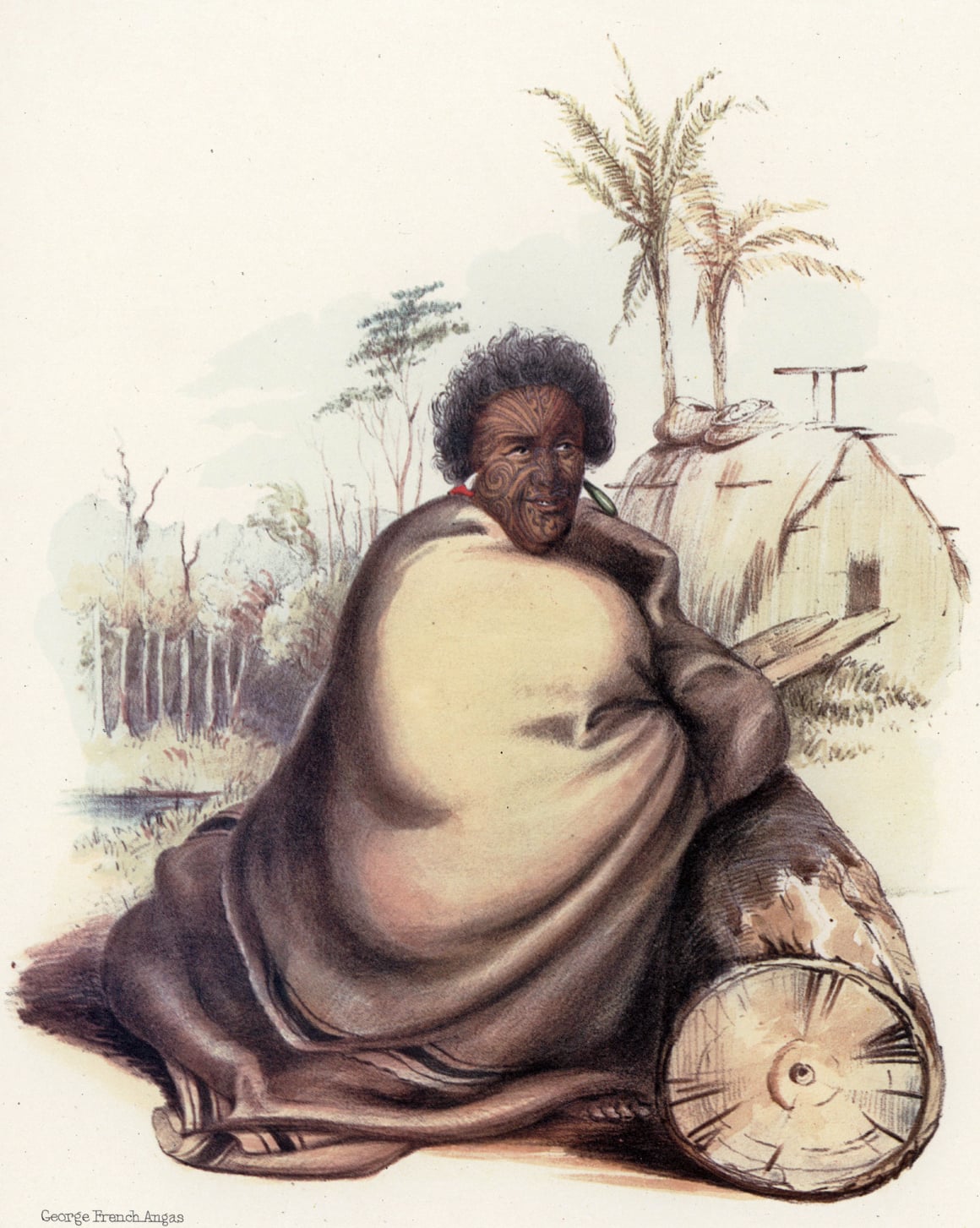
Māori Tribes Crown Their First King
Pōtatau Te Wherowhero was chosen to help protect Māori land from sale.
During the 1850s, Māori communities across New Zealand's North Island faced relentless pressure from expanding European settlement. As colonial authorities acquired vast swathes of fertile territory through aggressive purchasing practices, traditional communal holdings eroded. Disputes frequently arose when officials negotiated deals with individual owners or minority groups who lacked the authority to represent the wider tribal community. As the European population swelled to surpass the indigenous inhabitants, many Māori leaders grew alarmed that their lands and communal authority would soon be entirely overwhelmed.
In response, chiefs revived traditional assemblies, known as runanga, to coordinate opposition to further property transfers. At a major meeting in Manawapou in 1854, nearly two thousand leaders gathered to discuss united resistance against land alienation. A prominent voice in these assemblies was Tamihana Te Rauparaha, who had traveled to England in 1851 and met Queen Victoria. He argued that establishing a single monarch over all tribes would give Māori an institutional standing equal to the British Crown, fostering internal cohesion and creating an indigenous authority capable of enforcing order when colonial authorities showed little interest.

Keep reading in Yester
Coming soon to the App Store
Keep following the story
Sources
Image: George French, 1822-1886 Angas (Copyist); J W fl 1847 Giles (as the lithographer); Joseph Jenner, 1816?-1854 Merrett (as the artist)