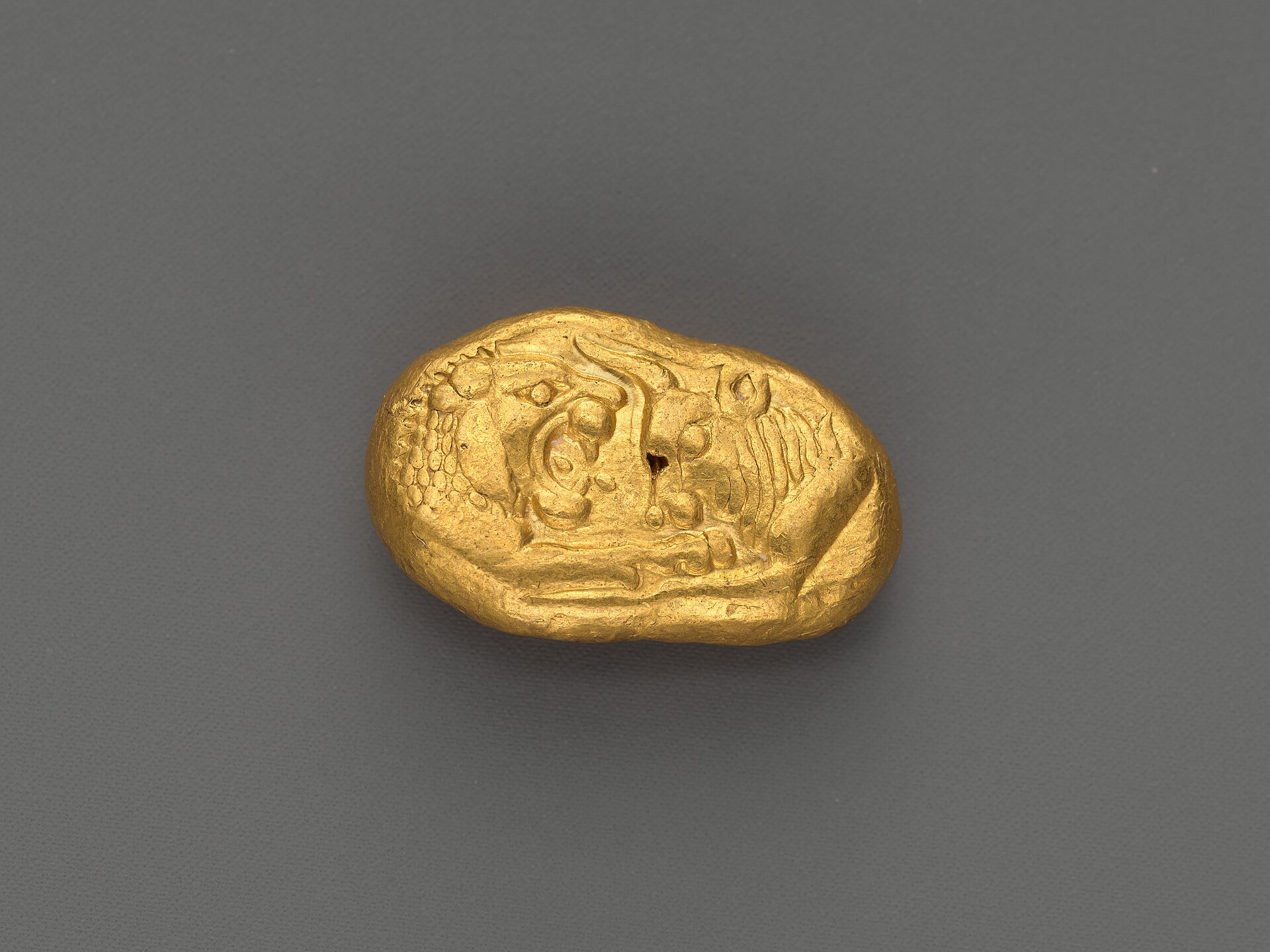
Lydia Strikes Some of the First Coins
Stamped lumps of electrum began a new way to pay.
During the seventh and sixth centuries BC, the kingdom of Lydia in western Anatolia stood as a vibrant crossroads of commerce, benefiting from rich mineral deposits and active trade networks with neighbouring Greek and Near Eastern communities. Before standardized currencies emerged, transactions throughout the ancient Mediterranean relied on bulk bullion, weighted ingots, or inconsistent pieces of metal that required constant verification. In Lydia, early rulers addressed this inefficiency by stamping pieces of electrum, a naturally occurring alloy containing varying ratios of gold and silver. Under King Alyattes, the father of Croesus, Sardis produced early electrum coins stamped with the head of a roaring lion. These marks served as official guarantees of value, yet the gold and silver content of electrum varied, which made precise evaluation difficult and complicated regional exchanges.
When King Croesus ascended the Lydian throne, traditionally dated to about 561 BC, though some scholars now argue for the 580s BC, his administration transformed this experimental practice into a systematic monetary order. Excavations in the capital of Sardis show that metallurgical workshops mastered refining techniques capable of separating gold and silver from raw electrum. During his reign, Croesus retired the older electrum currency and instituted pure gold and silver pieces, creating what historians identify as the first bimetallic monetary system. The ancient Greek historian Herodotus recorded that the Lydians were the earliest people known to manufacture and use standard gold and silver coins, linking this technological development with the expansion of retail commerce across the eastern Aegean.

Keep reading in Yester
Coming soon to the App Store
Keep following the story
Sources
- Gold Croeseid Twelfth-Stater (Archaeological Exploration of Sardis, Harvard University)
- From Hoard of 30 Coins: Two Gold Croeseid Staters (Archaeological Exploration of Sardis, Harvard University)
- Lydian Electrum Third stater (Archaeological Exploration of Sardis, Harvard University)
- New Archaic Coin Finds at Sardis, Cahill and Kroll (American Journal of Archaeology)
- A New Find of Croeseid Coins from Sardis (Hesperia, American School of Classical Studies at Athens)
- Herodotus, The Histories 1.94 (Perseus Digital Library, Tufts University)
- Daric (Encyclopaedia Iranica)
- Croeseid