Poland and Lithuania Unite in a Commonwealth
The Union of Lublin created one of Europe’s largest states, ruled by an elected king.
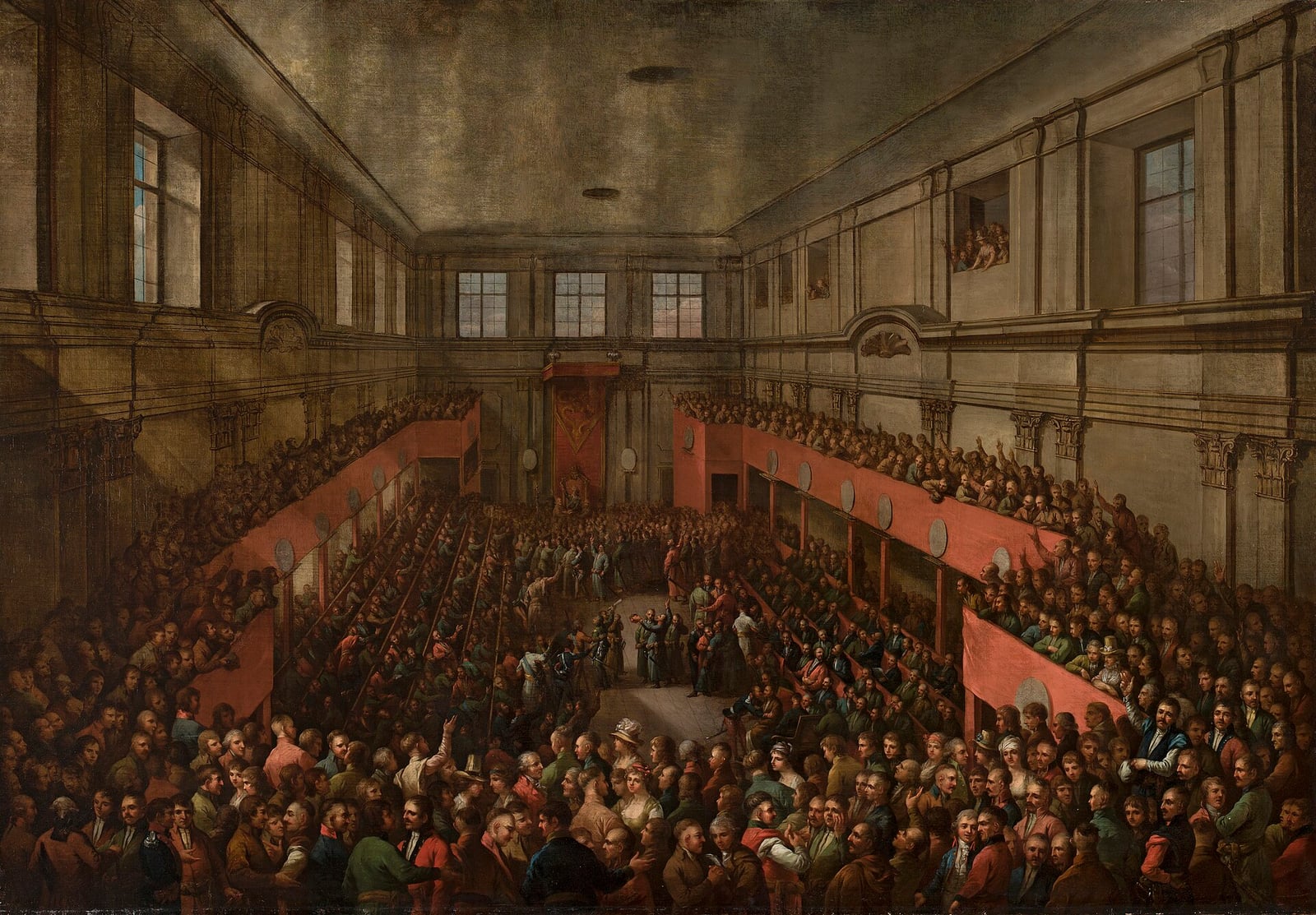
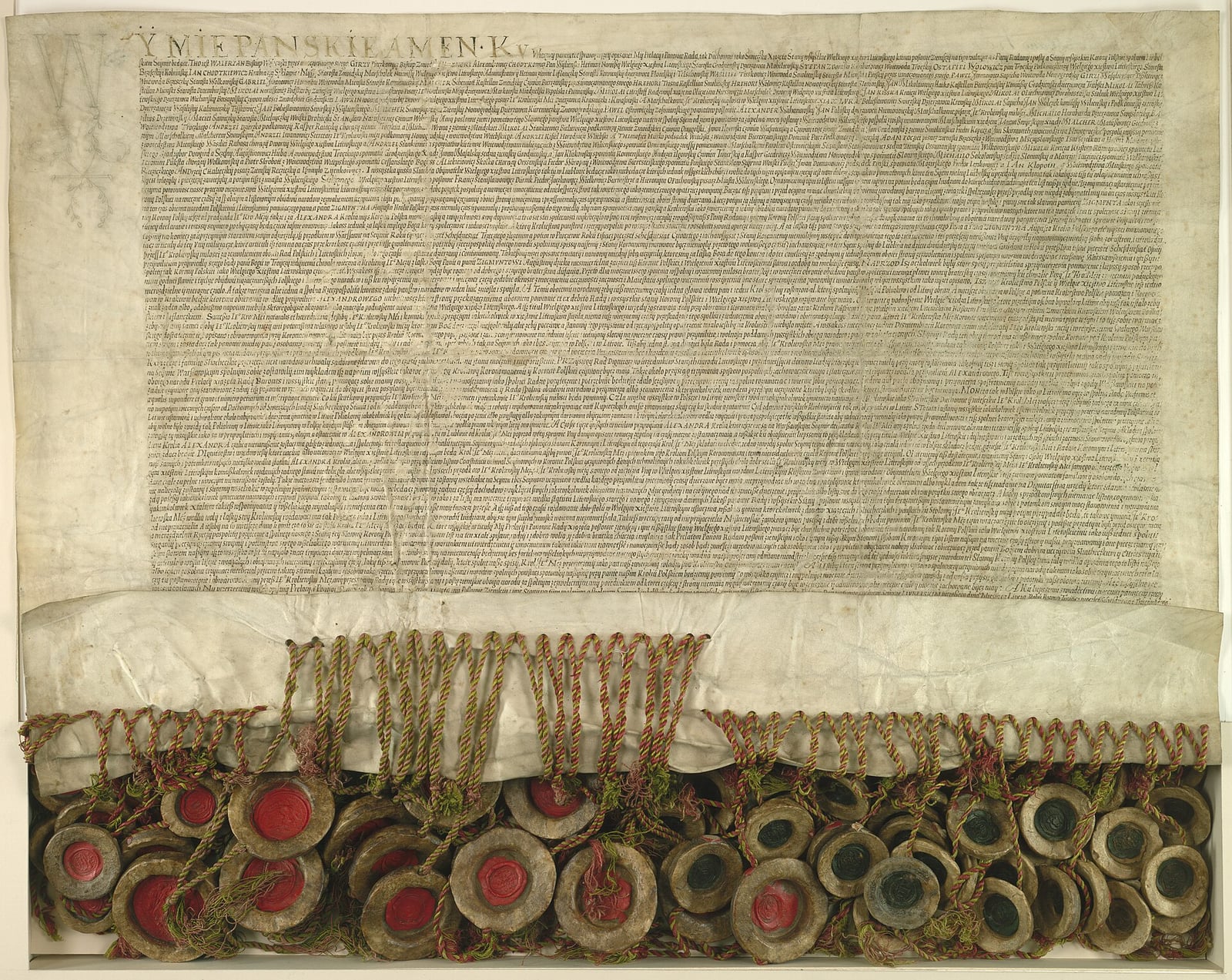
In the summer of 1569, envoys assembled at Lublin Castle to forge an unprecedented political compact between the Kingdom of Poland and the Grand Duchy of Lithuania. The two realms had maintained a loose personal union since the late fourteenth century, yet they had long retained separate institutions, legal codes, and borders. By the late 1560s, Lithuania confronted severe military strain in the Livonian War against the Tsardom of Russia, while the Polish nobility hesitated to finance campaigns without enduring concessions. Furthermore, King Sigismund II Augustus, the final monarch of the Jagiellonian dynasty, had no heirs. To prevent the partnership from dissolving upon his death, he pressed both nations to construct a permanent constitutional union.
Negotiations at the joint parliamentary gathering in Lublin proved contentious. Lithuanian magnates resisted the prospect of political equality with Poland's far more numerous lower nobility, fearing a dilution of their regional authority. Talks stalled in March 1569 when leading Lithuanian delegates abandoned the assembly. In response, Sigismund exerted decisive pressure by annexing substantial Lithuanian territories, including the Podlachie, Volhynian, Bracław, and Kiev voivodeships, directly into the Polish Crown. Local elites in these southern Ruthenian borderlands largely welcomed incorporation into the Polish political system. Deprived of extensive lands and facing ongoing Russian aggression, the Lithuanian representatives returned to the negotiating table.

Keep reading in Yester
Coming soon to the App Store