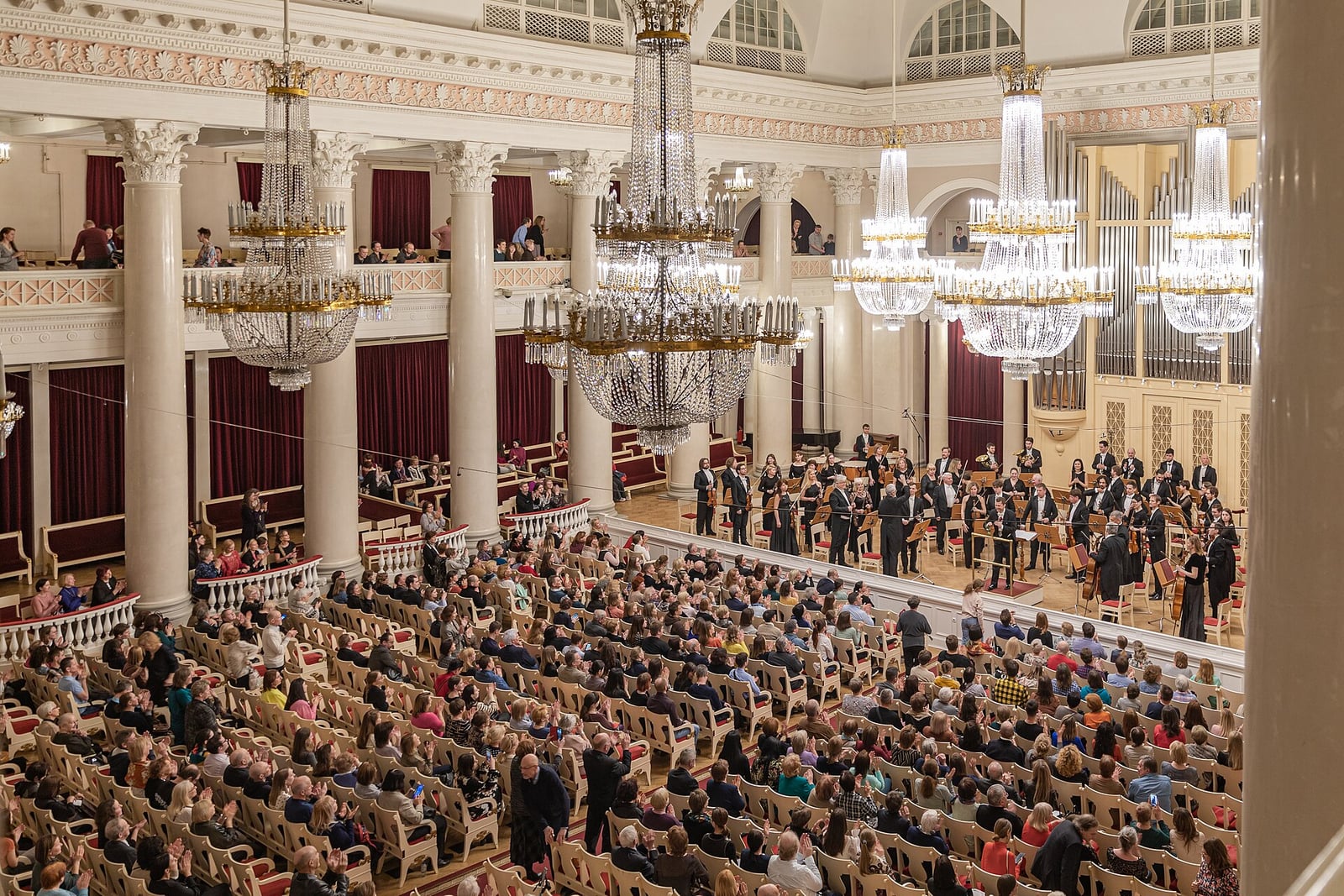
Shostakovich’s Seventh Is Played in Besieged Leningrad
Starving musicians performed a symphony in a city under siege.
On August 9, 1942, Dmitri Shostakovich's Symphony No. 7 in C major sounded across the starving, blockaded city of Leningrad. German forces had surrounded the metropolis nearly a year earlier, cutting rail links and initiating a catastrophic siege that ultimately claimed hundreds of thousands of civilian lives. To stage the demanding eighty-minute work, the Leningrad Radio Orchestra had to be pieced together from surviving musicians under conductor Karl Eliasberg. Weakened players were tracked down in freezing apartments and granted supplementary rations, while a military operation codenamed Squall pounded German artillery positions to keep their guns silent during the concert.
Loudspeakers carried the live performance through the empty streets and directly toward German positions in an act of psychological defiance. The composition itself had been drafted during the opening months of the siege. Working between visits to bomb shelters, Shostakovich completed the first three movements before Soviet authorities evacuated him and his family to Moscow and then to Kuybyshev in October 1941. It was in Kuybyshev that the composer finished the finale in December 1941, leading to the world premiere there by the Bolshoi Theatre Orchestra the following March.

Keep reading in Yester
Coming soon to the App Store
Keep following the story


Sources
- The 'Leningrad' Symphony At Carnegie Hall (NPR)
- Amid Hunger And Cold, An Unforgettable Symphony Premiere (NPR)
- Symphony No. 7, Leningrad (Los Angeles Philharmonic)
- When a Long, Dark Night Lit up with Music: The Story of the Leningrad Symphony II (The Wire)
- 7 facts about the Seventh Symphony of Dmitri Shostakovich (Smotrim, VGTRK)
- Fireman Shostakovich (London Review of Books blog)
- Symphony No. 7 (Shostakovich)
Image: Ninara