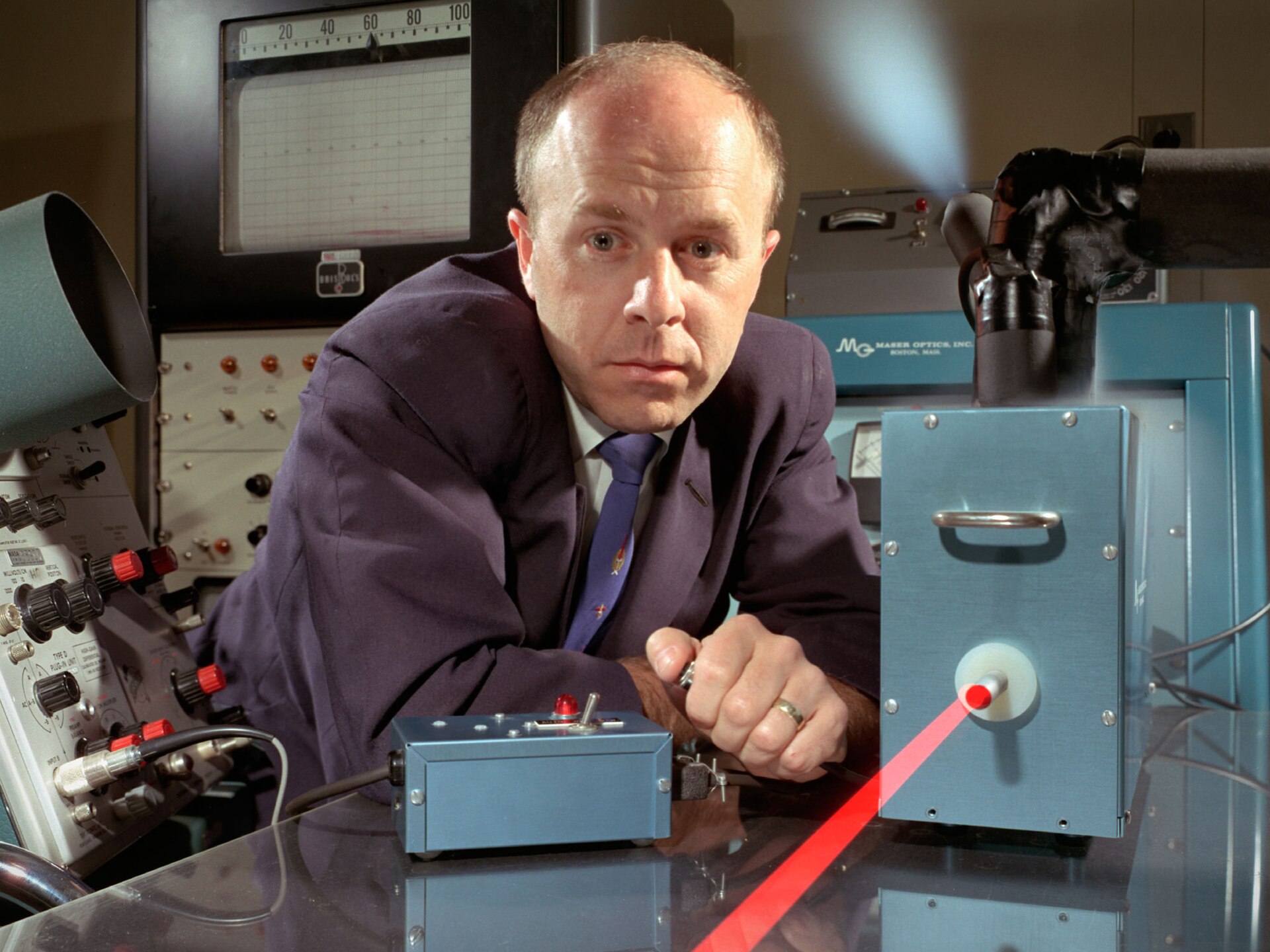
Theodore Maiman Builds the First Laser
A ruby crystal produced a beam of coherent light.
On May 16, 1960, Theodore Maiman succeeded in producing pulses of coherent light from a synthetic ruby crystal at Hughes Research Laboratories in Malibu, California, completing the first operational laser. His achievement represented the physical realization of theoretical concepts that had circulated within the scientific community for several years, grounded in calculations by Charles H. Townes and Arthur Leonard Schawlow, along with optical design principles patented by Gordon Gould. Rather than relying on the random thermal emission found in standard light sources, Maiman created an optical oscillator that relied on the quantum mechanics of stimulated emission.
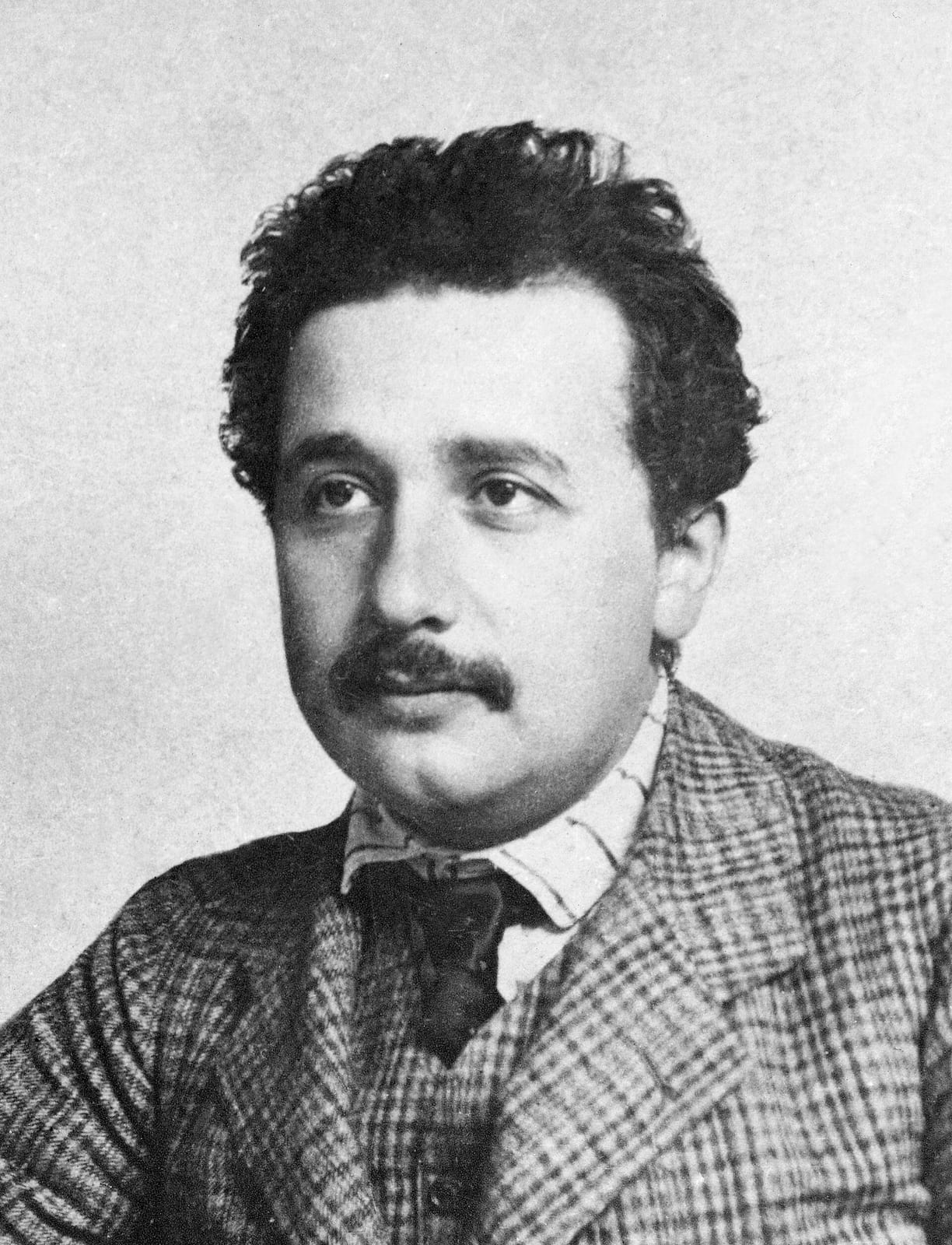
The theoretical framework for stimulated emission originated in 1917, when Albert Einstein formulated a quantum theory of radiation describing how matter interacts with light. Einstein proposed that in addition to absorbing radiation or spontaneously releasing it, an excited atom could be triggered by an incoming photon to release a matching photon. This stimulated emission generated secondary light identical to the incoming signal in wavelength, phase, and direction. If a large number of particles could be elevated into an excited state, a single photon could provoke an escalating chain reaction of identical emissions.

Keep reading in Yester
Coming soon to the App Store
Keep following the story
Sources
Image: NASA Glenn Research Center