The Tang Cast a Coin That Lasts Three Centuries
A round coin with a square hole set the pattern for East Asian money.
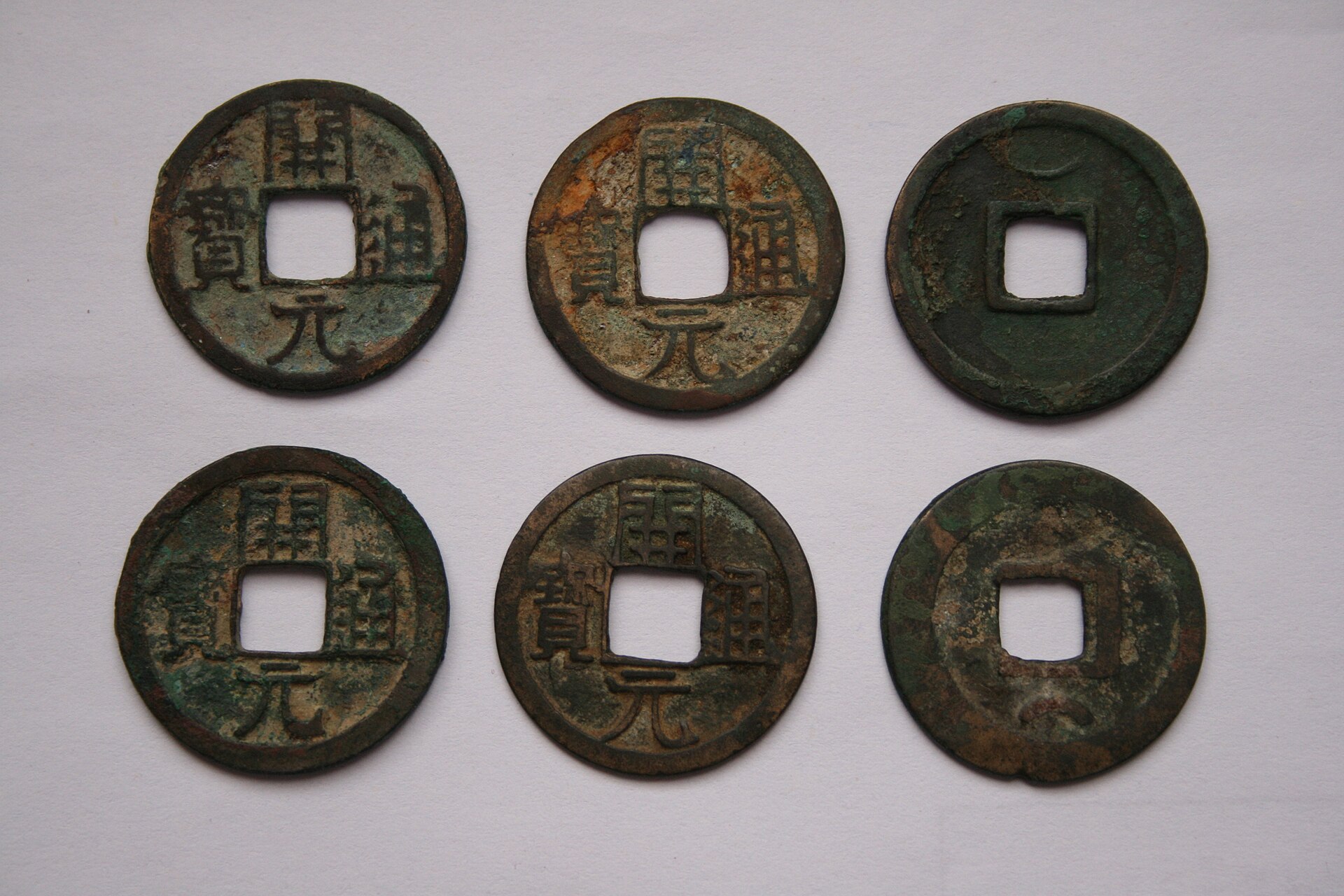
In 621, during the fourth year of the Wu De reign period, Emperor Gaozu decreed the creation of a new bronze cash coin across Tang dynasty China. Earlier imperial dynasties had relied on coins such as the Qin Ban Liang and Han Wu Zhu, whose face inscriptions derived directly from official measurements of their weight. The new Kaiyuan Tongbao dismantled that long monetary convention. While the imperial administration assigned the coin an exact target weight of one-tenth of a liang, or one mace, its nominal value did not depend on an intrinsic balance of metal alone. Instead, its buying power was grounded in formal state regulations, initiating the broad baowen monetary system that defined East Asian cast coinages for over a thousand years.
The new legend departed sharply from previous scripts. Rather than traditional seal characters, the text used clerical script designed by the celebrated calligrapher Ouyang Xun. Read in the conventional top-to-bottom and right-to-left order, the four characters pronounced the coin as circulating treasure from the inauguration of a new epoch. Because the phrase did not use Gaozu's Wu De reign name, many users misread the inscription clockwise as Kaitong Yuanbao. This popular misreading subsequently prompted later rulers and regional rebels to adopt yuanbao as a permanent monetary formula alongside zhongbao. The primary inscription tongbao persisted across dynasties until the final imperial coins in 1911 and surviving local mintings in early republican Yunnan.

Keep reading in Yester
Coming soon to the App Store
Keep following the story
Sources
Image: Gary Lee Todd, Ph.D.