
Humayun’s Tomb Brings the Garden Tomb to India
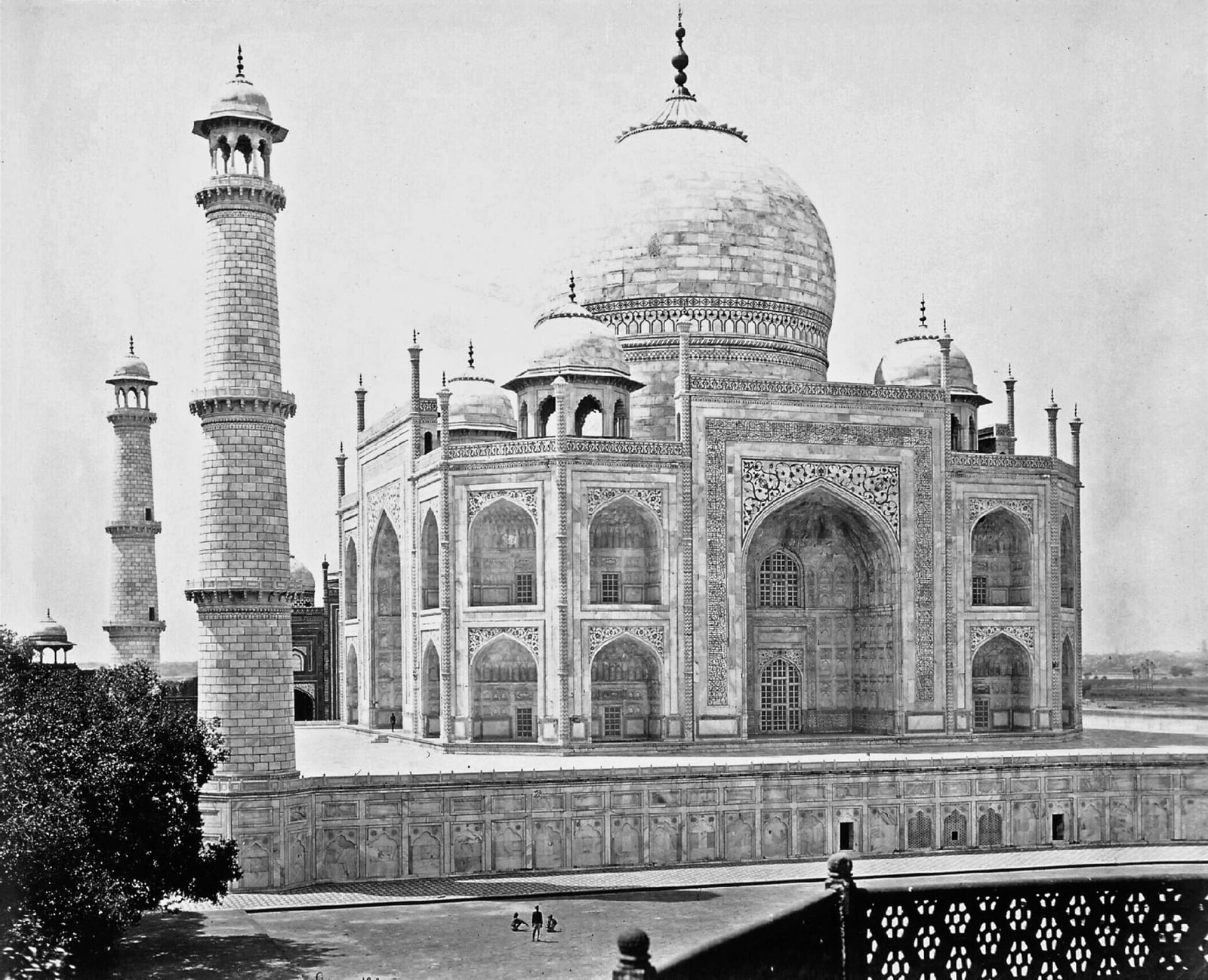
The Mughal emperor’s domed mausoleum set the pattern later followed by the Taj Mahal.
When the second Mughal emperor Humayun died in Delhi in January 1556, his remains were initially interred at his palace in the Purana Qila before being transferred to Sirhind. A decade after his death, a grand imperial project commenced to provide him with a permanent monument. Built during the reign of his son Akbar, the tomb is traditionally credited to Humayun's senior widow, Bega Begum, also known as Haji Begum, as its patron. The empress selected the Persian architect Mirak Mirza Ghiyas to execute the design, and following the architect's death before its completion, his son Sayyid Muhammad concluded the work around 1570.
Erected near the sacred shrine of the Sufi saint Nizamuddin Auliya and the Yamuna River, the mausoleum introduced the monumental garden tomb format to the Indian subcontinent. The building is placed at the center of an enclosed thirty-acre quadripartite garden, known as a charbagh. Paved causeways and intersecting water channels divide the enclosure into four large quadrants, which are further partitioned into thirty-two sunken garden plots. These channels were engineered to give the visual impression of flowing beneath the raised platform, reflecting the paradise rivers described in Islamic cosmology.

Keep reading in Yester
Coming soon to the App Store
Keep following the story
Sources
Image: https://www.flickr.com/photos/posk/