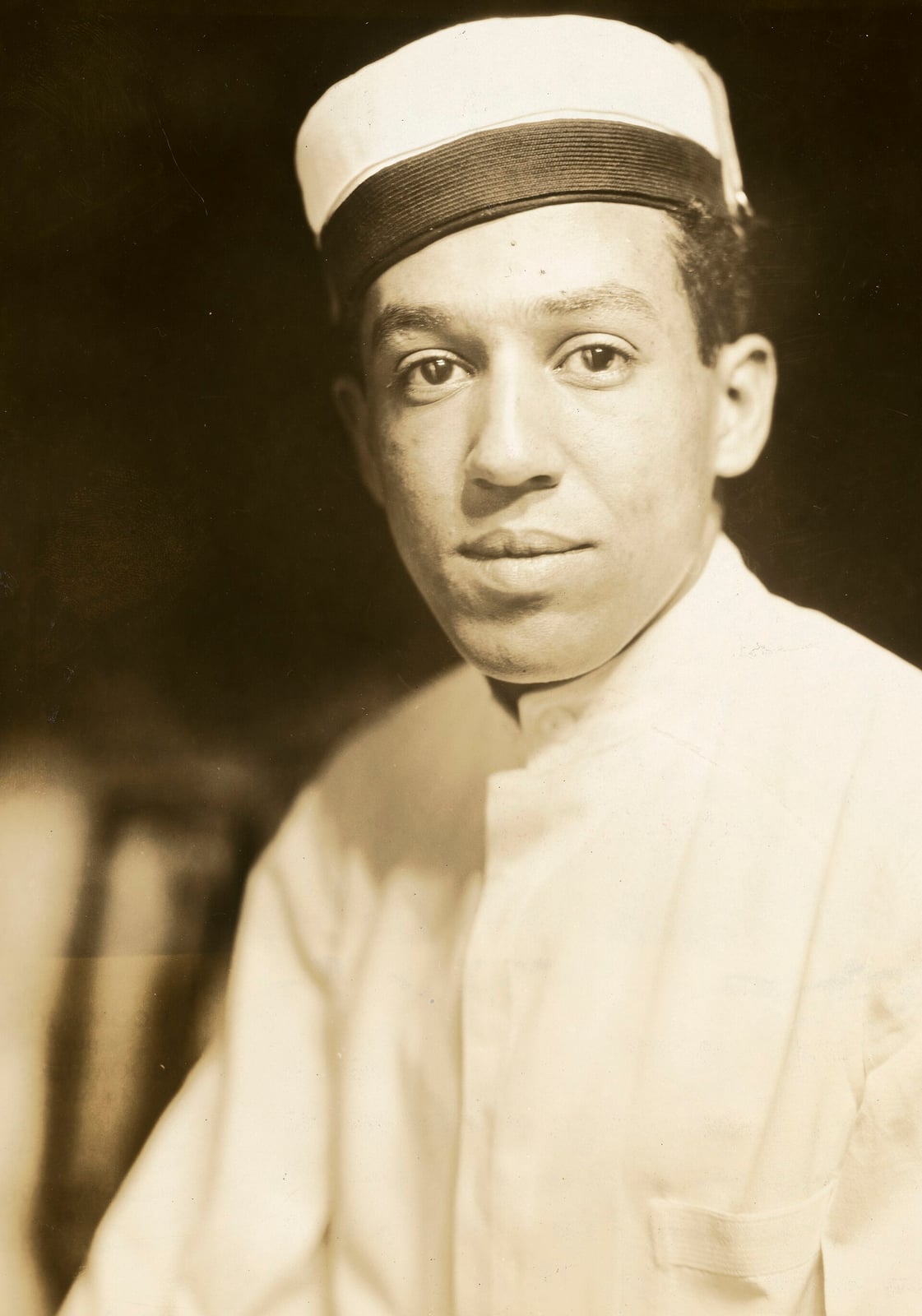
Langston Hughes Publishes The Weary Blues
A young poet brought the rhythms of blues and jazz into verse.
In 1926, the publication of The Weary Blues marked the formal book debut of Langston Hughes, establishing him as one of the defining literary voices of the Harlem Renaissance. Born in Joplin, Missouri, in 1901, Hughes spent much of his childhood in Lawrence, Kansas, where his maternal grandmother raised him on family histories of Black resistance and perseverance. He began experimenting with verse during his school years in Illinois and Ohio, writing his first piece of jazz poetry while attending Central High School in Cleveland. By the time his first collection appeared in print, Hughes had already spent several years shaping an artistic approach that drew directly on vernacular African American traditions.
Hughes's early adulthood was shaped by extensive travel and intermittent formal education. After graduating from high school in 1920, he spent time with his father in Mexico before moving to New York in September 1921 to study engineering at Columbia University. Hughes encountered racial discrimination on campus, including denial of university housing, and found himself far more engaged by the vibrant cultural life of Harlem than by his academic curriculum. Leaving Columbia in 1922, he took odd jobs and served as a crewman aboard the cargo ship S.S. Malone in 1923, visiting ports across West Africa and Europe before spending months living in Paris and England.

Keep reading in Yester
Coming soon to the App Store
Keep following the story
Sources
Image: Underwood & Underwood