Hubble Finds a Universe That Is Expanding
Measurements of distant galaxies changed the scale and history of the cosmos.
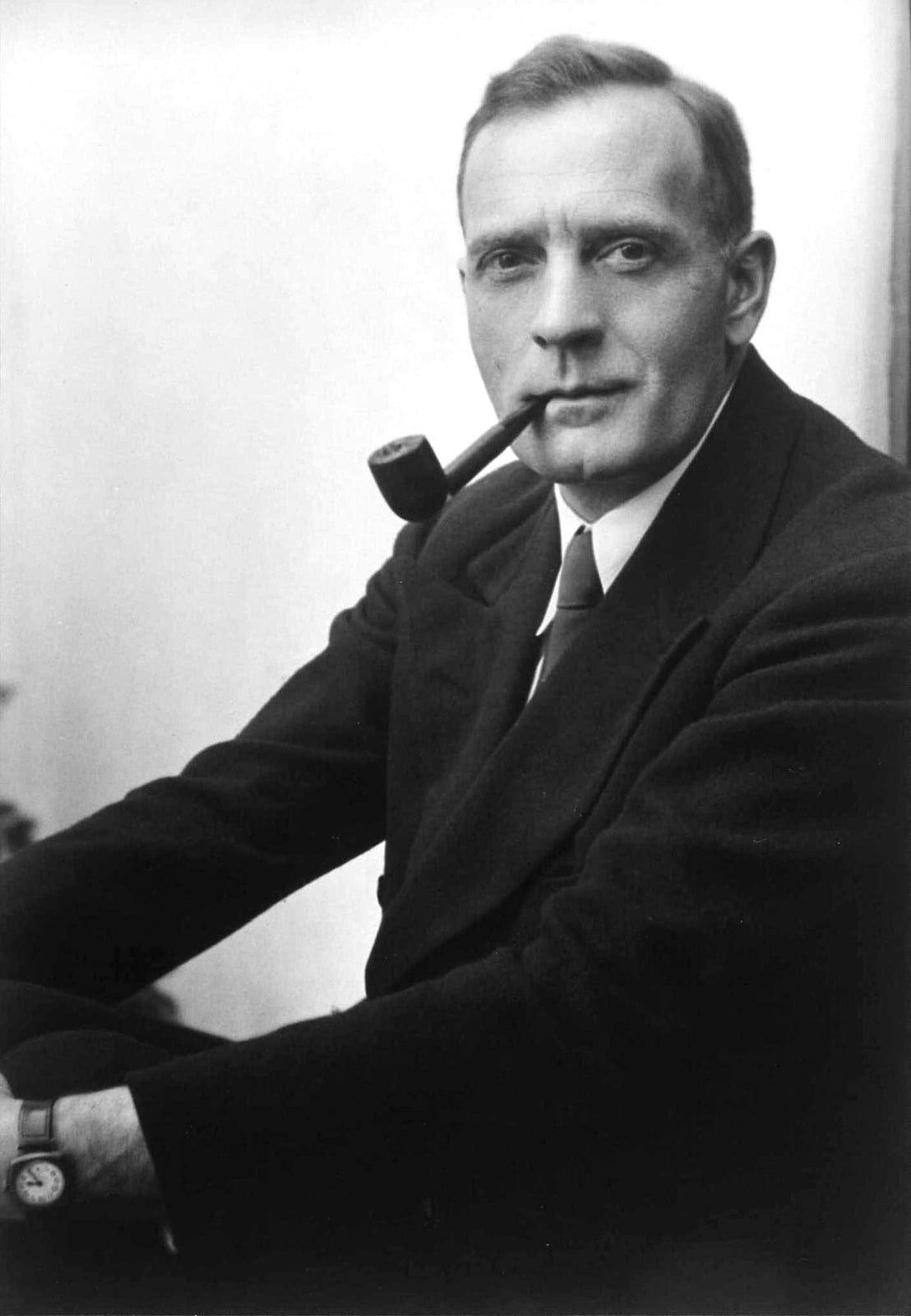
During the 1920s, astronomical work conducted at Mount Wilson Observatory fundamentally altered scientific understanding of the structure of the cosmos. Astronomers had spent years debating whether spiral nebulae were simply clouds of gas within the Milky Way or separate stellar systems situated far beyond it. Edwin Hubble resolved this debate by identifying Cepheid variable stars within several nebulae, establishing that these formations lay at vast distances well outside our own galaxy. The finding confirmed that the universe extended far past the borders of the Milky Way, setting the stage for systematic inquiries into the movement of these remote structures.
Theoretical physicists had already begun to suggest that spacetime might not remain static. In 1922, Alexander Friedmann published solutions to the equations of general relativity that described a universe that was not static. Five years later, Belgian priest and astronomer Georges Lemaître independently concluded that the universe was expanding, publishing a theoretical relation between recessional velocities and cosmic distances in 1927. Earlier observational groundwork was also underway, as Vesto Slipher had measured the first Doppler shift of a spiral nebula in 1912, finding that the Andromeda Nebula was approaching, and in the following years he found many other spirals receding.

Keep reading in Yester
Coming soon to the App Store
Keep following the story

Sources
- IAU members vote to recommend renaming the Hubble law as the Hubble-Lemaitre law (IAU, iau1812)
- The Expanding Universe (American Institute of Physics, Discovery of Cosmic Fronts)
- Island Universes (American Institute of Physics)
- Why Hubble's Distances Were Too Small (American Institute of Physics)
- Lost in translation: Mystery of the missing text solved, Mario Livio (Nature)
- Mystery of the Universe's Expansion Rate Widens with New Hubble Data (NASA)
- Hubble's law
Image: Johan Hagemeyer