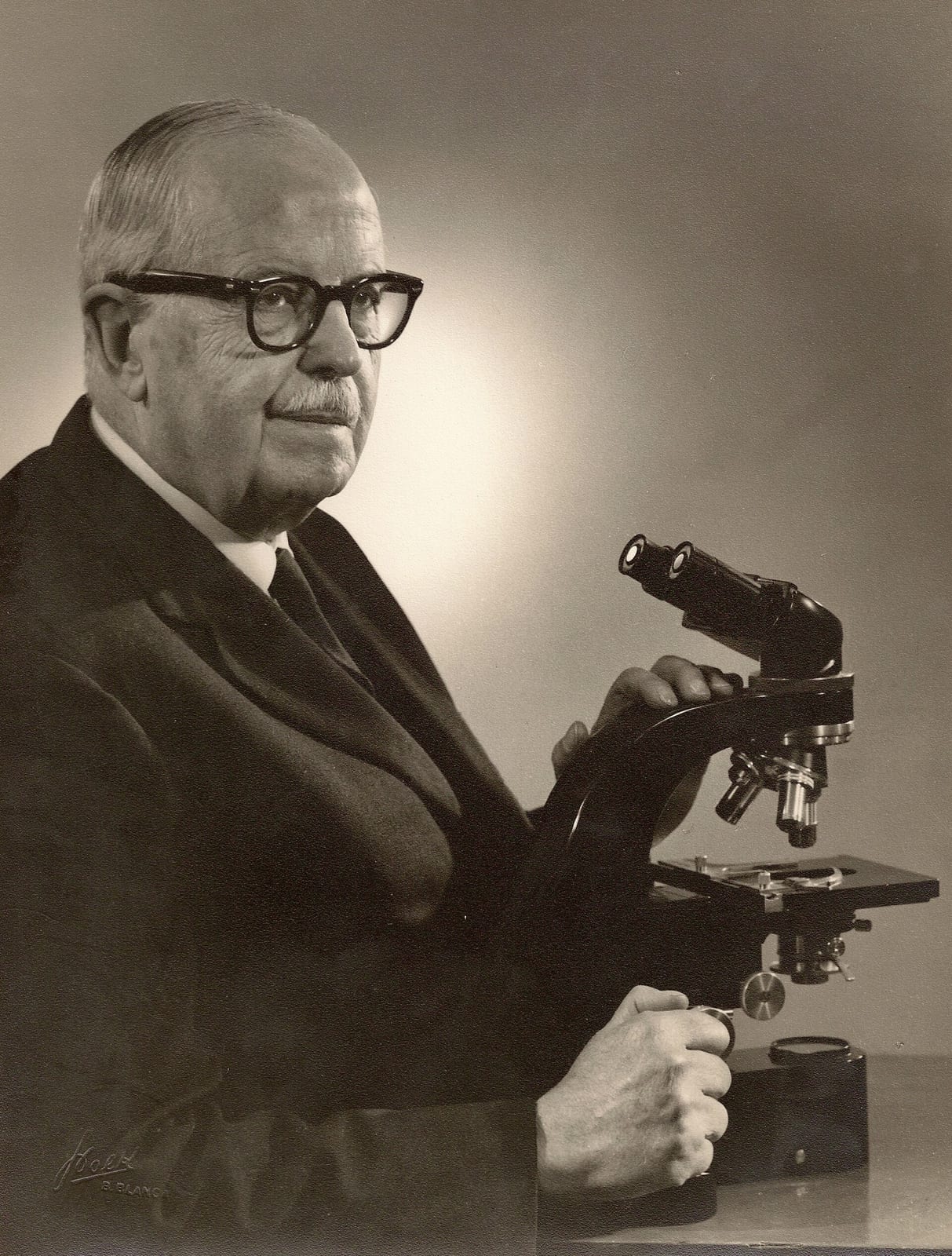
Bernardo Houssay Reveals Another Side of Blood Sugar
Experiments in Argentina showed that the pancreas was not acting alone. Houssay’s work helped make the body’s hormonal relationships a central question in medicine.
By the time Bernardo Houssay received the Nobel Prize in 1947, insulin had already transformed the treatment of diabetes. The pancreas was central to the explanation of blood sugar, but it was not acting alone. Working in Argentina, Houssay investigated how hormones associated with the pituitary gland affected carbohydrate metabolism. His research helped change the question from which organ controls a process to how different organs influence one another within a living system.
The experimental work involved animals and interventions that altered the activity of endocrine organs. Researchers compared the effects of removing the pancreas, the pituitary or both, observing how the resulting metabolic conditions differed. These procedures were invasive, and their historical importance should not hide the ethical questions surrounding animal experimentation. Their scientific significance lay in showing an interaction: the severity of diabetes after loss of pancreatic function could change when pituitary influence was also removed.

Keep reading in Yester
Coming soon to the App Store
Keep following the story
Sources
- Bernardo Houssay: Facts (Nobel Prize)
- Bernardo Houssay: Biographical (Nobel Prize)
- The Nobel Prize in Physiology or Medicine 1947: Award ceremony speech (Nobel Prize)
- The Nobel Prize in Physiology or Medicine 1947: Summary (Nobel Prize)
- Nobel Foundation: Houssay facts
- Houssay’s research career
- Pituitary research context
Image: Desconocido