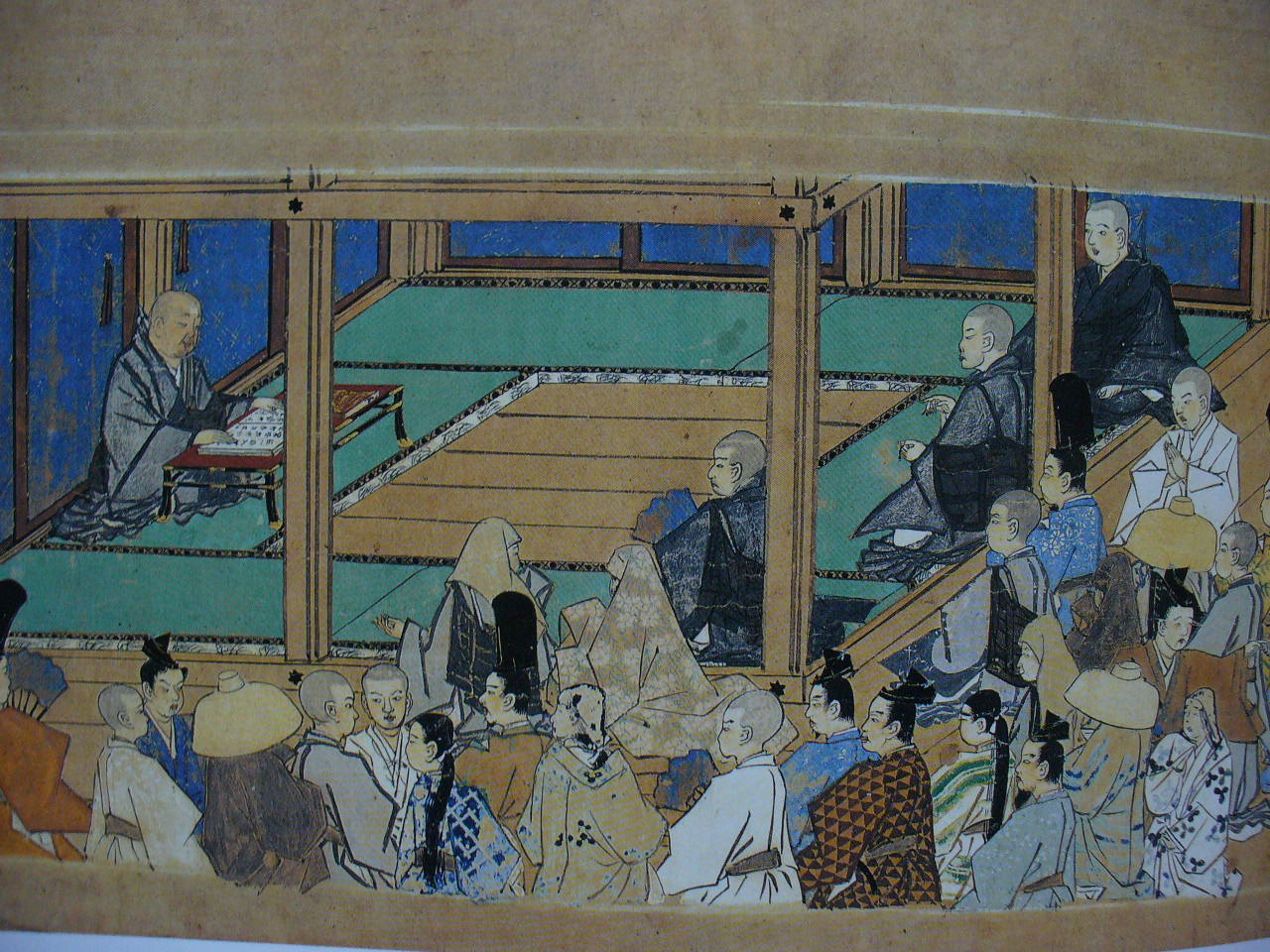
Hōnen Teaches Salvation Through the Name of Amida
A monk began the Pure Land school of Japanese Buddhism.
In 1175, a Buddhist monk named Honen abandoned his monastic seclusion on Mount Hiei, near Kyoto, to initiate a radically accessible religious movement. Having entered the Tendai school at an early age following the killing of his father in a night raid, Honen had spent decades studying the extensive Buddhist canon, undertaking rigorous training, and visiting important centers of learning. Despite his erudition, he grew disillusioned with the stark divide separating monastic elites from the daily struggles of ordinary people, concluding that traditional ascetic practices and intellectual regimens offered little hope to common individuals.
The catalyst for Honen's departure from Mount Hiei was his encounter with the writings of the seventh-century Chinese master Shandao. Shandao's commentary on the Amitayus Contemplation Sutra argued that the sole essential practice for liberation was the nembutsu, the devoted recitation of the phrase Namo Amida Butsu, invoking the name of Amida Buddha. Convinced that the world had entered the age of Dharma decline, in which liberation through one's own power was nearly impossible for ordinary people, Honen resolved that total reliance on Amida's universal vow offered the only viable path to rebirth in the Pure Land.

Keep reading in Yester
Coming soon to the App Store
Keep following the story
Sources
Image: Unknown author Unknown author