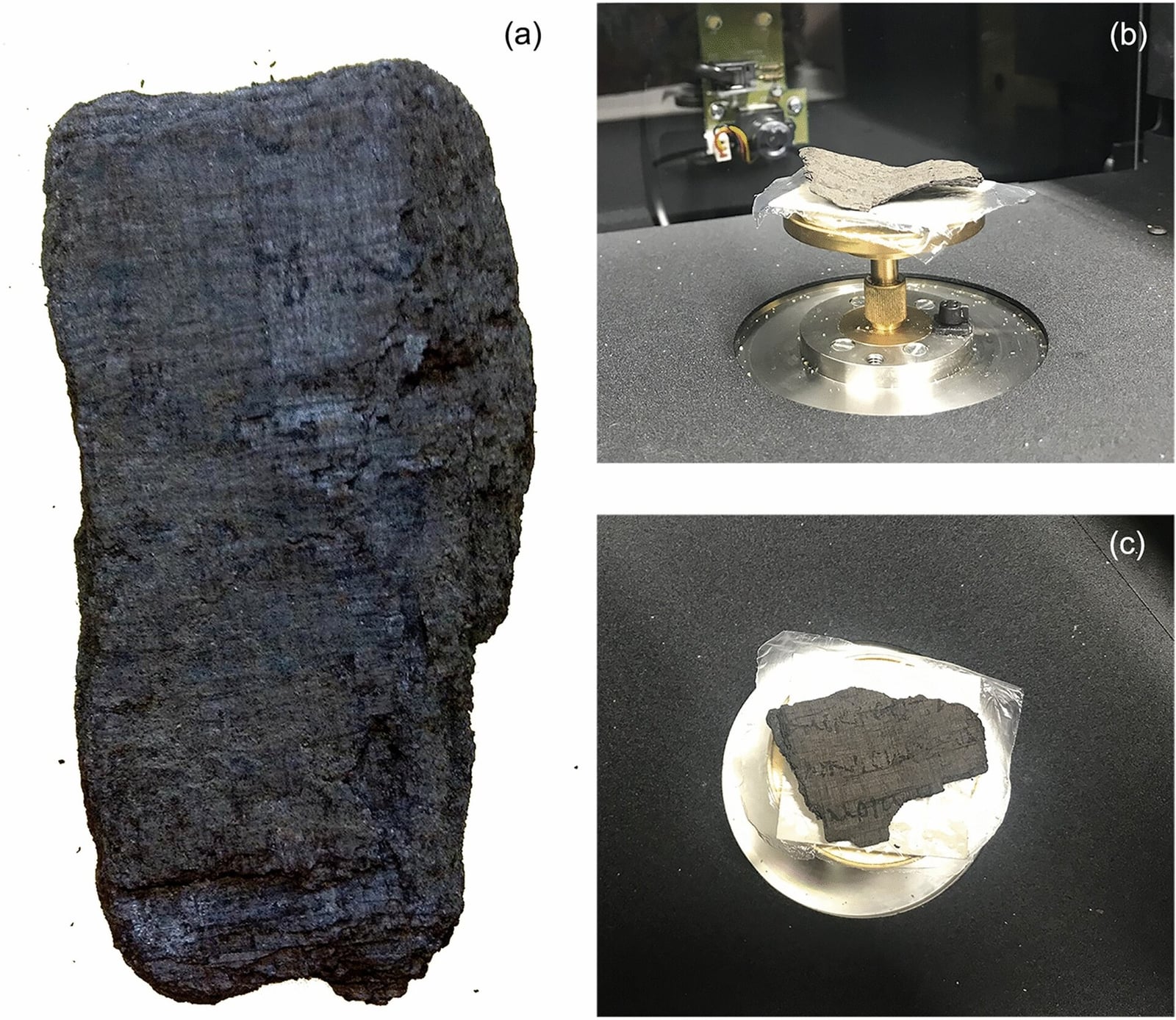
AI Reads a Scorched Scroll from Herculaneum
Machine learning picked out Greek text inside a papyrus carbonized by Vesuvius in 79 CE.
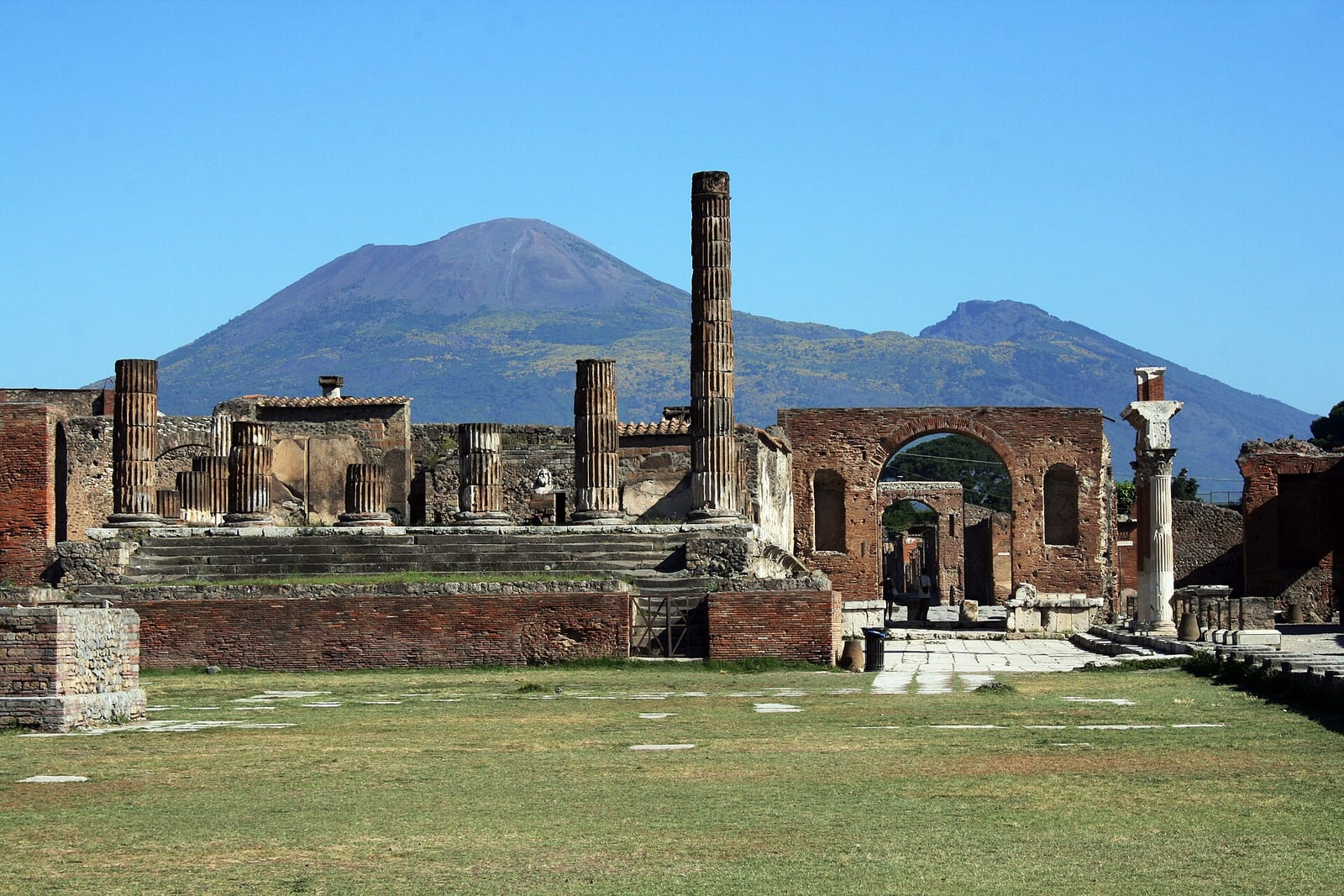
When Mount Vesuvius erupted in 79 CE, pyroclastic flows engulfed the seaside town of Herculaneum and smothered a vast private estate now known as the Villa of the Papyri. Inside an oxygen-starved chamber, hundreds of rolled documents were subjected to sudden, intense heat that carbonized them into fragile, blackened cylinders before sealing them beneath dense volcanic rock. In 1752, laborers working for the Bourbon royal family broke into the buried rooms through subterranean shafts, accidentally unearthing bundles that workmen initially mistook for chunks of charcoal or charred tree limbs.
The discovery yielded more than eighteen hundred papyri and fragments, representing the sole intact library to survive from the classical Mediterranean world. Because ordinary organic materials deteriorate quickly in humid soil, virtually all classical texts had previously depended on medieval manuscript copies. Scholars soon realized that the scorched collection preserved extensive philosophical treatises, including works by Epicurus, his early followers, and dozens of writings by the first-century BCE philosopher Philodemus of Gadara, alongside lost Stoic essays and Latin poetry.

Keep reading in Yester
Coming soon to the App Store
Keep following the story

Sources
Image: Sara Stabile, Francesca Palermo, Inna Bukreeva, Daniela Mele, Vincenzo Formoso, Roberto Bartolino & Alessia Cedola