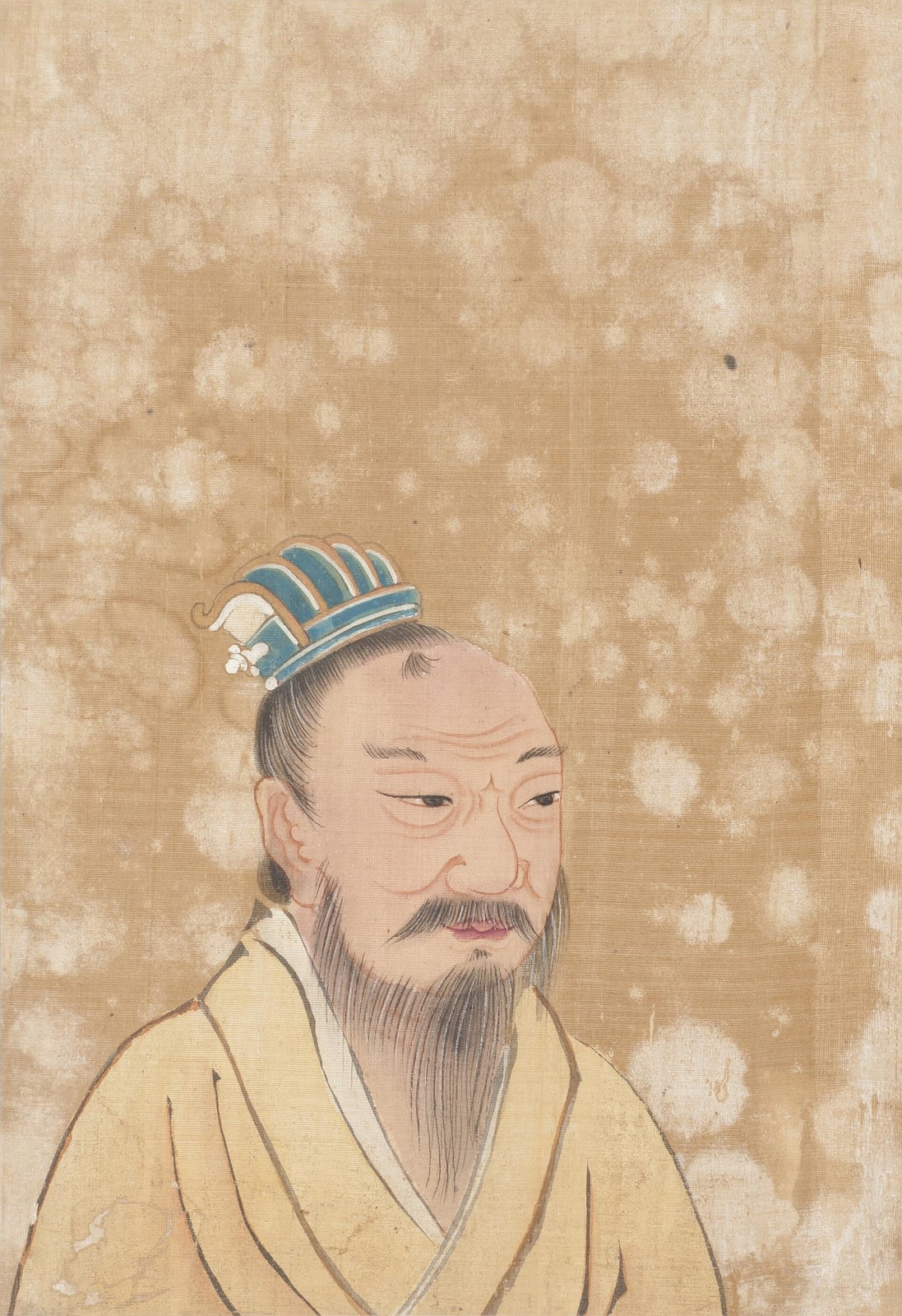
Liu Bang Founds the Han Dynasty
A rebel of humble birth ended years of civil war and began four centuries of Han rule.
In 202 BCE, a rebel commander from an agrarian background assumed the imperial title after years of widespread civil conflict, inaugurating the Han dynasty. Liu Bang had entered public service during the Qin dynasty as a low-ranking precinct head in Pei County, located in the conquered southern state of Chu. Following the death of Qin Shi Huang, the ruler who had unified the competing states in the late third century BCE, imperial authority dissolved into widespread insurrections. Liu Bang abandoned his administrative duties, assembled an outlaw force, and joined the coalition seeking to dismantle Qin rule.
Liu Bang's strategic advance into the Guanzhong imperial core culminated in 206 BCE with the peaceful capitulation of Ziying, the final Qin sovereign. After entering the capital at Xianyang, Liu Bang abolished the stringent legal code of the old regime, preserving public order and gaining regional goodwill by prohibiting looting. However, the rebel hegemon Xiang Yu subsequently partitioned the fallen empire into eighteen principalities, granting Liu Bang the title King of Han alongside the remote territories of Bashu and Hanzhong while distributing the strategic Guanzhong lands to former Qin commanders.

Keep reading in Yester
Coming soon to the App Store
Keep following the story

Sources
Image: Unknown Chinese artist