The Ghana Empire Grows Rich on Gold and Salt
A West African kingdom controlled trade across the Sahara.
By the ninth century, the Soninke kingdom known as Wagadu had transformed into a dominant economic power across the western Sahel. Located across areas of modern southeastern Mauritania and western Mali, the realm drew the attention of external chroniclers as early as 830, when the scholar Muhammad ibn Musa al-Khwarizmi documented its existence. Arab writers soon began referring to the entire realm as Ghana, adopting the royal title borne by its monarchs. These rulers, also styled as Kaya Maghan, presided over a confederation of provincial territories and subject rulers whose allegiances stretched across the savanna frontier.
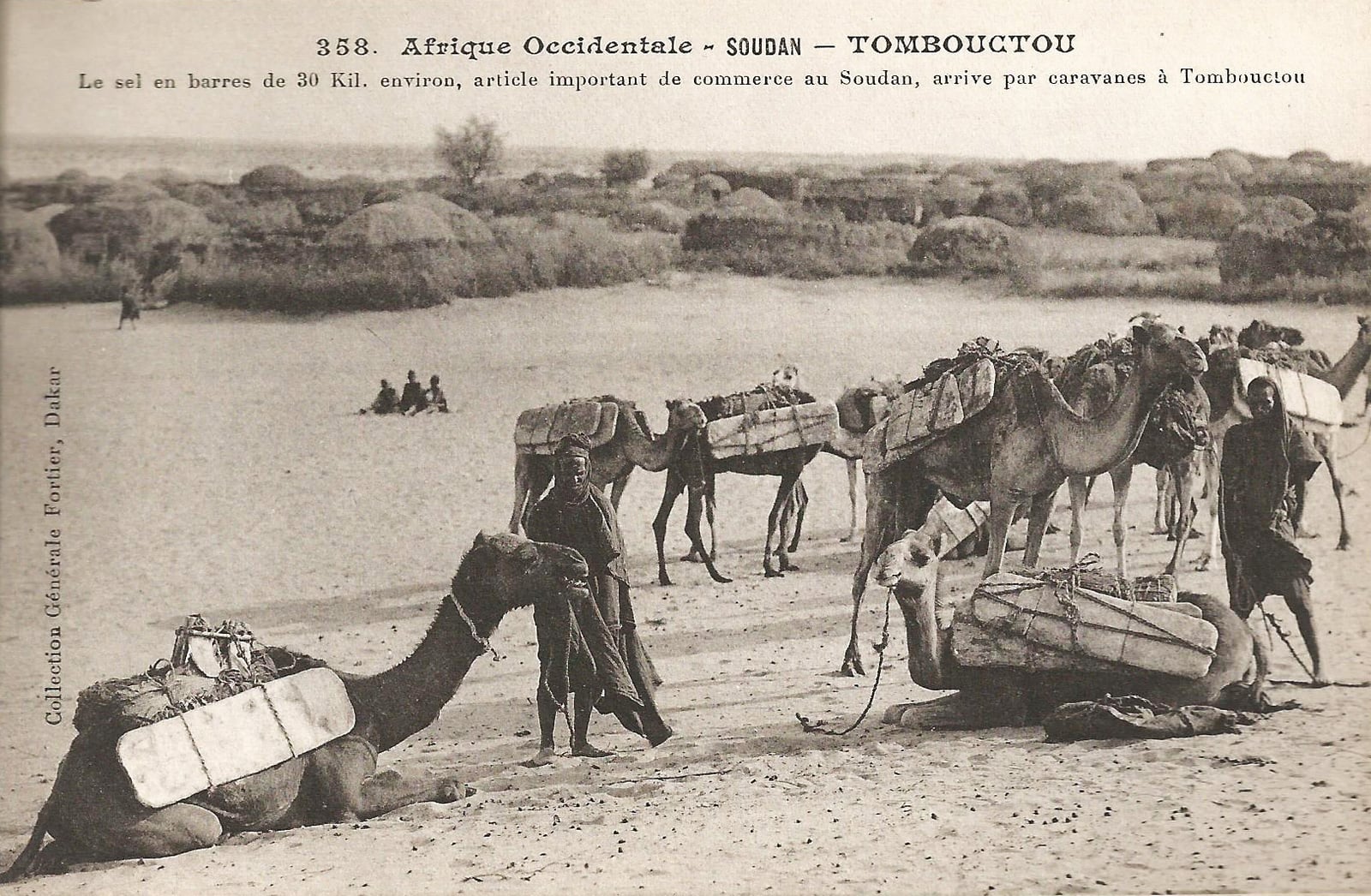
The empire's extraordinary wealth rested upon its strategic position between two complementary ecological zones. To the north lay desert deposits of rock salt, an indispensable dietary commodity in West Africa, while dense goldfields lay situated to the south. Although the Ghanaian court did not own the southern mines, it tightly regulated the movement of goods passing through its domain. Caravans led by camels crossed the Sahara, funneling refined trade into royal markets where administrators collected precise levies. Merchants paid import duties of one gold dinar per load of salt and double that amount upon export, yielding substantial revenue for the central treasury.

Keep reading in Yester
Coming soon to the App Store
Keep following the story
Sources
Image: François-Edmond Fortier (1862-1928)