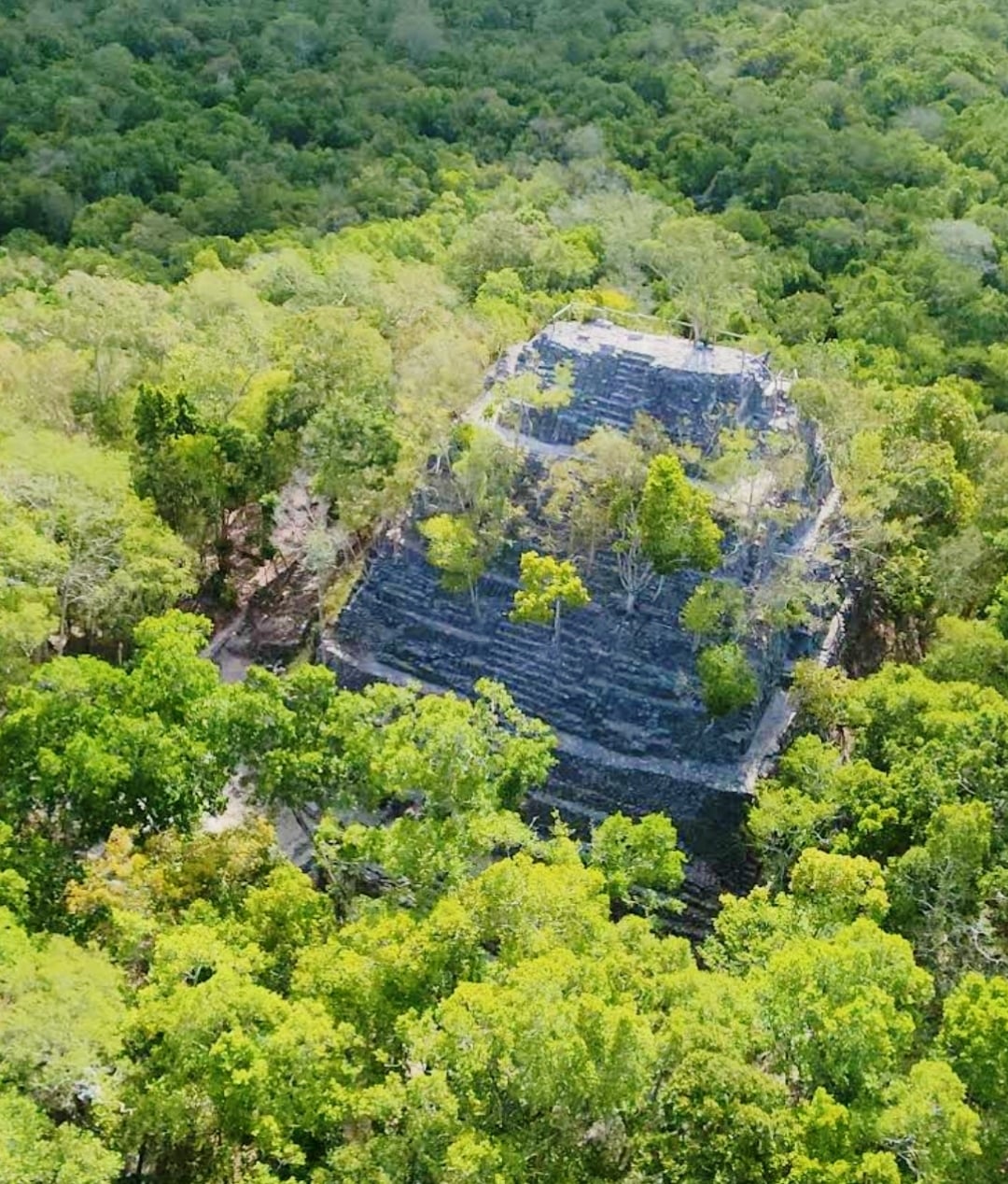
El Mirador Raises One of the World’s Largest Pyramids
The Maya city built La Danta and linked towns with raised causeways centuries before Tikal’s peak.
Deep in the dense forests of northern Guatemala, the ancient Maya settlement of El Mirador flourished long before the famous capitals of the Classic period. First noted when engineer Claudio Urrutia surveyed part of the basin in 1885, officially reported in 1926, and partly mapped by Ian Graham in 1962, the site revealed its true antiquity only when formal excavations began in 1978. Archaeologists directed by Bruce Dahlin and Ray Matheny established that its monumental civic center was not contemporary with Classic centres like Uaxactun or nearby Tikal, but had instead reached its zenith centuries earlier, in the Late Preclassic era between the third century BCE and the first century CE.
At the heart of the settlement, builders constructed vast triadic architectural complexes, where elevated platforms supported groups of three summit temples. The grandest of these, the La Danta complex, stands approximately 72 metres tall from the jungle floor. Built upon an enormous artificial base measuring roughly 180,000 square metres, the complex encompasses an estimated total volume of 2.8 million cubic metres, ranking it among the most voluminous ancient structures on Earth. Nearby complexes, such as the 55-metre El Tigre and the 48-metre Los Monos, framed an urban plan aligned with astronomical and solar paths.

Keep reading in Yester
Coming soon to the App Store
Keep following the story
Sources
Image: Konjiki1