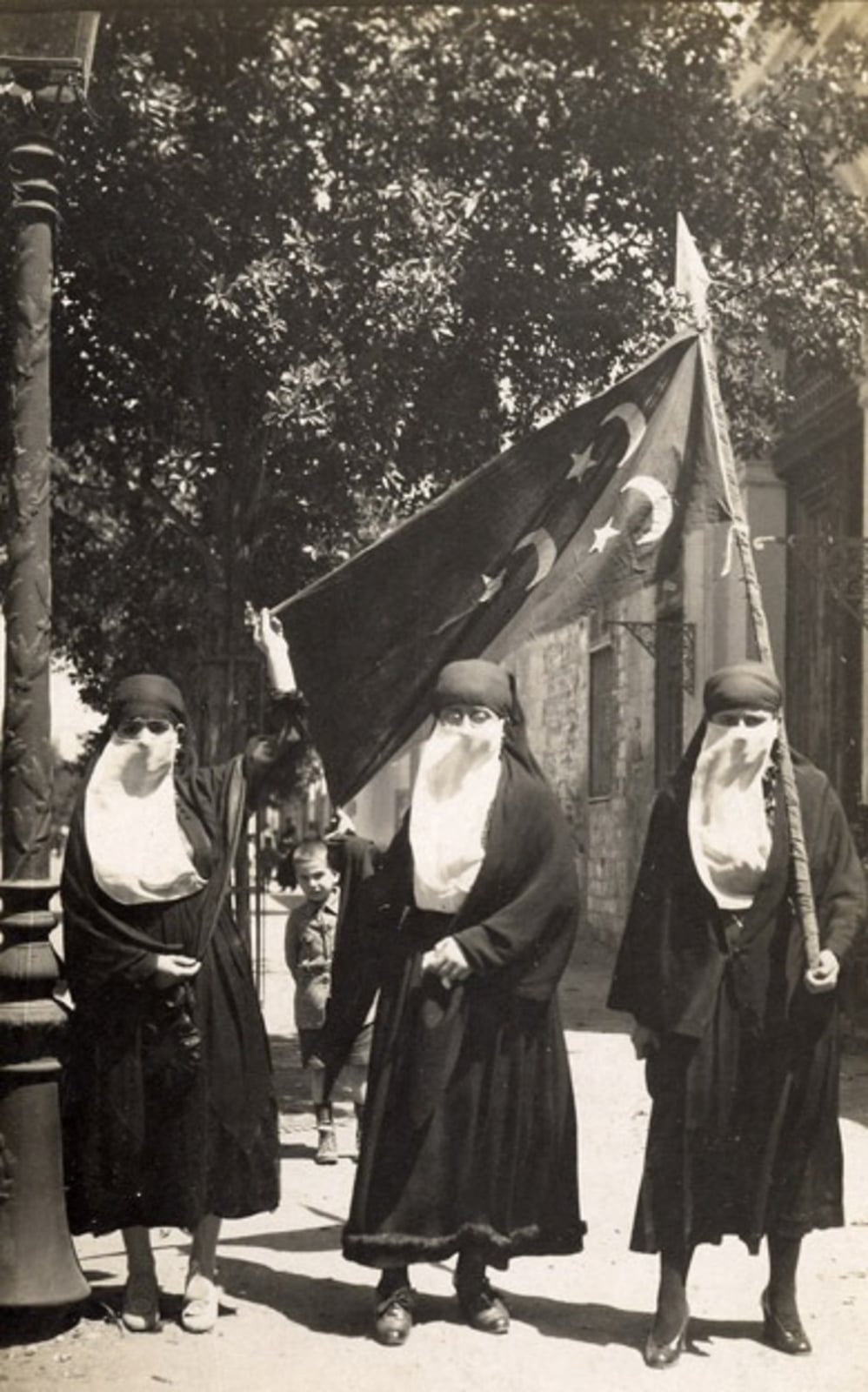
Egyptian Women March in the 1919 Revolution
Women marched alongside men in mass protests against British rule.
In March 1919, mass demonstrations erupted across Egypt against British imperial rule, bringing normal civic life to an abrupt standstill. Although decades of nationalist resentment had simmered since the 1882 British occupation, the immediate catalyst was the arrest and exile to Malta of Saad Zaghlul and other prominent figures from the nationalist Wafd Party. When Britain imposed a formal protectorate in December 1914, many Egyptian leaders believed the status was merely temporary. Following the First World War armistice, Zaghlul and a delegation sought permission to travel to the planned peace conference in Paris to lobby for national self-determination, only to be rebuffed by British authorities.
The resulting uprising mobilized unprecedented segments of Egyptian society across class, geographic, and religious lines. A key factor behind the public response was the political mobilization of women. In the decades preceding the upheaval, a wave of expanded literacy and women's periodicals often described as the Women's Awakening had brought political self-determination and feminist ideas to a wider audience. In the spring of 1919, women marched openly alongside men, while Muslim and Christian Egyptians united in strikes, rallies, and acts of civil disobedience throughout major urban centers.

Keep reading in Yester
Coming soon to the App Store
Keep following the story

Sources
Image: Unknown author Unknown author