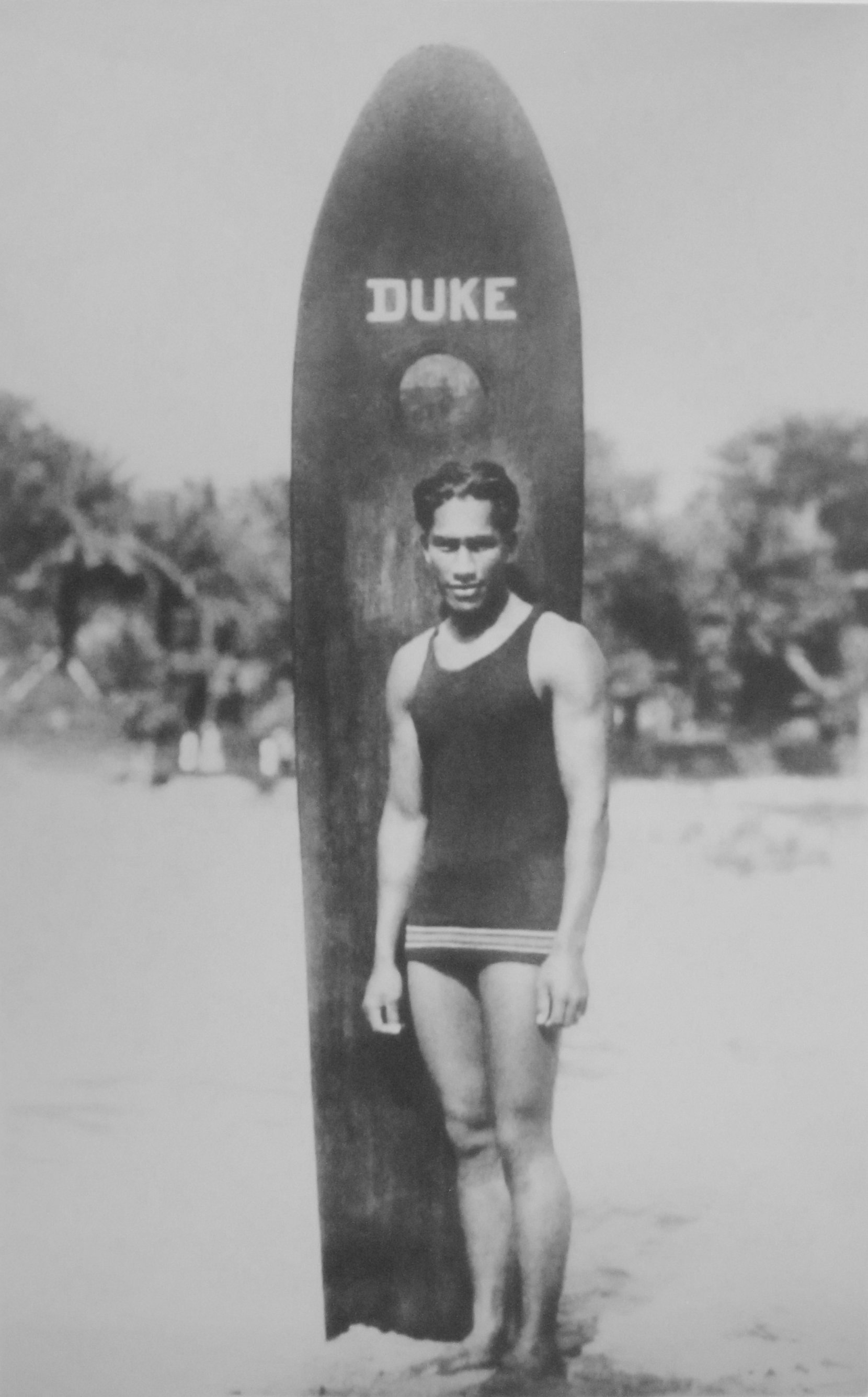
Duke Kahanamoku Takes Hawaiian Water Skills to the World
An Olympic swimming champion helped carry surfing far beyond Hawaiʻi. His fame crossed oceans while the culture behind his skills was often reduced to spectacle.
Duke Kahanamoku arrived at the 1912 Stockholm Olympics with skills developed in Hawaiian water rather than through the image of a conventional metropolitan sporting institution. He won the 100-meter freestyle and helped his relay team take silver. The result made him an international champion. It also gave a Native Hawaiian athlete a platform from which swimming and surfing could reach audiences who knew little about the history or everyday life of the islands that had shaped him.
Kahanamoku competed for the United States while Hawaiʻi was a U.S. territory. That official designation did not exhaust his identity. The islands had undergone the overthrow of their monarchy and annexation within the previous generation. His sporting fame therefore existed within a political setting that a medal table could not explain. Remembering him simply as an American champion or as a timeless ambassador of tropical leisure risks losing the specifically Hawaiian knowledge and experience through which he became exceptional in the water.

Keep reading in Yester
Coming soon to the App Store
Keep following the story
Sources
Image: Unknown author Unknown author