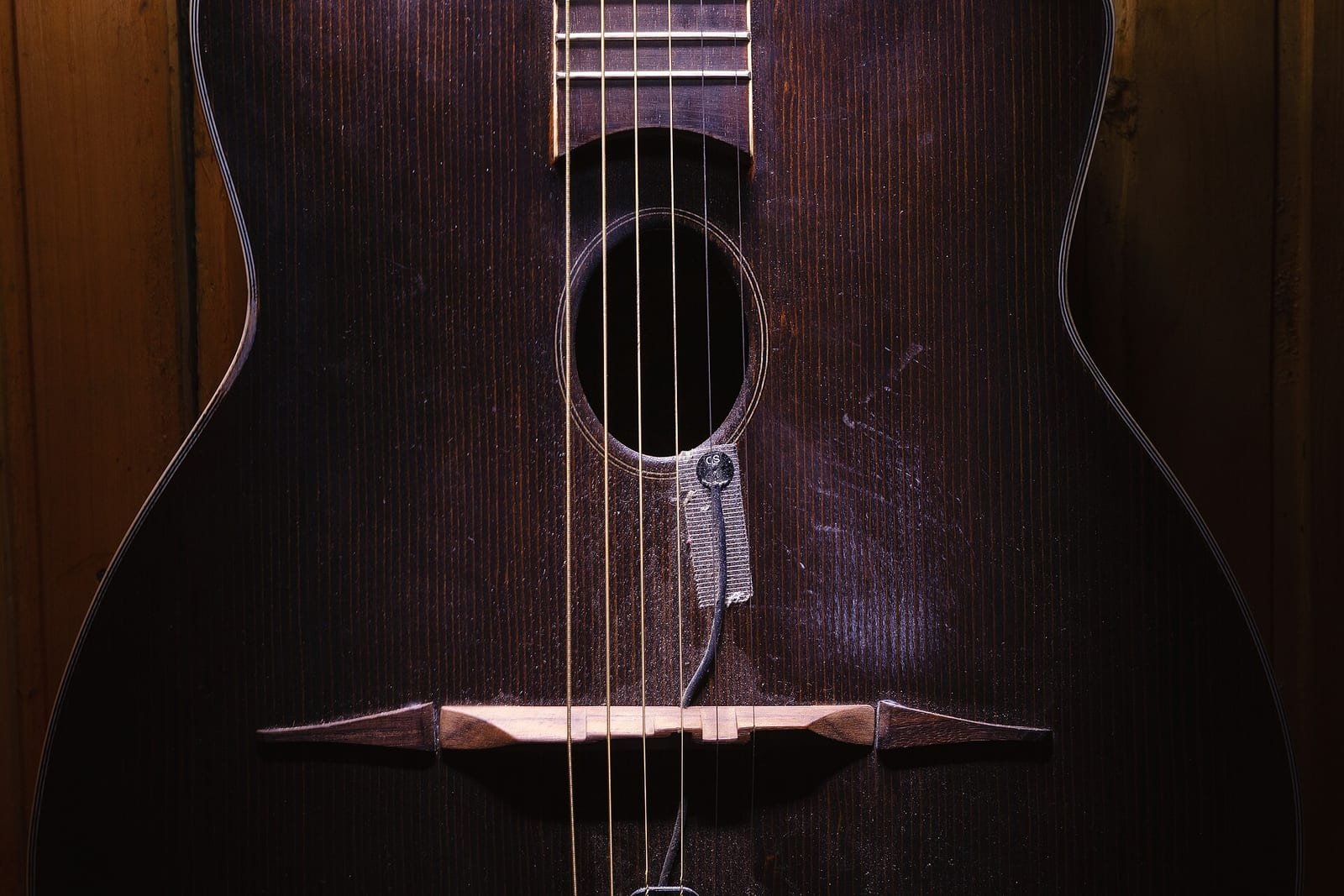
Django Reinhardt Gives Jazz a Different Guitar Voice
A Romani musician’s playing and collaborations helped create a distinctive European jazz sound.
In 1934, a small ensemble in Paris offered a strikingly different sound from the brass sections and piano-led groups associated with jazz. The Quintette du Hot Club de France put Django Reinhardt’s guitar beside Stéphane Grappelli’s violin, supported by two rhythm guitars and a double bass. Its string-only format gave Reinhardt space to turn the guitar into a commanding solo voice. The group did not simply imitate an American model: it developed a recognizable language within a music already moving across the Atlantic through records, visiting performers and clubs.
Reinhardt was born in Belgium in 1910 into a Manouche Romani family and spent much of his childhood around Paris. His early musical education came from relatives, other performers and the practical work of playing for audiences. Before his jazz career, he played banjo-guitar alongside accordionists in the world of Parisian popular dance music. That experience gave him rhythmic assurance and familiarity with the demands of making an acoustic instrument heard in a busy room. He was earning money as a performer while still a teenager.

Keep reading in Yester
Coming soon to the App Store
Keep following the story
Sources
Image: Dejan Krsmanovic