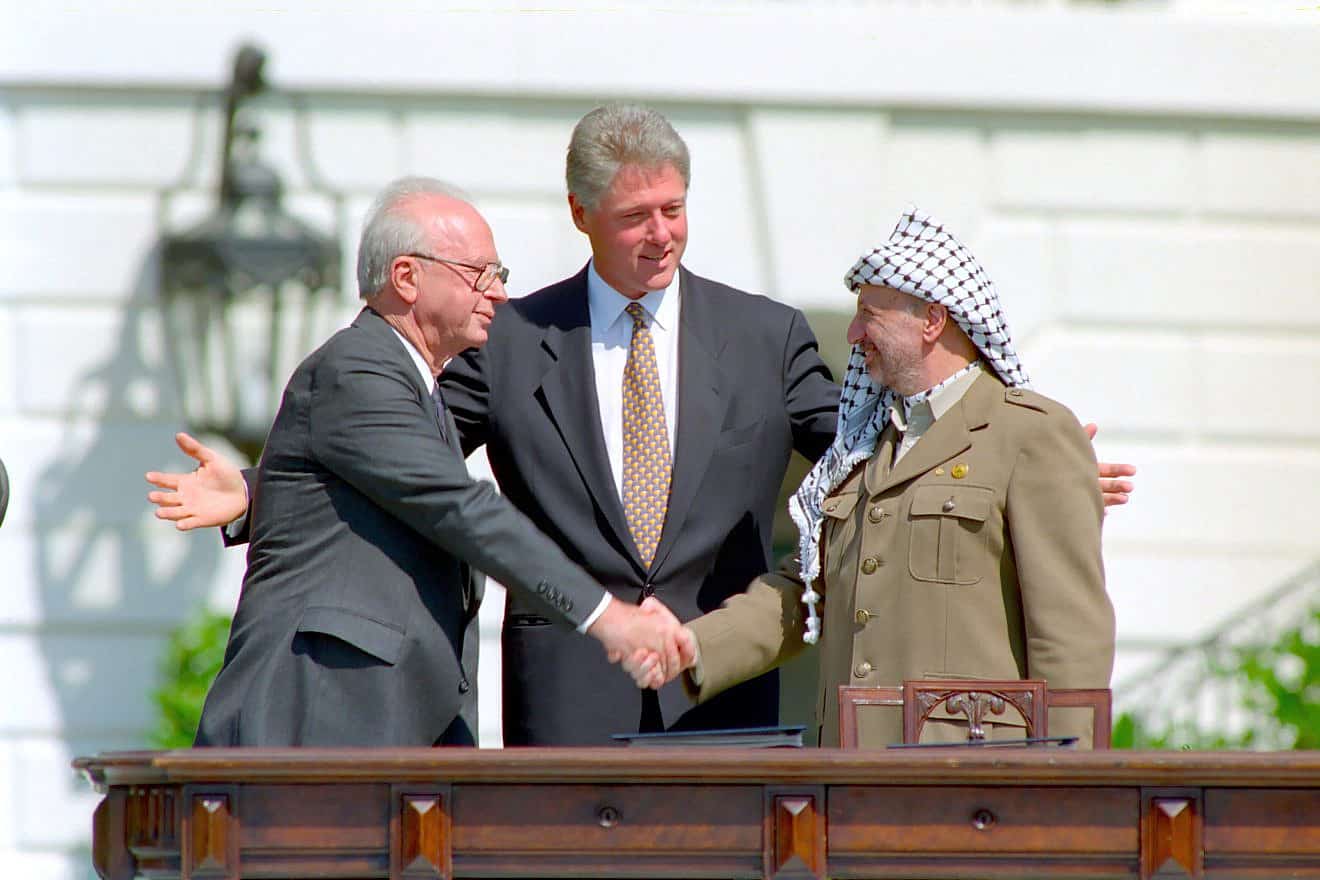
The Handshake That Promised Peace
Secret negotiations produced mutual recognition between Israel and the Palestine Liberation Organization along with a staged framework for interim Palestinian self-rule. While celebrated on the world stage, the diplomatic accord left the most contentious territorial and political questions unresolved.
In 1993, Israeli and Palestinian representatives opened a secret negotiating channel in Norway. Engaging in direct talks challenged entrenched political positions on both sides. A breakthrough emerged only because both delegations agreed to focus on an interim arrangement while postponing the most difficult disputes concerning a permanent settlement.
In September 1993, the parties took the decisive step of extending formal mutual recognition. Israel recognized the Palestine Liberation Organization as the legitimate representative of the Palestinian people, and the PLO renounced terrorism while recognizing Israel's right to exist in peace and security. Although these commitments transformed their diplomatic relationship, they did not erase the conflict or its unequal realities.

Keep reading in Yester
Coming soon to the App Store
Keep following the story
Sources
Image: Vince Musi / The White House