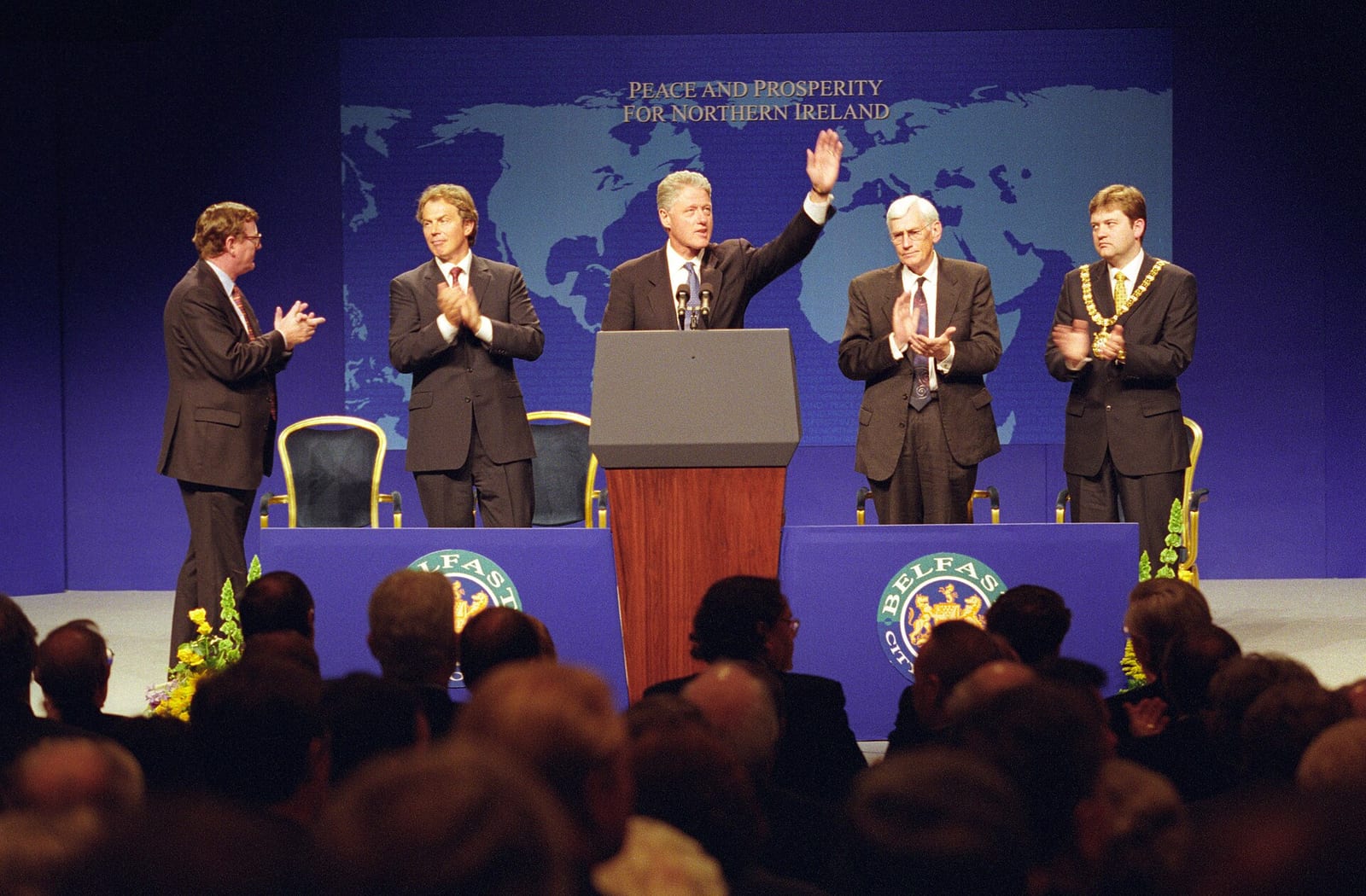
The Good Friday Agreement
After decades of devastating conflict in Northern Ireland, negotiators established a framework based on consent, power-sharing, and rights. Both Northern Ireland and Ireland subsequently approved the compromise at the ballot box, turning away from violence toward institutional politics.
Decades of conflict had devastated Northern Ireland, leaving communities divided by differing constitutional goals and contrasting experiences of violence. Unionists and nationalists held fundamentally incompatible aspirations, meaning any workable settlement could not depend on communities abandoning their identities or adopting a shared view of history.
In April 1998, negotiations chaired by George Mitchell brought together the British and Irish governments alongside political parties from Northern Ireland. The participants sought to construct durable institutions that could withstand deep mutual distrust rather than simply issuing another temporary ceasefire.

Keep reading in Yester
Coming soon to the App Store
Keep following the story
Sources
Image: President (1993-2001 : Clinton). White House Photograph Office. 1/20/1993-1/20/2001