The Cuyahoga River Catches Fire
Oil-soaked debris burned on a polluted river and fed a national outcry.
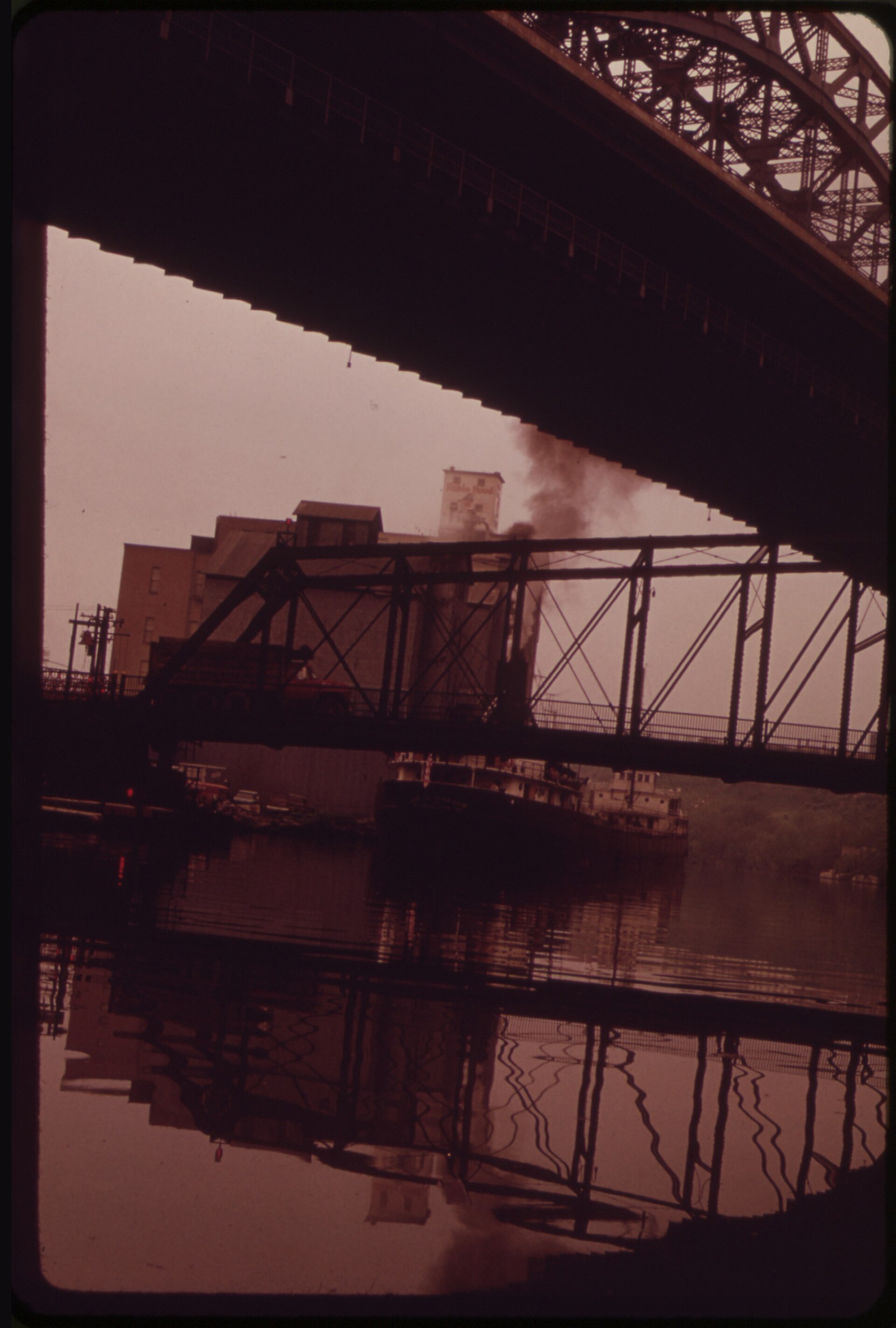
On June 22, 1969, an oil slick and floating industrial debris caught fire on the Cuyahoga River in Cleveland, Ohio. The blaze was ignited by sparks from a passing rail car and caused approximately $50,000 in damage, primarily to an adjacent railroad trestle. At the time, industrial flammability was not a novel hazard for the waterway. As Cleveland grew into a major manufacturing center, heavy industrial discharges had previously caused the river to catch fire at least a dozen times since 1868. The most destructive incident, occurring in 1952, had inflicted more than $1 million in damage on riverfront buildings, boats, and bridges.
Accounts compiled by Case Western Reserve University's Encyclopedia of Cleveland History give more detail. The fire started around midday, with witnesses reporting flames as high as five stories, and it burned on accumulated oily wastes and debris beneath two wooden railroad trestles at the foot of Campbell Road hill. A fireboat fought the flames on the water while units from three fire battalions brought the blaze on the trestles under control. The Norfolk and Western Railway bridge suffered about $45,000 in damage and was closed to rail traffic, while the Newburgh and South Shore Railroad trestle sustained about $5,000 in damage and remained open.

Keep reading in Yester
Coming soon to the App Store
Keep following the story
Sources
- Cuyahoga River Fire (Encyclopedia of Cleveland History, Case Western Reserve University)
- The Cuyahoga River Caught Fire at Least a Dozen Times, but No One Cared Until 1969 (Smithsonian Magazine)
- The Burning River (EarthDate, Bureau of Economic Geology, University of Texas at Austin)
- Civil Engineering Almanac: The 1969 Cuyahoga River fire (American Society of Civil Engineers)
- Cuyahoga River
Image: Frank John Aleksandrowicz