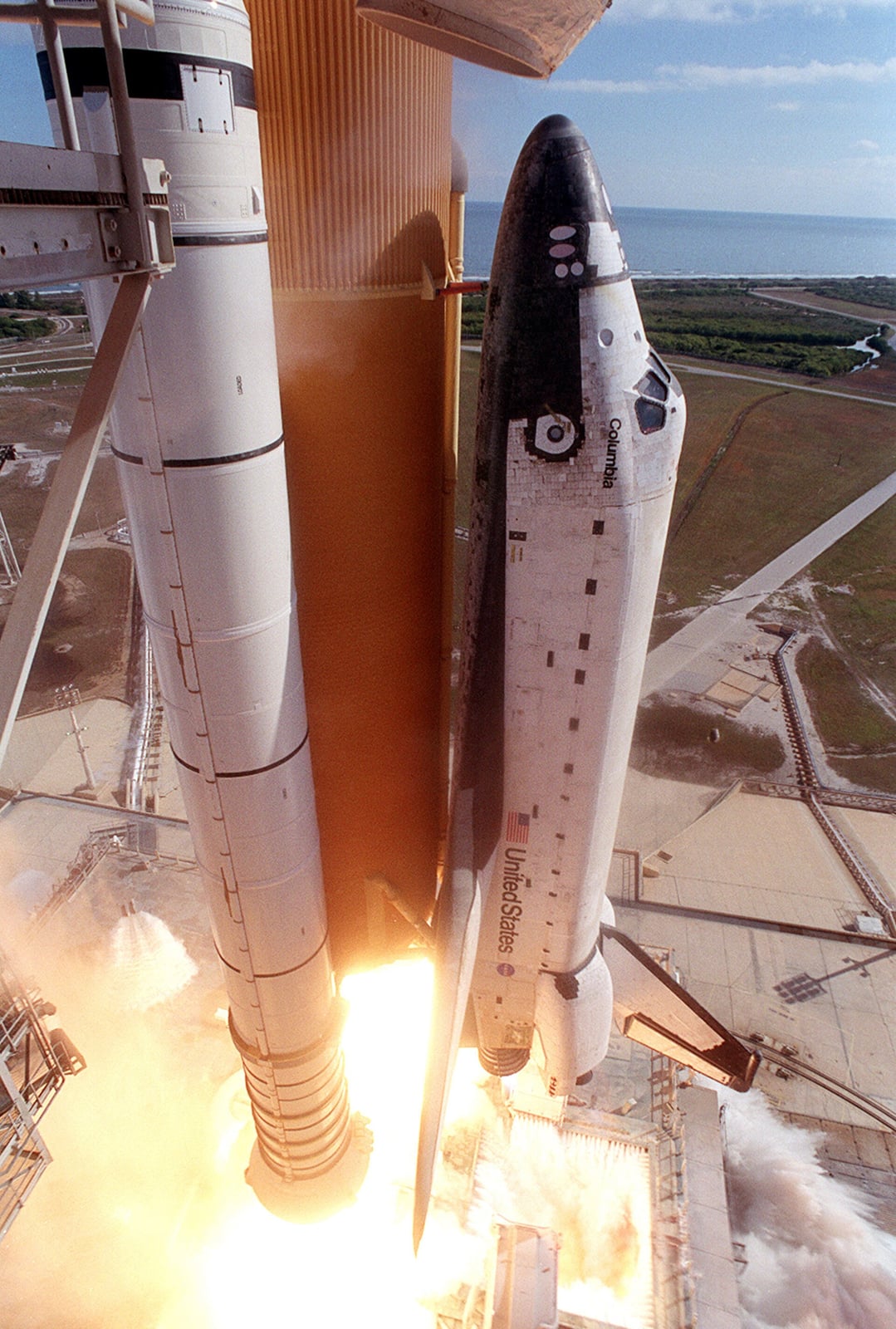
Columbia Breaks Apart on Its Return to Earth
Damage from a piece of foam during launch destroyed the shuttle and its crew of seven.
On February 1, 2003, Space Shuttle Columbia broke apart during atmospheric re-entry over Texas and Louisiana, resulting in the deaths of all seven astronauts on board. The mission, designated STS-107, was the twenty-eighth voyage of the vehicle and the one hundred thirteenth flight conducted under the Space Shuttle program. Having spent sixteen days in orbit primarily conducting scientific experiments inside an onboard research module, the crew commenced their descent toward the Kennedy Space Center before structural failure destroyed the craft minutes prior to its scheduled touchdown.
The physical origin of the catastrophe occurred 81.7 seconds after launch on January 16, 2003. A section of insulating foam detached from the external fuel tank bipod ramp and struck the reinforced carbon-carbon panels shielding the orbiter's left wing. The external tank held super-cold liquid hydrogen and liquid oxygen, requiring insulating foam to maintain low temperatures and prevent ice accumulation. Because the lightweight foam slowed rapidly in the airflow, the accelerating orbiter struck it at a relative speed of more than 500 miles per hour.

Keep reading in Yester
Coming soon to the App Store
Keep following the story
Sources
Image: NASA