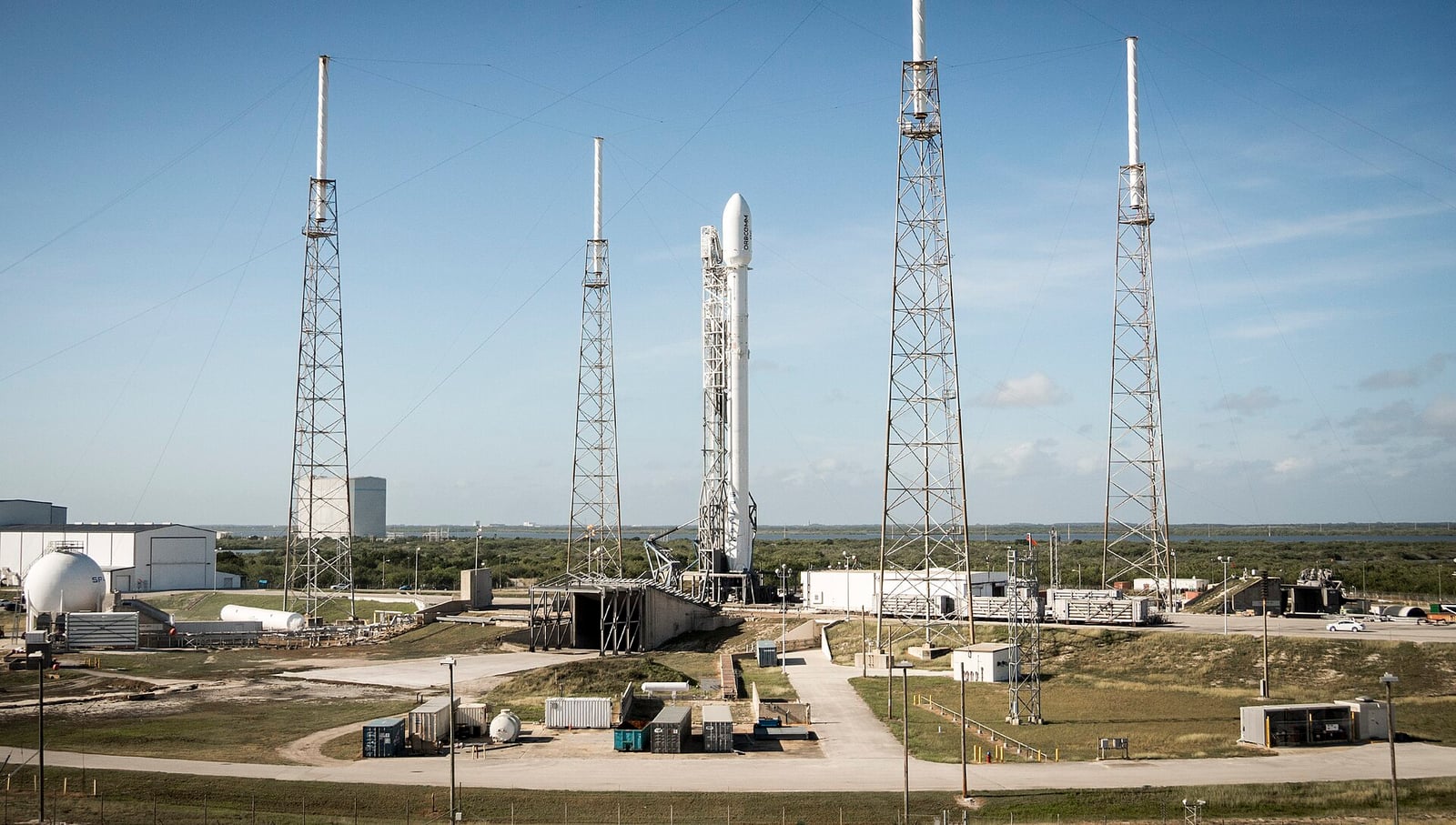
A Falcon 9 Booster Lands Upright After Reaching Space
A rocket stage flew back to its launch site, opening the way to reusable launchers.
On 21 December 2015, at 8:29 pm local time, a Falcon 9 rocket lifted off from Cape Canaveral on a mission to deploy eleven commercial satellites into Earth orbit. Designated as Falcon 9 Flight 20, the operation marked the maiden flight of the Falcon 9 Full Thrust variant. This updated design featured higher-thrust Merlin engines, a lengthened upper stage with extended tanks, a new stage separation system, and densified propellants chilled below conventional launch temperatures. The flight was also the company's first launch following the loss of a Falcon 9 and its Dragon cargo ship during ascent in June 2015.
The payload consisted of eleven second-generation satellites built by Sierra Nevada Corporation for Orbcomm, a company that relays messages, tracks shipments and monitors maritime traffic through a network of satellites in low Earth orbit. The flight was Orbcomm's second launch of these OG2 spacecraft, following six that reached orbit in July 2014. The mission also gave SpaceX an opportunity to test the restart capability of its modified upper stage engine in orbit.

Keep reading in Yester
Coming soon to the App Store
Keep following the story
Sources
- Round-trip rocket flight gives SpaceX a trifecta of successes (Spaceflight Now)
- Recovered Falcon 9 booster fires again at Cape Canaveral (Spaceflight Now)
- SpaceX puts historic flown rocket on permanent display (Spaceflight Now)
- Sierra Nevada Corporation Completes Initial On-Orbit Checkout of Eleven Satellites Built for ORBCOMM (Sierra Nevada Corporation)
- 45th SW launches ORBCOMM, lands first stage booster (Air Force News Service, via GlobalSecurity.org)
- Falcon 9 flight 20
Image: SpaceX Photos