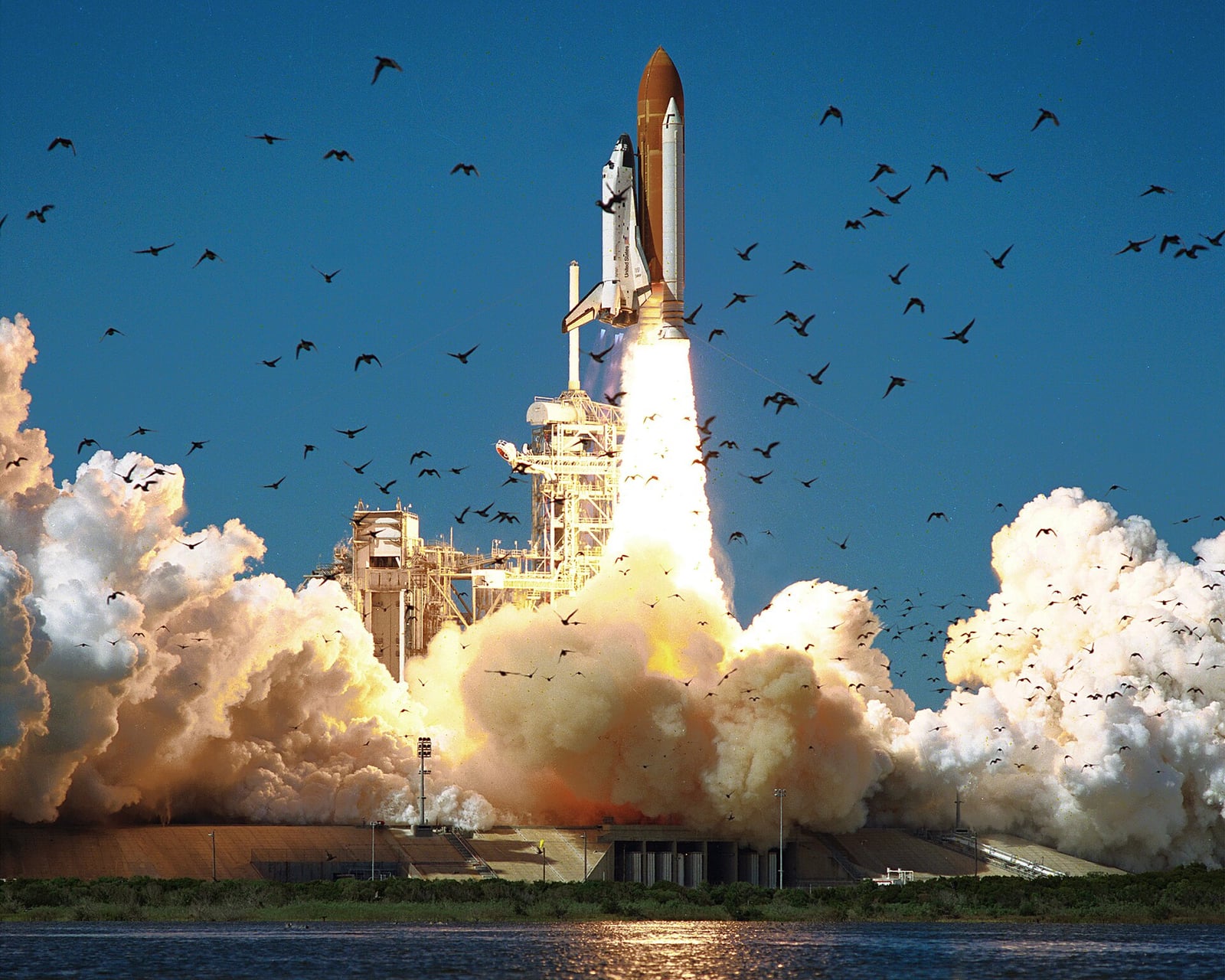
Challenger Breaks Apart After Launch
Seven astronauts died when the shuttle broke apart 73 seconds into flight.
On January 28, 1986, the Space Shuttle Challenger disintegrated seventy-three seconds after launching from the Kennedy Space Center in Florida. The disaster claimed the lives of all seven crew members: commander Dick Scobee, pilot Michael Smith, mission specialists Ronald McNair, Ellison Onizuka, and Judith Resnik, and payload specialists Gregory Jarvis and Christa McAuliffe. Because McAuliffe was slated to become the first participant in the Teacher in Space Project, the launch received immense public attention and was broadcast live to classrooms across the United States.
The physical failure originated in the aft field joint of the right Solid Rocket Booster, which was manufactured by Morton Thiokol. The joint relied on two rubber O-rings designed to retain high-pressure, hot combustion gases during the booster burn. Unusually low temperatures at Cape Canaveral on the morning of the launch stiffened the rubber seals, severely impairing their elasticity. When the booster ignited, cold prevented the primary and secondary O-rings from seating properly. Hot propellant gases escaped through the seam, eventually eroding an attachment strut and breaching the shuttle stack external propellant tank.

Keep reading in Yester
Coming soon to the App Store
Keep following the story
Sources
- Report of the Presidential Commission on the Space Shuttle Challenger Accident, Chapter III: The Accident (NASA History Office)
- Report of the Presidential Commission, Chapter V: The Contributing Cause of the Accident (NASA History Office)
- Report of the Presidential Commission, Chapter VI: An Accident Rooted in History (NASA History Office)
- Challenger STS-51L Accident (NASA)
- Kerwin letter on the cause of death of the Challenger crew (NASA History Office)
- STS-26 (NASA)
- Space Shuttle Challenger disaster
Image: NASA