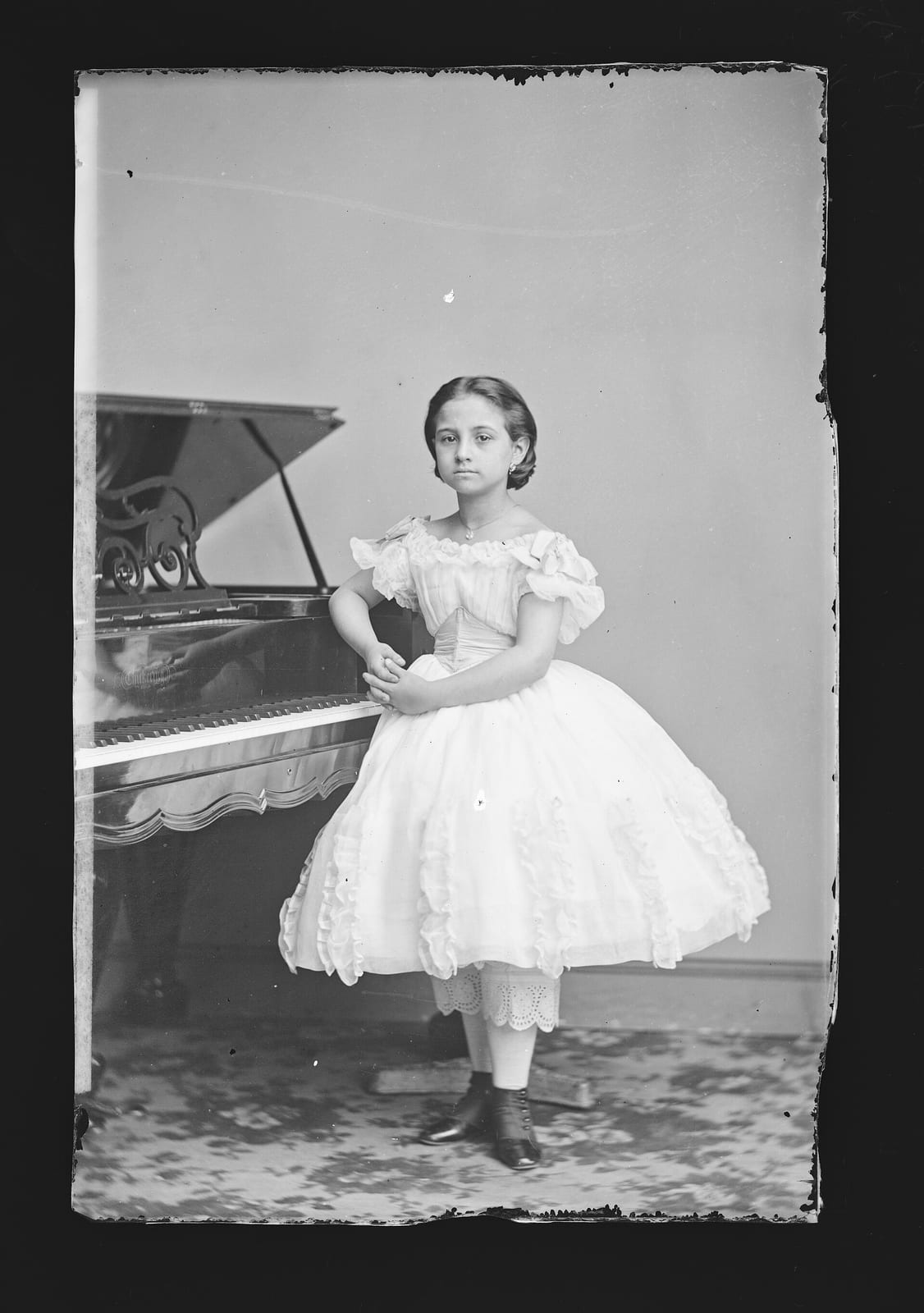
Teresa Carreño Begins a Concert Career That Crosses Borders
A Venezuelan child pianist made an early impression in New York. The career that followed required sustained musicianship, mobility and professional independence, not just the novelty of being young.
Born into a musical Caracas family in 1853, Teresa Carreño received initial musical training from her father, Manuel Antonio Carreño, and a German teacher, Julio Hohene. In 1862, her family emigrated to the United States amid shifting political circumstances in Venezuela. Settling in New York City, the eight-year-old pianist quickly gained the attention of American composer and virtuoso Louis Moreau Gottschalk, who took an active interest in promoting her talents to broader audiences.
Carreño made her formal public debut at New York's Irving Hall on November 25, 1862. Her demanding program featured Johann Nepomuk Hummel's Rondo Brillant accompanied by a quintet, as well as works by Sigismond Thalberg, Theodor Döhler, and Gottschalk. The performance launched a rigorous concert schedule across the northeastern and mid-Atlantic states, extending to Cuba and including an 1863 White House appearance before President Abraham Lincoln. Clara Schumann offers an earlier parallel: a childhood reputation could open doors, but sustaining a career required mature artistry and professional independence.

Keep reading in Yester
Coming soon to the App Store
Keep following the story
Sources
Image: Mathew Brady Studio (attributed)