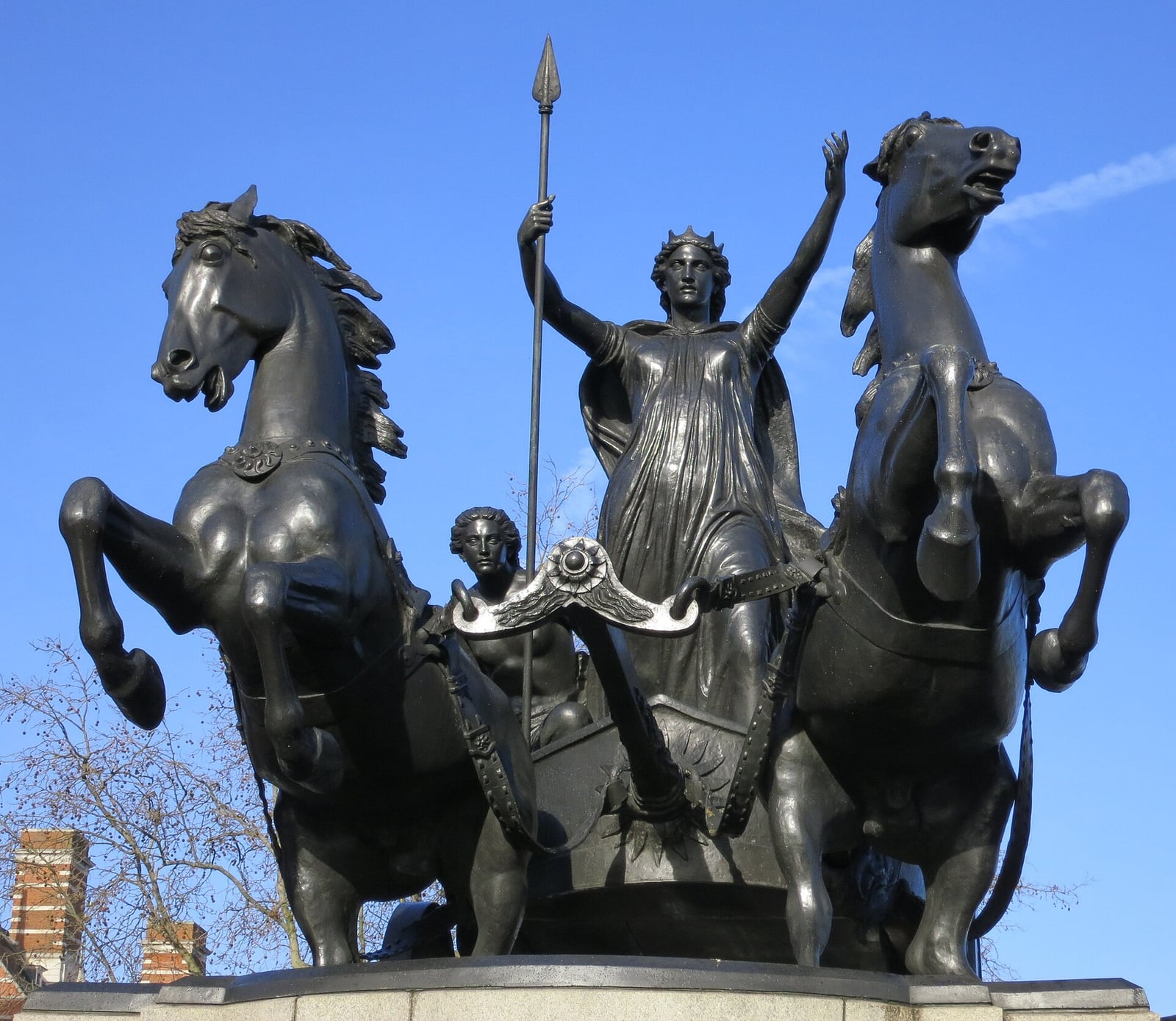
Boudica Leads the Iceni Against Roman Britain
The queen’s army burned Camulodunum, Londinium and Verulamium before its defeat.
In either AD 60 or 61, the Iceni tribe of eastern Britain rose in sudden rebellion against imperial Roman authority. For years, their king Prasutagus had ruled as a nominally independent client ally of Rome in the region encompassing modern Norfolk and adjacent areas. Hoping to safeguard his household and preserve stability, Prasutagus drafted a will dividing his estate jointly between his two daughters and the Roman emperor Nero. Upon the king's death, imperial administrators set the arrangement aside, formally annexing Iceni lands directly into the Roman provincial administration and seizing royal assets through procurator Catus Decianus.
The harsh enforcement of direct rule triggered outrage among the indigenous population. The Roman historian Tacitus, whose father-in-law Agricola witnessed the campaign as a military tribune, recorded that the Roman authorities subjected the royal household to plunder, had Queen Boudica flogged, and subjected her daughters to rape. Writing much later, the historian Cassius Dio cited financial grievances instead of personal physical abuses, noting that previous grants made under Emperor Claudius were suddenly confiscated and that loans pressed upon reluctant Britons by the Roman philosopher Seneca were abruptly called in. Compounded by local grievances over the lavish temple to Claudius built in Camulodunum, the Iceni forged an alliance with the neighboring Trinovantes.

Keep reading in Yester
Coming soon to the App Store
Keep following the story
Sources
Image: Paul Walter