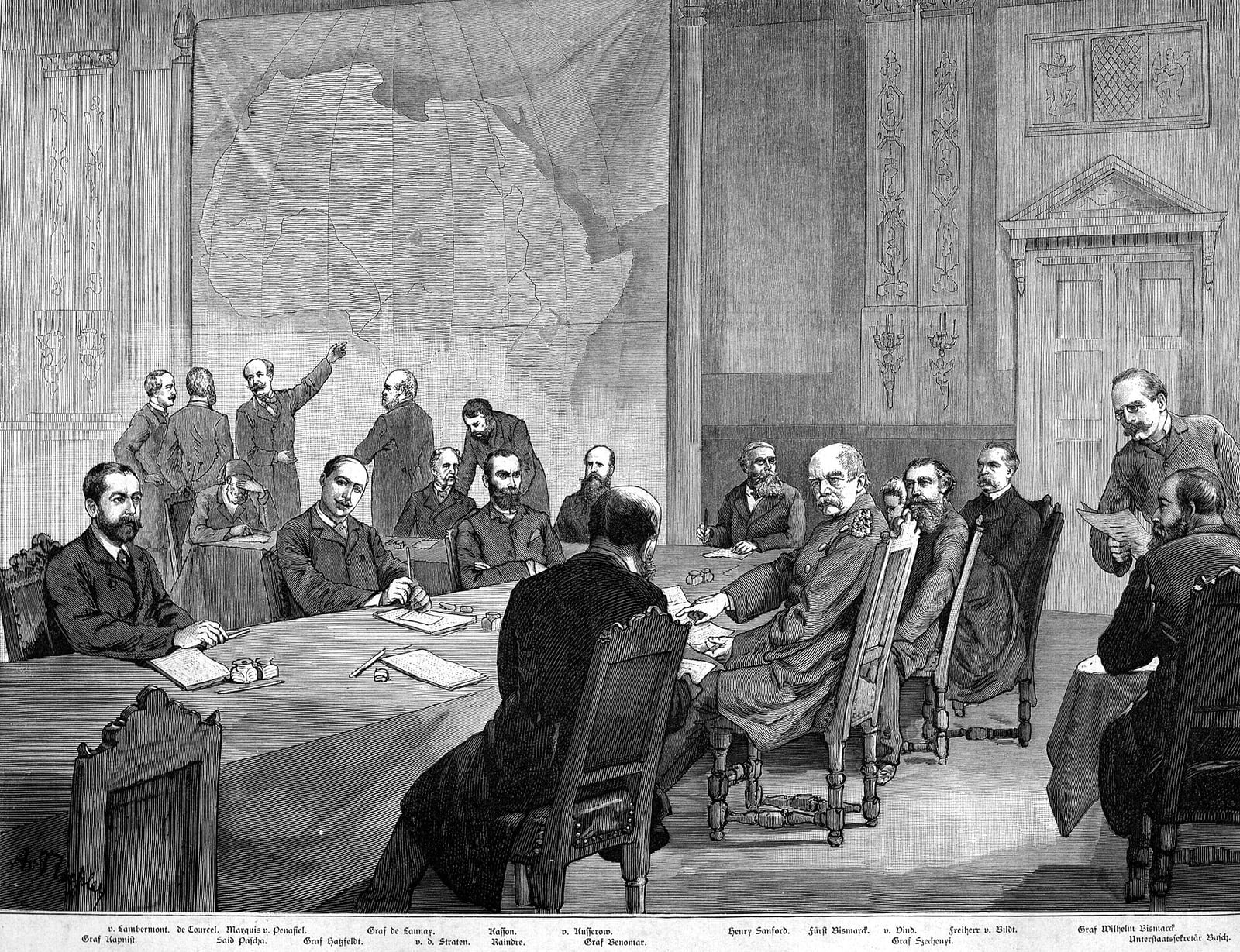
European Powers Meet in Berlin to Set Rules for Claiming Africa
No African ruler was invited to a conference that accelerated colonial partition.
On 15 November 1884, diplomats representing fourteen states, including the United States and the Ottoman Empire, convened at Wilhelmstrasse in Berlin to establish ground rules for trade and territorial claims across the African continent. Hosted by German Chancellor Otto von Bismarck, the gathering sought to avert military conflict among European states competing for commercial dominance. Expanding industrialisation in Europe had accelerated the pursuit of raw materials like ivory, rubber, minerals, and cotton, while home factories required new markets for manufactured goods. In response, rival governments rushed to establish strategic claims before competitors could monopolise key waterways and trade corridors.
No African rulers were invited to participate in the negotiations. The Sultan of Zanzibar sought an invitation, but his efforts were dismissed by the British. Unconcerned with indigenous self-governance, the assembled foreign delegates negotiated continental policies entirely among themselves. The United States took part in the talks but, alone among the participants, never ratified the resulting agreement.

Keep reading in Yester
Coming soon to the App Store
Keep following the story
Sources
Image: Adalbert von Roessler