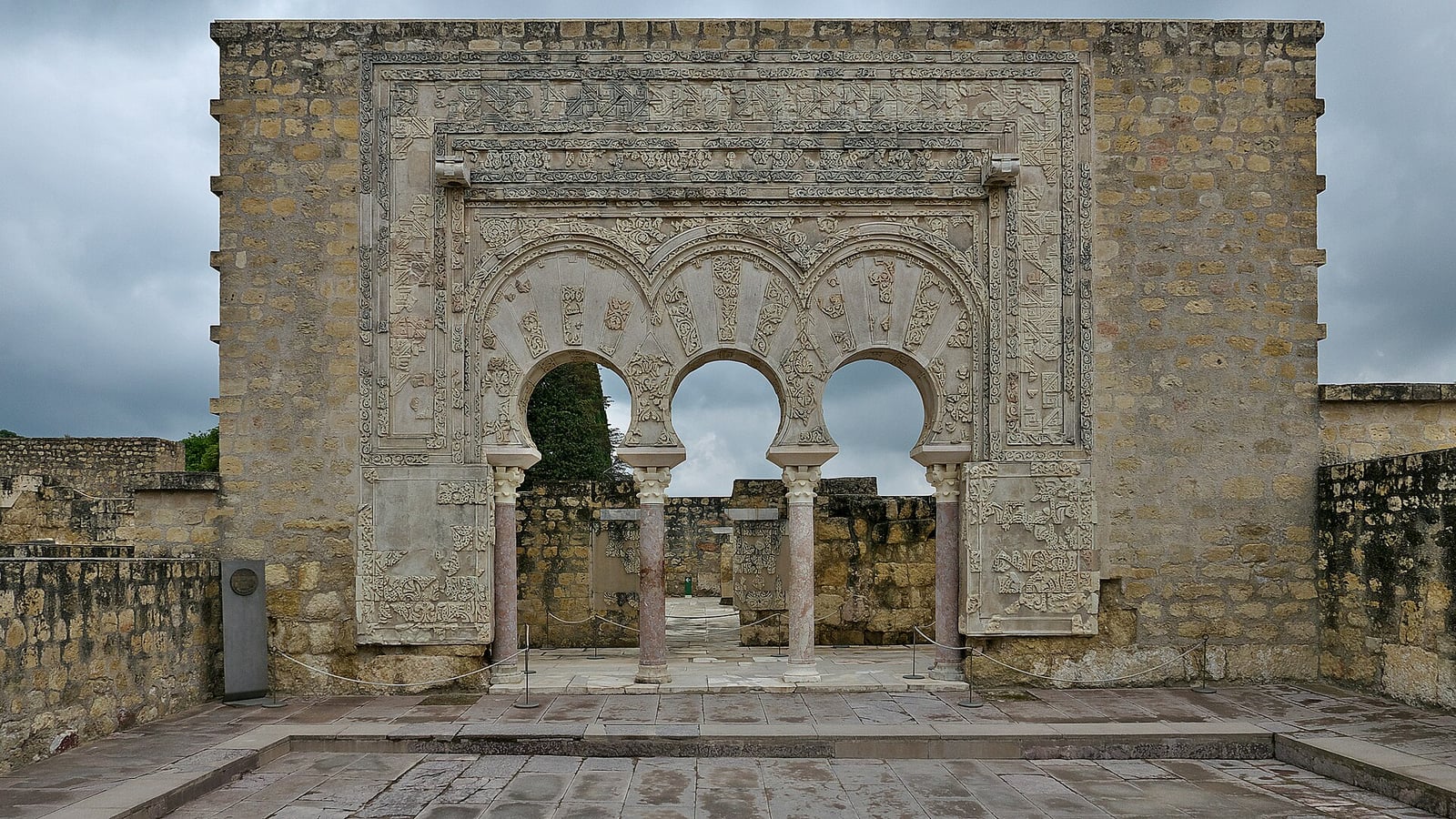
The Caliph of Córdoba Builds Madinat al-Zahra
A palace city displayed the power of the Andalusian caliphate.
In the tenth century, the Umayyad ruler Abd ar-Rahman III initiated the construction of a vast fortified palace-city on the western outskirts of Córdoba. After spending years subduing regional rebellions, he had formally claimed the supreme title of caliph in 929, challenging both the Abbasids in Baghdad and the expanding Fatimids in North Africa. Establishing a ceremonial capital served to express the dignity and authority of his elevated status, imitating the monumental foundations created by eastern caliphal dynasties.
Foundational work for the settlement, known as Madinat al-Zahra, began around 936, with major building underway by 940. Crown Prince Al-Hakam oversaw much of the development, and the later chronicler al-Maqqari identified Maslama ibn Abdallah as architect, though his precise responsibilities remain uncertain. The congregational mosque was completed in the 940s, and by 947 core functions of government, including the state mint, had transferred westward from Córdoba, even as extensive construction continued across subsequent decades.

Keep reading in Yester
Coming soon to the App Store
Keep following the story
Sources
- Caliphate City of Medina Azahara (UNESCO World Heritage Centre)
- The Plaza de Armas of Madinat al-Zahra (Cordoba, Spain), 2019-2020 (Max van Berchem Foundation / German Archaeological Institute project report)
- Architecture capital, Madinat al-Zahra, 936-976 (Victoria and Albert Museum)
- Pedro de Madrazo (1816-1898) y Medina Azahara (Atrio, Universidad Pablo de Olavide)
- Madinat al-Zahra
Image: José Luis Filpo Cabana