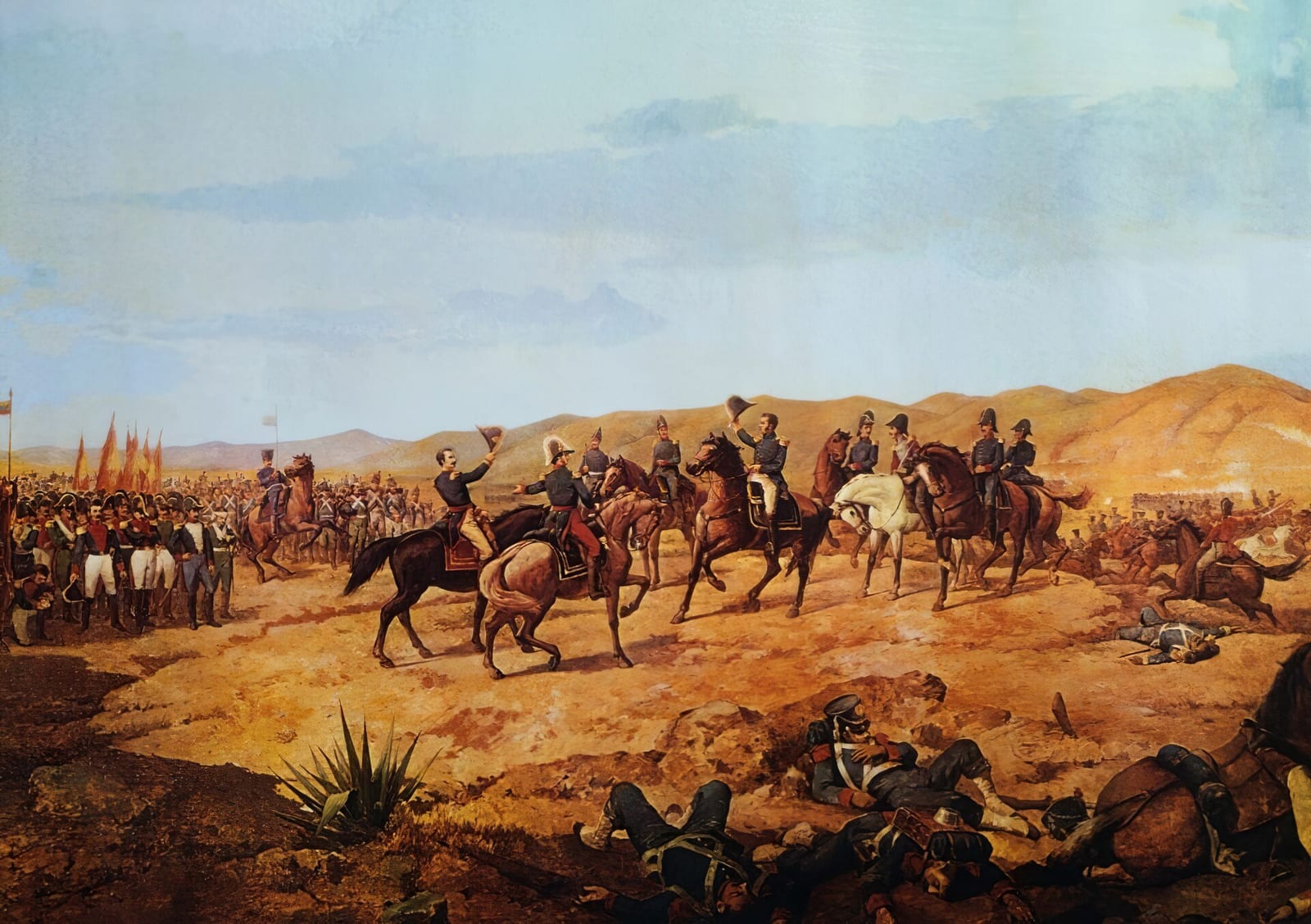
Ayacucho Breaks Spain’s Main Army in South America
An allied army under Antonio José de Sucre won a decisive battle in the Peruvian highlands. The victory ended one struggle without resolving every question independence raised.
On December 9, 1824, armies met near Quinua in the Peruvian highlands. The force commanded by Antonio José de Sucre defeated the main royalist army and captured its senior leadership, including the viceroy José de la Serna. The resulting capitulation made Ayacucho a decisive moment in the collapse of Spanish power in mainland South America. It was not the first declaration of independence, and it did not end every remaining fight. Its importance lay in removing the military structure that could still reverse much of what had been declared.
The victorious army was a coalition rather than a simple expression of one modern nation. Soldiers came from different parts of Spanish America and brought varied experiences of the long wars. The royalist side also included many people born in the Americas. Describing the battle as Europeans against a united continent therefore creates a misleading picture. Political loyalties, local pressures, military recruitment and personal circumstances divided communities in ways that later national commemorations often smooth into a clearer story.

Keep reading in Yester
Coming soon to the App Store
Keep following the story
Sources
- Battlefield of Ayacucho, Tentative List submitted by Peru's Ministry of Culture (UNESCO World Heritage Centre)
- Guardianes de la memoria: el Archivo General de la Nación y los 200 años de la Independencia del Perú (Archivo General de la Nación, gob.pe)
- Batalla de Ayacucho: 200 años de la victoria que selló la independencia de América Latina (Andina, Agencia Peruana de Noticias)
- Battle and capitulation
- Independence war context
Image: Martín Tovar y Tovar