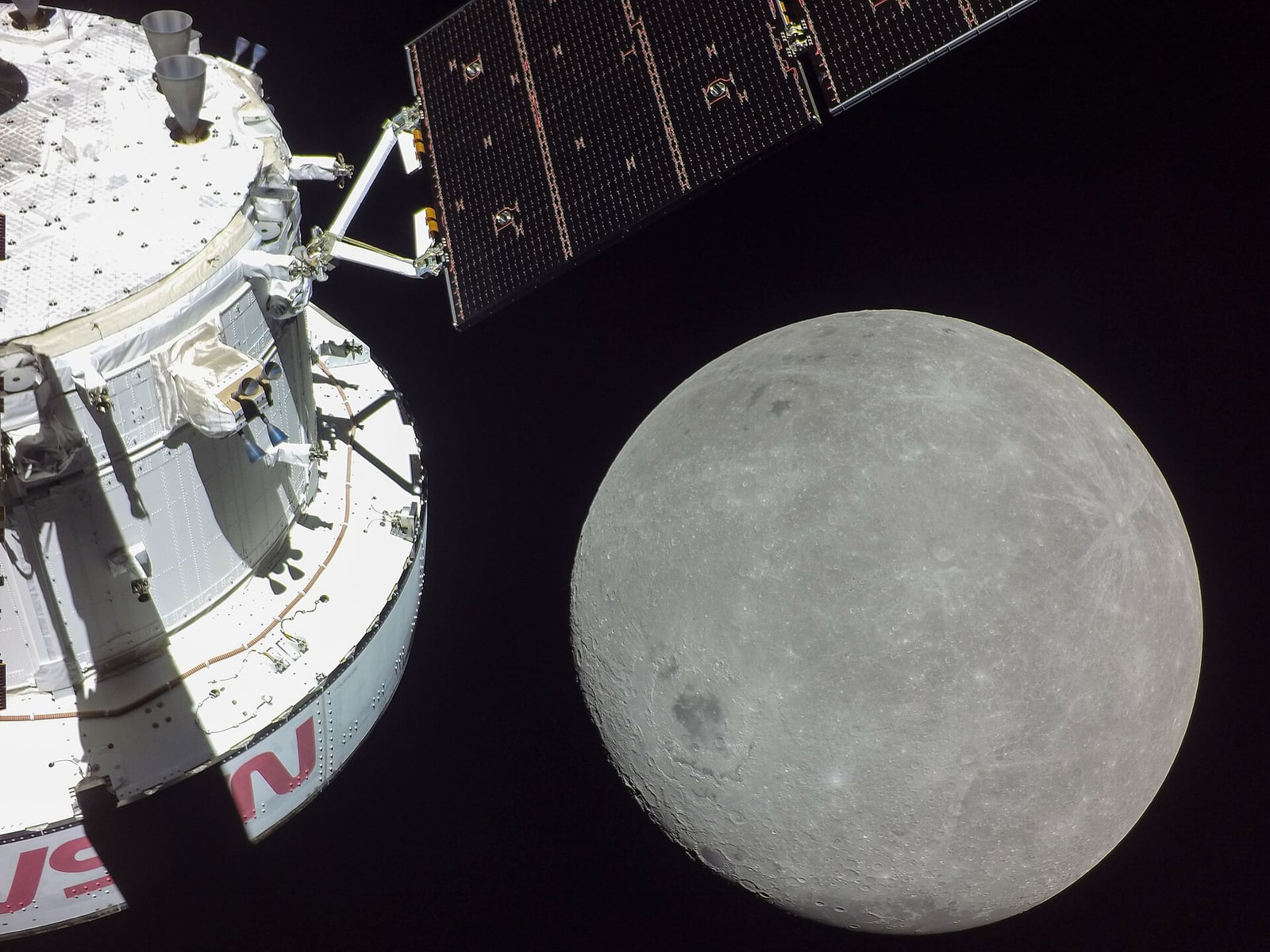
Artemis I Sends an Uncrewed Orion Around the Moon
NASA’s new Moon rocket flew for the first time, half a century after Apollo.
On November 16, 2022, the Space Launch System lifted off from Launch Complex 39B at the Kennedy Space Center, sending an uncrewed Orion spacecraft into space. Designated Artemis I, the flight served as the opening integrated test of NASA's heavy-lift rocket and deep-space crew capsule, half a century after the Apollo program completed its final lunar journeys. The primary goal of the uncrewed mission was to evaluate the spacecraft's systems, particularly its structural durability and thermal protection, before entrusting human crews to future flights aimed at returning astronauts to the Moon.
The Space Launch System is a super heavy-lift rocket that pairs solid rocket boosters derived from the Space Shuttle with liquid-fueled engines attached to a new central core stage. The rocket and spacecraft were stacked inside the Vehicle Assembly Building at Kennedy Space Center before rolling out to the pad. The flight plan called for Orion to travel about 64,000 kilometers beyond the Moon and return over roughly 25.5 days, and over the course of the mission the spacecraft completed 161 test objectives, including 20 added during flight.

Keep reading in Yester
Coming soon to the App Store
Keep following the story

Sources
- Orion capsule enters distant retrograde orbit, breaks Apollo distance record (Spaceflight Now)
- Artemis I: flight day ten - distant retrograde orbit (ESA Orion blog)
- Artemis I - Flight Day Eight (NASA blog)
- Artemis I (NASA)
- Liftoff! NASA's Artemis I Mega Rocket Launches Orion to Moon (NASA)
- NASA Identifies Cause of Artemis I Orion Heat Shield Char Loss (NASA)
- NASA's Orion Capsule Splashes Down, Completing the First Artemis Moon Mission (NBC 7 San Diego / CNBC)
- Artemis I
Image: NASA