The Tunisian Revolution Begins the Arab Spring
Protests that toppled a president spread across North Africa and the Middle East.
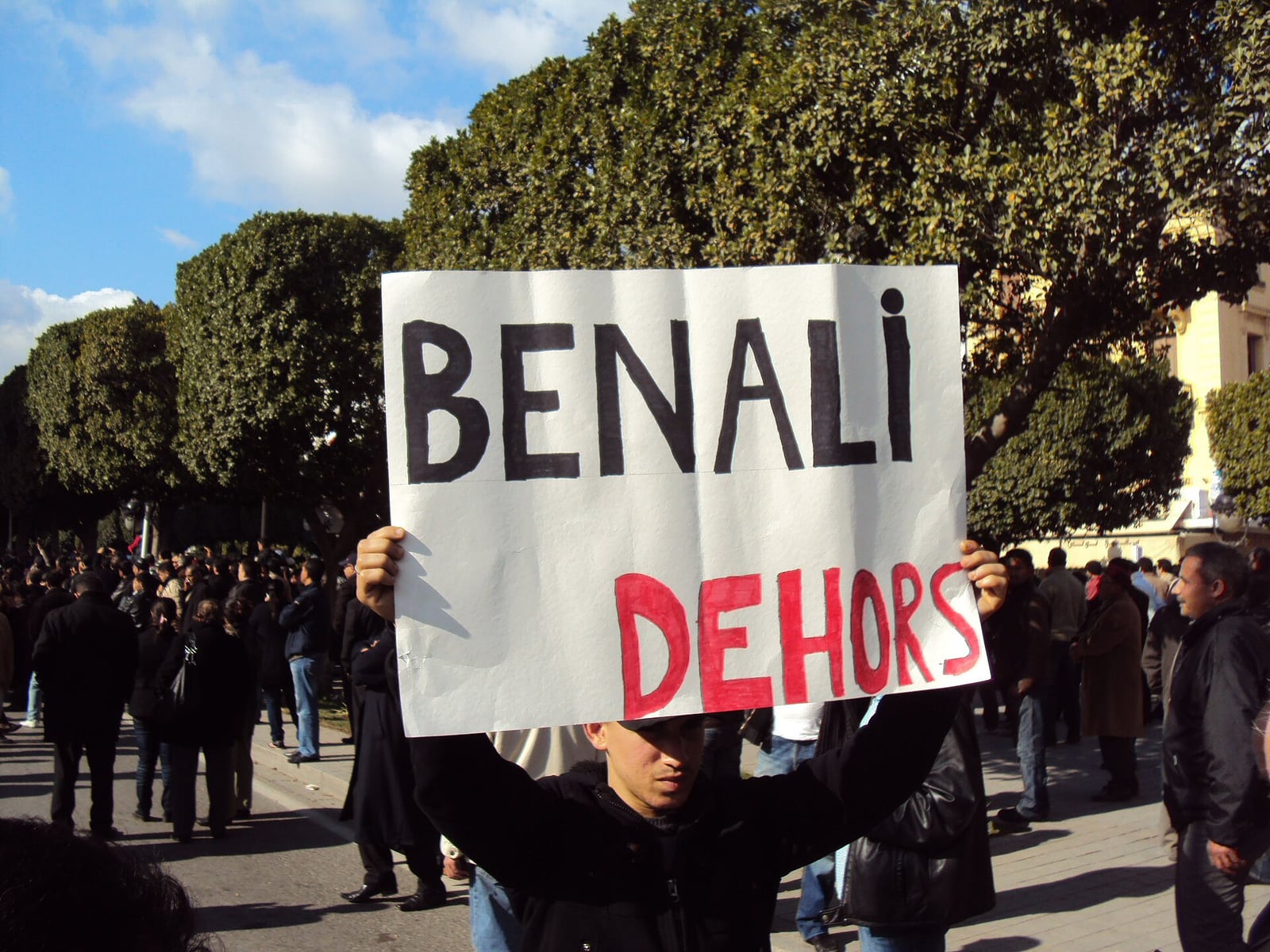
On 17 December 2010, municipal officials in the central Tunisian town of Sidi Bouzid seized the goods and cart of twenty-six-year-old vendor Mohamed Bouazizi. Unable to retrieve his confiscated produce or secure a hearing at the provincial administration, Bouazizi set himself on fire outside the local government headquarters that same day. The act triggered immediate unrest in Sidi Bouzid, where police responded with tear gas and arrests against demonstrators protesting his treatment. Bouazizi died from his injuries in a hospital near Tunis on 4 January 2011, having become a focal symbol for widespread public outrage.
The demonstrations were fueled by long-standing systemic grievances, including severe youth unemployment, food inflation, pervasive corruption, and an absence of basic civil liberties. Under President Zine El Abidine Ben Ali, who had governed the country since 1987 largely through the dominant Democratic Constitutional Rally party, public dissent had been systematically suppressed. Discontent was further amplified by economic marginalisation in the interior regions of the country and leaked US diplomatic cables, released by WikiLeaks in December 2010, describing corruption in the country.

Keep reading in Yester
Coming soon to the App Store
Keep following the story

Sources
- Tunisian protester dies of burns (Al Jazeera)
- Timeline: Tunisia's uprising (Al Jazeera)
- Timeline: Tunisian elections (Al Jazeera)
- Report: 338 killed during Tunisia revolution (Ahram Online / AP)
- Time for Security Reform in Tunisia (Amnesty International)
- The Nobel Peace Prize 2015, Press release (NobelPrize.org)
- Tunisian revolution
Image: Skotch 79