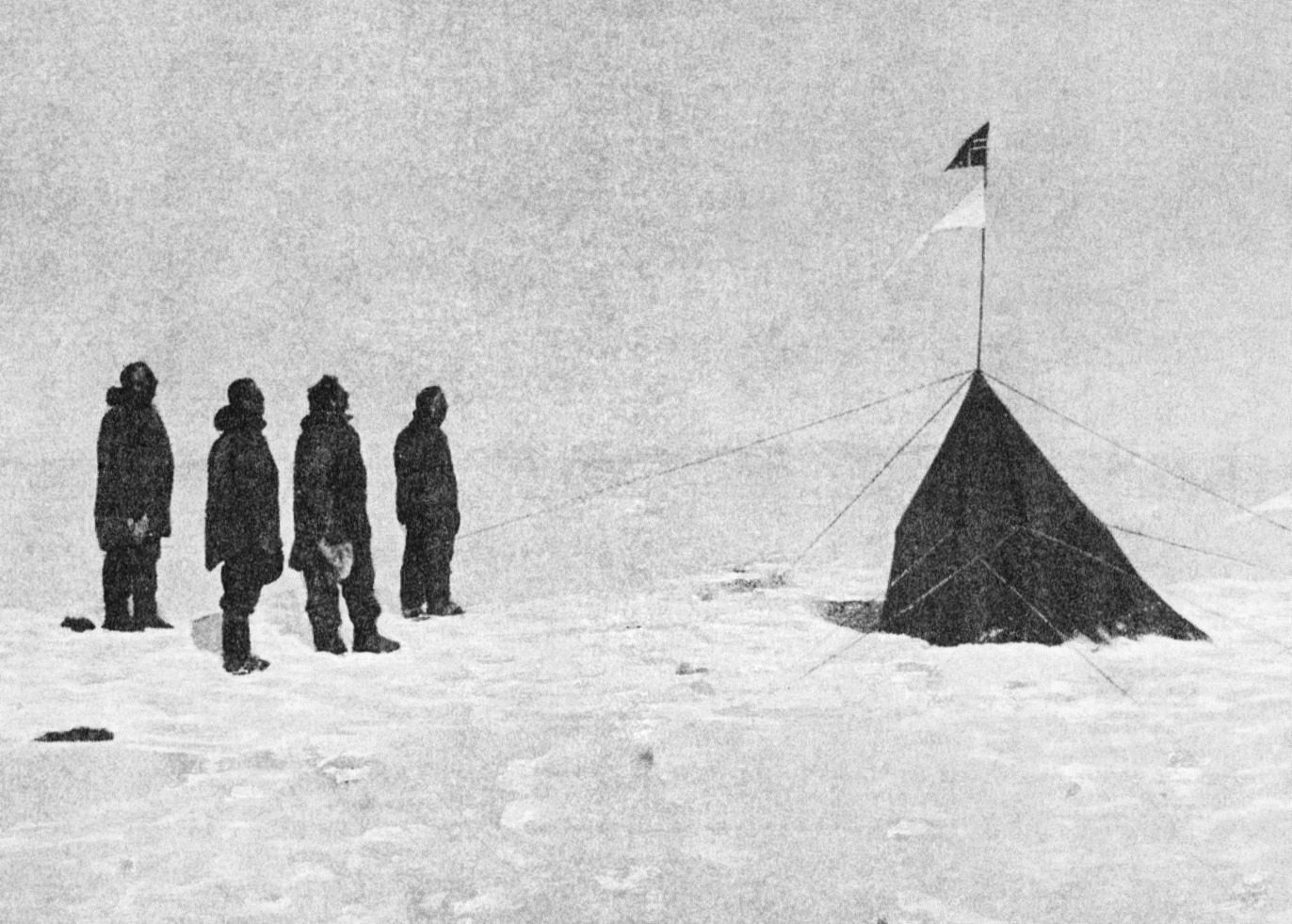
Five Men at the South Pole
Amundsen’s party reached the South Pole through careful preparation, dogs, skis and repeated navigation. Reaching an invisible point was only half the task: they still had to return.
There was no marker waiting at the South Pole. When Roald Amundsen and his four companions reached its vicinity on December 14, 1911, they had to establish where they were through navigation rather than recognize a visible destination. The plateau offered snow, cold and an immense horizon. To arrive at the bottom of the world meant turning observations and calculations into confidence that an invisible geographical point had been reached.
Amundsen traveled with Olav Bjaaland, Helmer Hanssen, Sverre Hassel and Oscar Wisting. Their expedition had established its Antarctic base, Framheim, at the Bay of Whales. From there, the southern journey depended on skis, dog teams, prepared supplies and a route that could sustain a return as well as an outward advance. The dogs were not merely companions in a heroic picture. They were central to the transport system, and the expedition’s use of them included harsh decisions about survival and provisioning.

Keep reading in Yester
Coming soon to the App Store
Keep following the story

Sources
Image: Olav Bjaaland (1863-1961) [1]