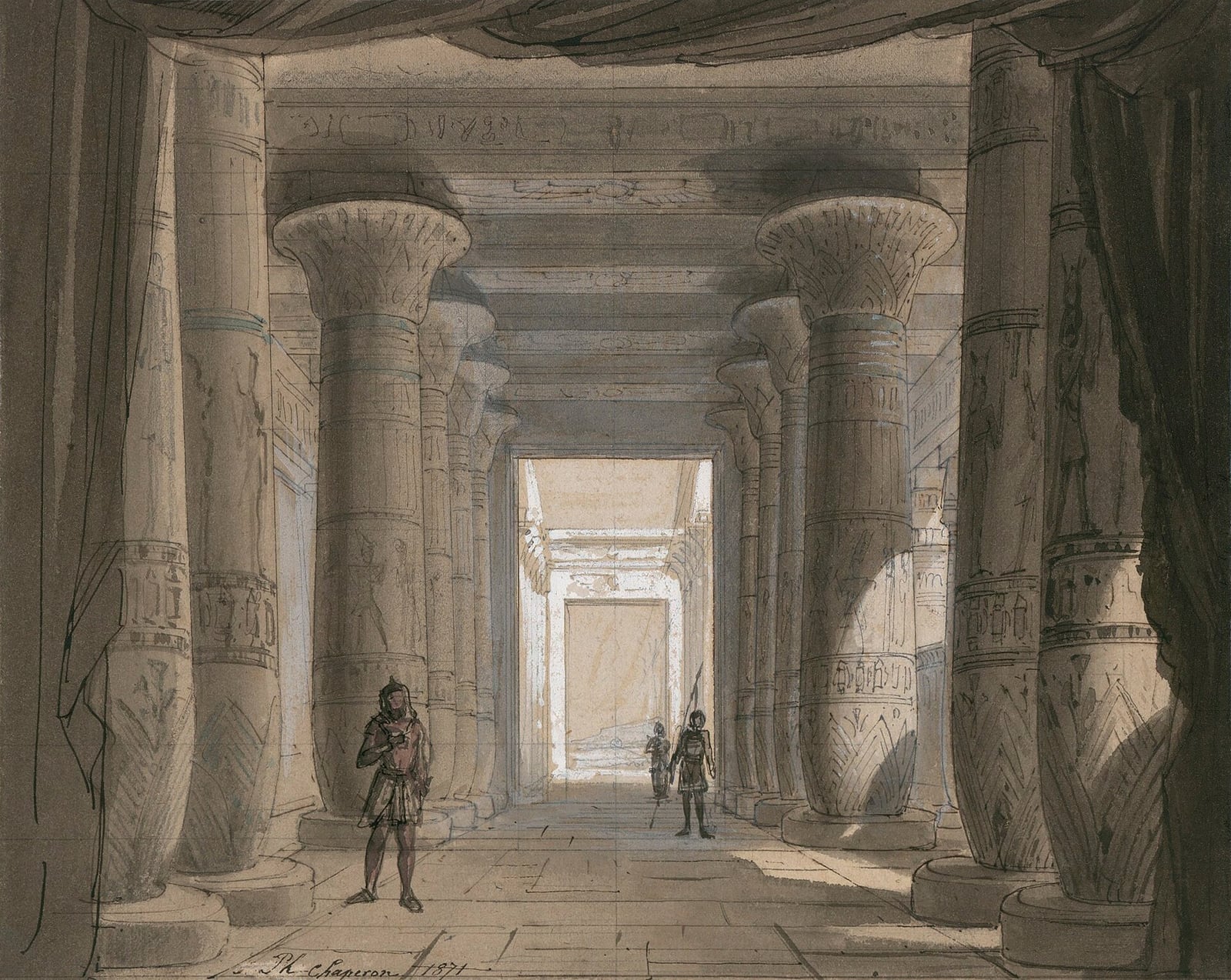
Aida Premieres in Cairo
An opera set in ancient Egypt emerged from a modern international commission.
On 24 December 1871, Giuseppe Verdi's four-act opera Aida opened at the Khedivial Opera House in Cairo, conducted by Giovanni Bottesini. The production represented the culmination of an ambitious international enterprise initiated by Isma'il Pasha, the Khedive of Egypt. Although Verdi had initially rejected a proposal to write an opera marking the opening of the Suez Canal, he subsequently agreed to compose a new piece after receiving a storyline set in ancient Egypt. The composer accepted a fee of 150,000 francs to complete the score to an Italian libretto written by Antonio Ghislanzoni.
The theatrical narrative developed through several hands before reaching the stage. French Egyptologist Auguste Mariette originally presented the concept to the Khedive, who then directed him to theatre manager Camille du Locle. Du Locle passed the outline to Verdi. While tradition widely attributes the scenario to Mariette, Verdi biographer Mary Jane Phillips-Matz has argued that the true source of the plot was Italian librettist Temistocle Solera. Working from the selected framework, Ghislanzoni assembled the formal Italian text depicting the tragic dilemma of Radames, an Egyptian commander torn between civic duty and his devotion to the enslaved Ethiopian princess Aida.

Keep reading in Yester
Coming soon to the App Store
Keep following the story

Sources
- Verdi's Rigoletto: From Khedivial Opera House to Cairo (Ahram Online)
- Story, background information and fun facts about Giuseppe Verdi's Aida (Oper im Steinbruch)
- Aida in a nutshell (Opera North)
- Stolz, Teresa, Dizionario Biografico degli Italiani (Treccani)
- Bottesini, Giovanni, Dizionario Biografico degli Italiani (Treccani)
- Arturo Toscanini (Encyclopedia.com / Baker's Biographical Dictionary of Musicians)
- Aida
Image: Philippe Chaperon / Adam Cuerden