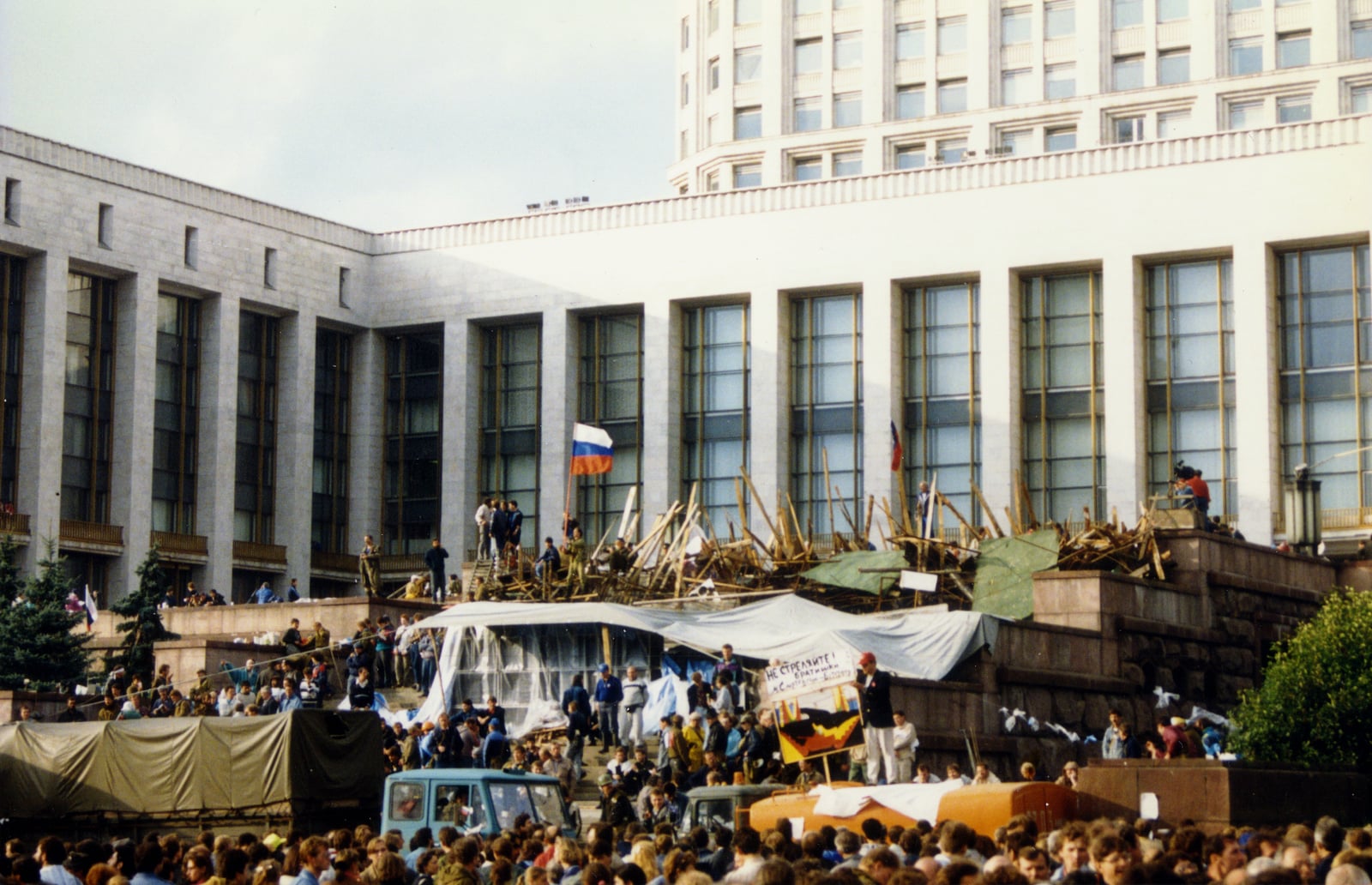
The Soviet Union Dissolves
The red flag came down over the Kremlin as fifteen republics went their own ways.
On 25 December 1991, the red Soviet flag was lowered from the Moscow Kremlin for the final time and replaced by the Russian tricolor. Earlier that day, Soviet president Mikhail Gorbachev had resigned his post and surrendered presidential authority, including the nuclear launch codes, to Russian president Boris Yeltsin. The following day, on 26 December, the Soviet of the Republics passed Declaration No. 142-N, formally terminating the existence of the Union of Soviet Socialist Republics under international law. After sixty-nine years, the superpower splintered into fifteen distinct independent nations.
The institutional collapse stemmed from years of mounting strain. Decades of economic stagnation had coincided with heavy military commitments abroad and an expensive arms contest with the United States. Following his appointment as general secretary in 1985, Gorbachev attempted to revitalize the system through structural reforms, introducing policies of glasnost to permit open discussion and perestroika to restructure the economy. Rather than securing stability, these openings exposed deep grievances and created space for long-suppressed ethnic rivalries and nationalist movements across the constituent republics to challenge central dominance.

Keep reading in Yester
Coming soon to the App Store
Keep following the story
Sources
Image: David Broad