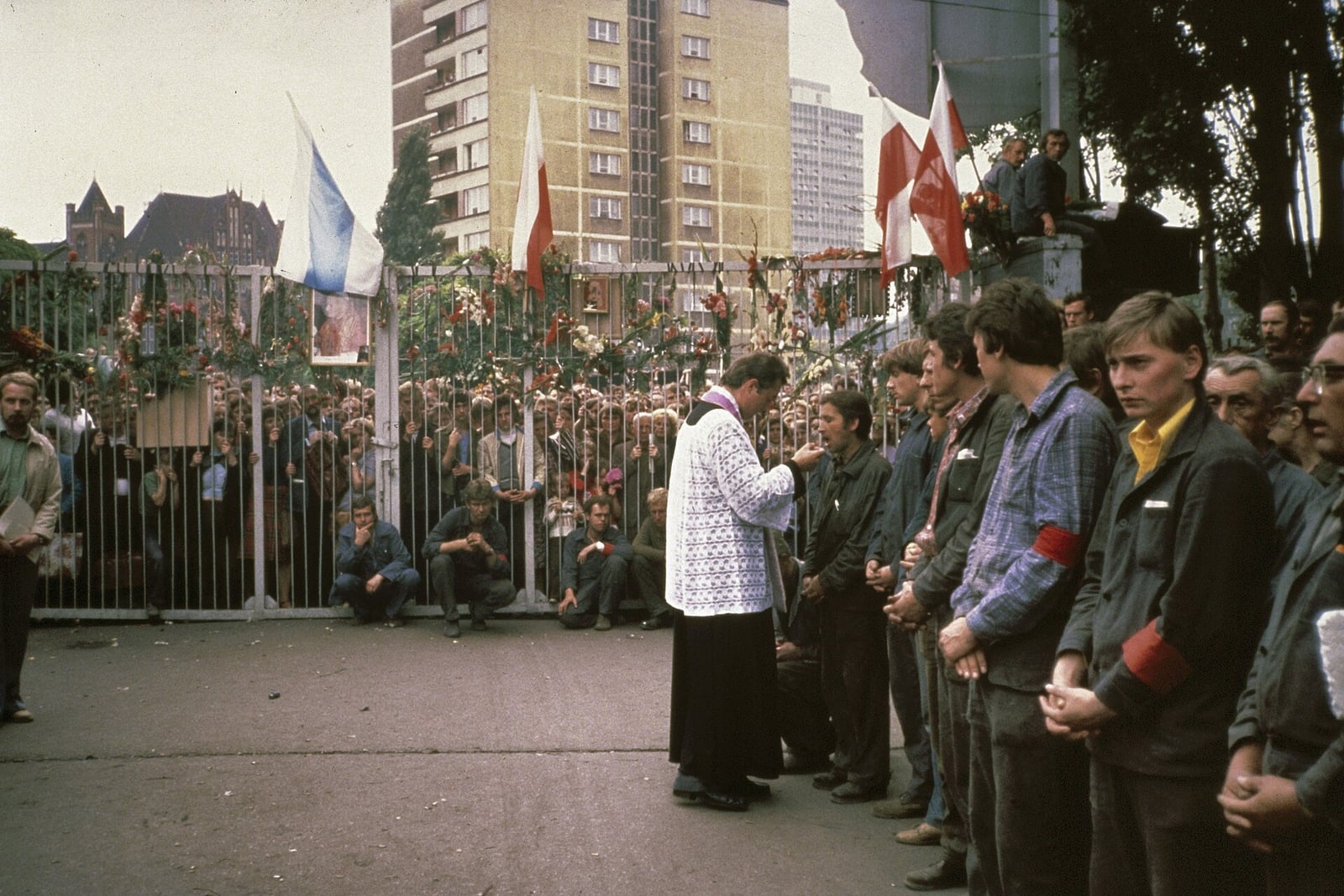
Shipyard Strikes in Gdańsk Give Birth to Solidarity
An independent trade union grew into a mass movement inside a communist state.
Economic distress mounted across Poland during the late 1970s as state authorities raised food prices while wages remained stagnant. By 1979, the national economy had begun to contract while the country's foreign debt climbed steeply. Previous unrest in 1976 had triggered harsh state crackdowns, prompting dissidents to construct clandestine mutual aid and monitoring networks such as the Workers' Defence Committee. Within this tense atmosphere, industrial facilities emerged as crucial centres of coordinated worker dissent.
On 7 August 1980, management at the Lenin Shipyard in Gdańsk dismissed crane operator Anna Walentynowicz just five months before she was scheduled to retire, punishing her involvement in illegal labor organizing. Her firing provoked widespread anger among shipyard workers, who launched a strike on 14 August demanding her reinstatement. Working alongside Alina Pienkowska, Walentynowicz helped transform a localized dispute over workplace grievances into an expansive sympathy strike connected to other industrial facilities across the region.

Keep reading in Yester
Coming soon to the App Store
Keep following the story
Sources
- Lech Wałęsa: Biographical (Nobel Prize Outreach)
- Vor 30 Jahren: Solidarność gewinnt bei Parlamentswahlen in Polen (Bundeszentrale für politische Bildung)
- Poland Remains Divided Over Legacy Of 1989 Solidarity Revolution (Radio Free Europe/Radio Liberty)
- Polish government signs accord with Gdansk shipyard workers (HISTORY.com)
- Anna Walentynowicz (Victims of Communism Memorial Foundation)
- Solidarity (Polish trade union)
Image: Anefo