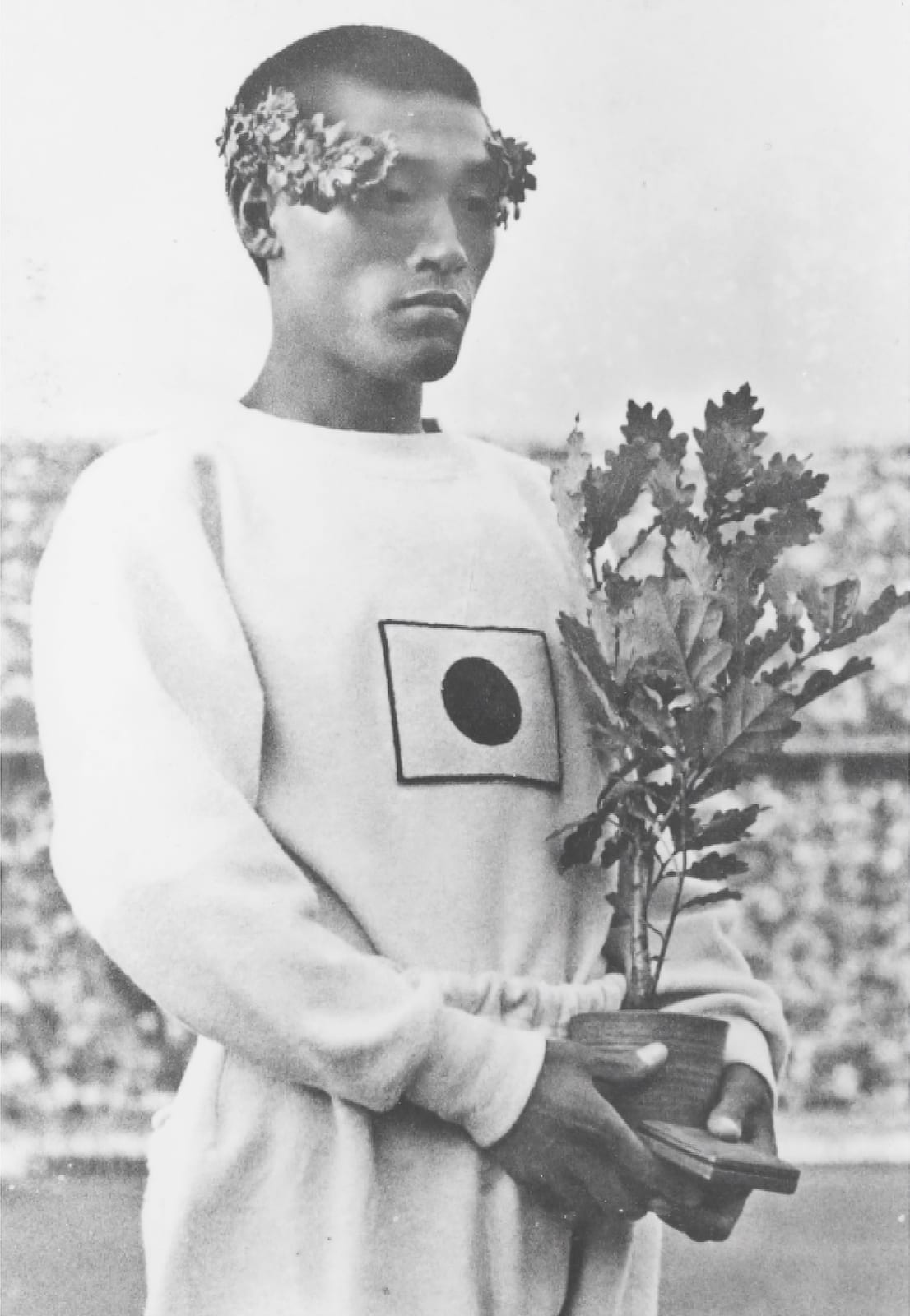
Sohn Kee-chung Wins a Marathon Under Another Flag
The Olympic result called him Son Kitei and credited his medal to Japan. The Korean runner’s victory carried an identity that the official record could not fully express.
The winner of the 1936 Olympic marathon appeared in the results under a name that was not how he understood himself. Sohn Kee-chung was Korean, but Korea was under Japanese colonial rule. In Berlin he competed for Japan, using the Japanese reading of his name, Son Kitei. The gold medal was credited to Japan. For the runner and many people following him in Korea, that official description could not contain the meaning of the victory.
On August 9, Sohn completed the marathon in 2 hours, 29 minutes, 19.2 seconds, an Olympic best. Britain’s Ernie Harper finished second, and another Korean runner competing for Japan, Nam Sung-yong, took bronze. The podium photograph brought the contradiction into view: athletes whose achievement could inspire Korean pride stood inside the formal symbols of the power that governed their country. The race had a clear winner. The question of whose victory it represented was far less simple.

Keep reading in Yester
Coming soon to the App Store
Keep following the story
Sources
Image: Japanese / German press at the 1936 Summer Olympics in Berlin