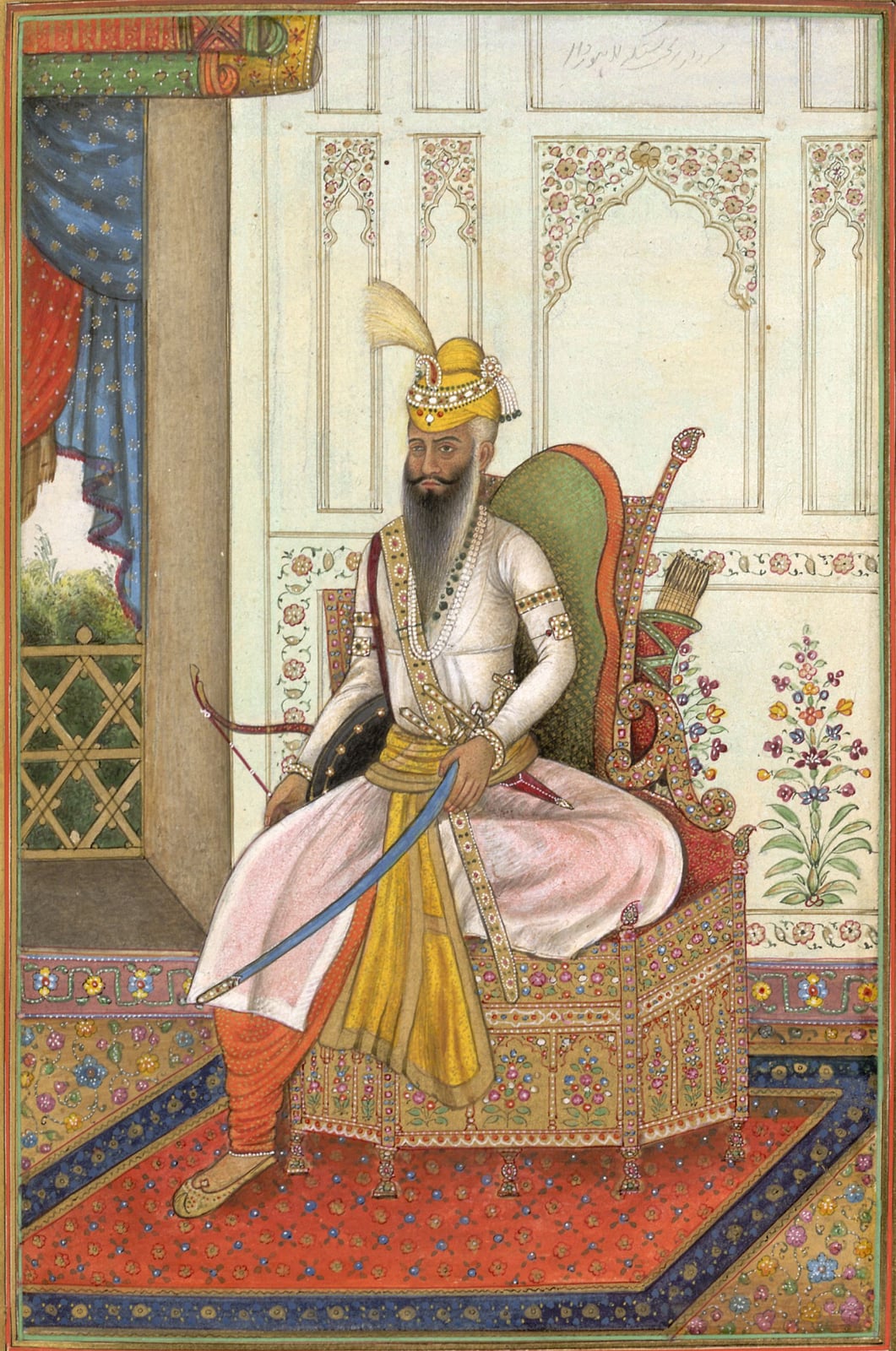
Ranjit Singh Takes Lahore and Builds a Sikh Empire
A young ruler united the Punjab into a powerful state.
In 1799, eighteen-year-old Ranjit Singh led an army to seize the historic city of Lahore, driving out the rival Sikh chiefs who had governed it since 1765. The Punjab had long been divided into competing regional confederacies known as misls, alongside various Hindu principalities and territories under Afghan Durrani authority. Two years after taking the citadel, Ranjit Singh underwent a formal coronation in 1801, styling his court as the Darbar Khalsa and striking coins in the name of the Guru rather than his own. From this seat of power, the young ruler embarked on decades of systematic campaigns that transformed a scattered patchwork of warring factions into a consolidated sovereign empire.
Following his accession, Ranjit Singh absorbed neighboring Sikh misls and steadily rolled back foreign dominion across the northwest. In 1802, he brought Amritsar under his rule and pledged substantial state revenue to restore the Harmandir Sahib with marble and gilt ornamentation. The Treaty of Amritsar, signed with the British East India Company in 1809, established the Sutlej River as the eastern frontier of his realm, which freed his armies to concentrate their expansion toward the north and west. Successive campaigns chipped away at Afghan territories: Sikh armies captured the citadel of Attock in 1813, occupied Multan in 1818, took control of the Kashmir Valley in 1819, and annexed Peshawar in the 1830s.

Keep reading in Yester
Coming soon to the App Store
Keep following the story
Sources
Image: Colonel James Skinner (1778-1841)