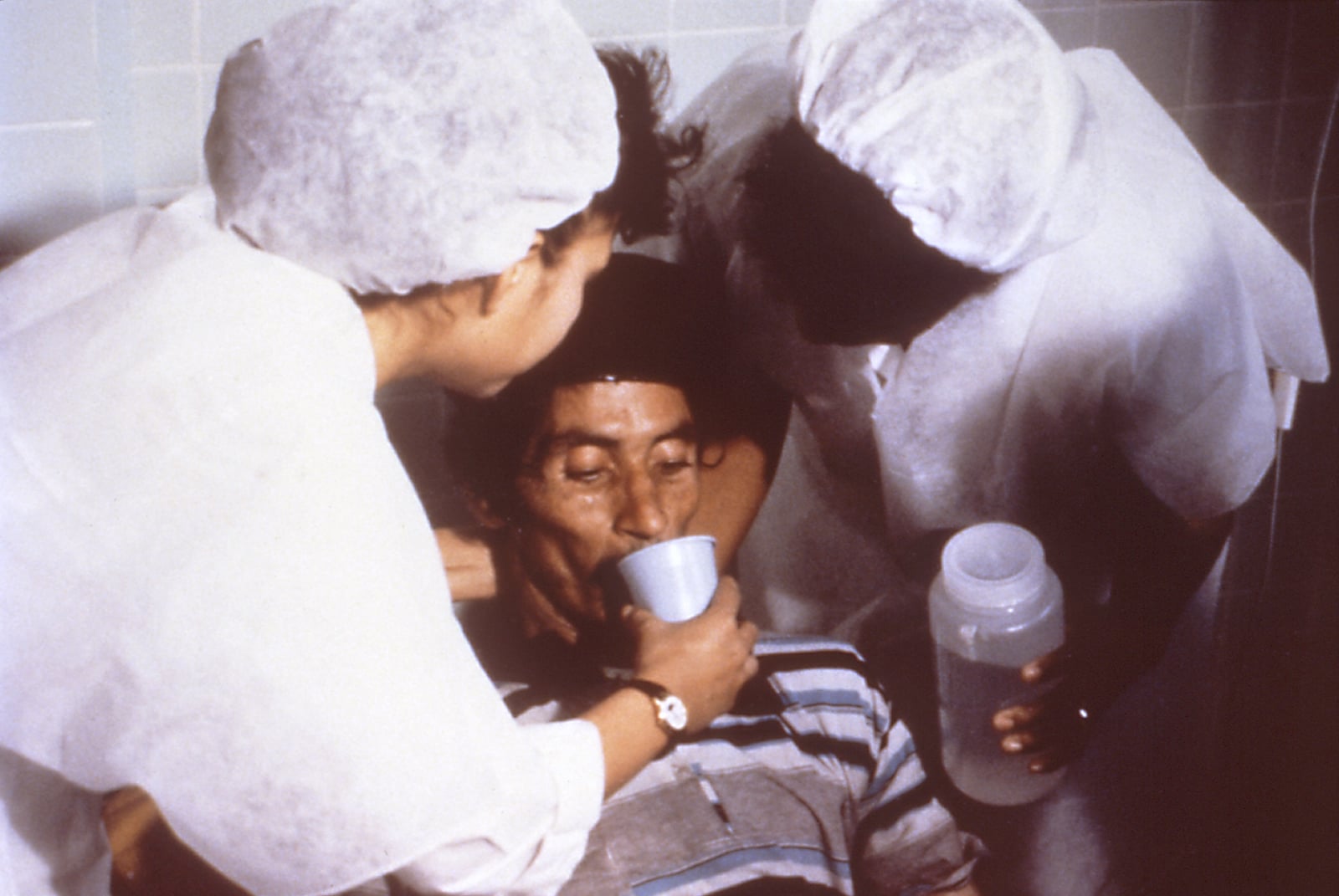
Oral Rehydration Therapy Saves Cholera Patients
Water, salt and sugar became one of medicine’s simplest lifesavers.
Severe diarrhea caused by cholera historically drained bodily fluids at rates rapid enough to induce circulatory collapse and death within hours. Intravenous saline infusions could restore the missing fluids, but the necessary sterile equipment, needles, and trained personnel were scarce during rural epidemics. Researchers long assumed that damaged intestines could not absorb swallowed liquids in large amounts. In the 1940s, clinicians tested simple electrolyte solutions on an empirical basis for mild cases, yet oral maintenance therapy was not adopted widely because it failed to keep pace with severe fluid loss.
The clinical barrier began to lift through physiology. In the early 1960s, Robert K. Crane described the intestinal sodium-glucose co-transport mechanism, showing that glucose accelerates the absorption of sodium and accompanying water across enterocyte membranes. Because cholera toxins do not physically destroy the intestinal mucosal lining, researchers suspected that this transport process remained functional. Robert Allan Phillips observed that cholera patients could absorb sodium and chloride in the presence of glucose, though his initial fluid mixture proved excessively hypertonic and aimed to halt purging rather than sustain hydration.

Keep reading in Yester
Coming soon to the App Store
Keep following the story

Sources
- Obituary: Dilip Mahalanabis (National Medical Journal of India)
- Dr. Dilip Mahalanabis, 2006 laureate (Prince Mahidol Award Foundation)
- Richard A. Cash, Developer of Oral Rehydration Therapy, Dies at 83 (The Harvard Crimson)
- Evolution of the World Health Organization's programmatic actions to control diarrheal diseases (Journal of Global Health, PMC)
- Progress in the use of ORS and zinc for the treatment of childhood diarrhea (Journal of Global Health, PMC)
- WHO/UNICEF Joint Statement: Clinical Management of Acute Diarrhoea (UNICEF/WHO)
- The use of oral replacement solutions in the treatment of cholera and other severe diarrhoeal disorders (Bulletin of the World Health Organization, PMC)
- Oral rehydration therapy
Image: Centers for Disease Control and Prevention