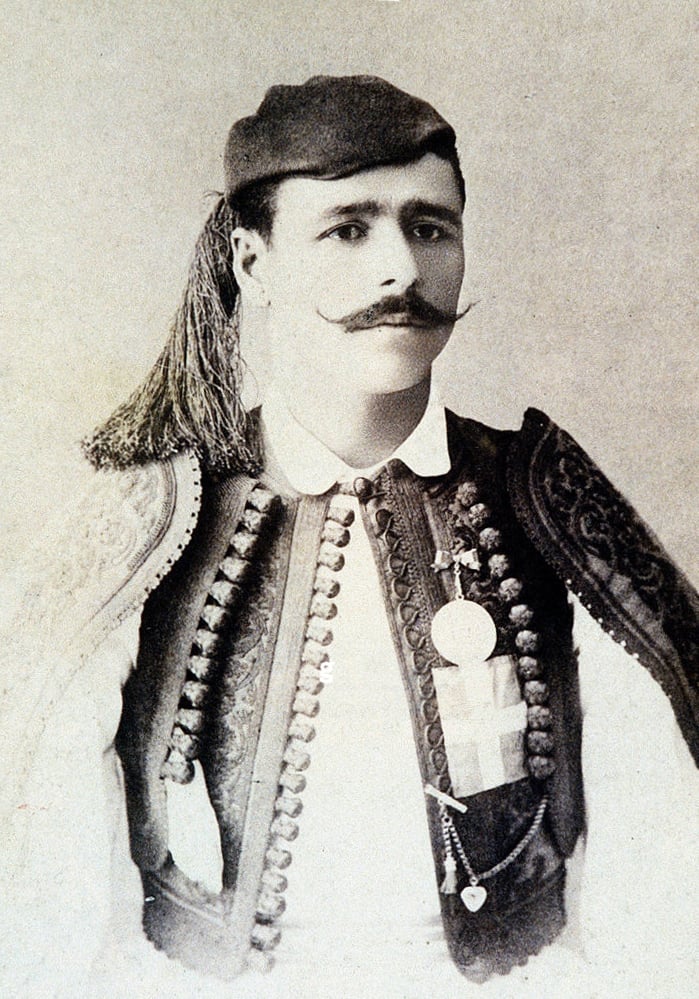
Spyridon Louis Wins the First Modern Olympic Marathon
A new race connected the modern Games with an imagined ancient precedent.
On 10 April 1896, seventeen athletes gathered near the coastal plain of Marathon to contest a race that had never existed in the ancient world. The modern Olympic Games, revived under the initiative of Pierre de Coubertin, were nearing their conclusion in Athens, but Greek competitors had yet to win a single track and field contest. A defeat in the discus throw, an event closely tied to Greek antiquity, had proved particularly disappointing to the home crowd. The marathon, proposed by French scholar Michel Bréal to commemorate the legend of the messenger Pheidippides, offered a final opportunity to secure an athletic victory infused with national symbolism.
Among the thirteen Greek entrants was Spyridon Louis, a twenty-three-year-old from the town of Marousi, north of Athens. Born into a poor family, Louis had spent his youth assisting his father in transporting and selling mineral water throughout the capital, which lacked a central municipal water supply. Although he was not an established athlete, he entered one of the Greek trial races held shortly before the Games. Accounts differ on how he came to run: one tradition credits encouragement from Colonel Papadiamantopoulos, his former military commander, while Louis himself later recalled entering with fellow villagers from Marousi. He finished fifth in the trial, which was still enough to earn a place in the Olympic contest.

Keep reading in Yester
Coming soon to the App Store
Keep following the story
Sources
Image: Unknown author Unknown author