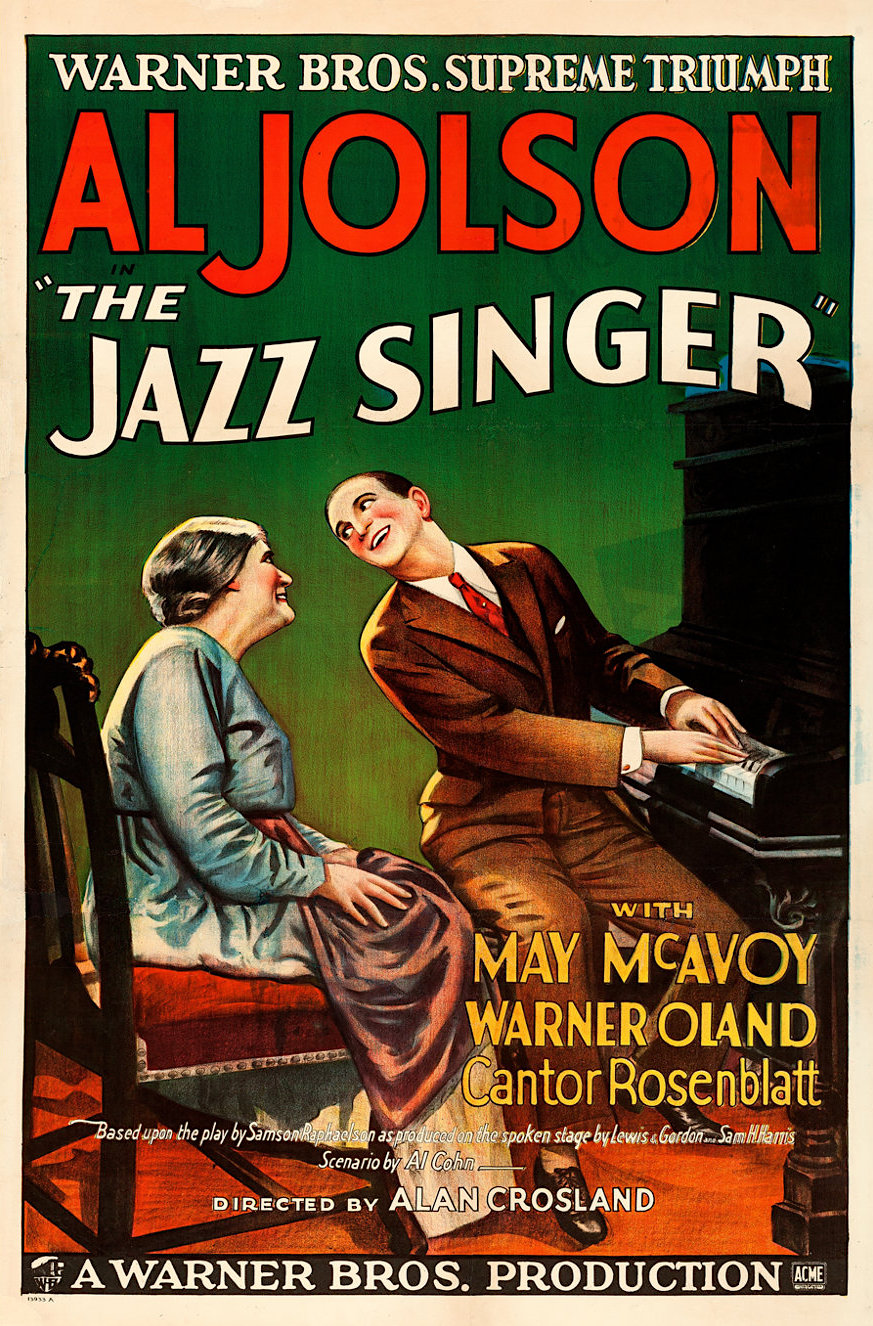
The Jazz Singer Brings Synchronized Speech to Feature Films
A musical with a few lines of dialogue signaled the end of the silent era.
On October 6, 1927, Warner Bros. premiered The Jazz Singer at its flagship theater in New York City. Staged on the eve of the Jewish holiday of Yom Kippur, the presentation required intense technical coordination. Projectionists had to keep the film's reels in step with a set of separate Vitaphone sound discs. While earlier Vitaphone releases had presented synchronized orchestral scores and sound effects, this production broke new ground by featuring synchronized singing and speech within a feature-length narrative. The Warner brothers were absent from the opening, having traveled to California following the sudden death of their brother Sam the previous day.
The story was adapted by screenwriter Alfred A. Cohn from Samson Raphaelson's 1925 stage play, which had originated as the short story "The Day of Atonement." It followed Jakie Rabinowitz, the son of an Orthodox cantor from Manhattan's Lower East Side. Rather than entering the religious service expected by his family, Jakie adopted the stage name Jack Robin and pursued a career as a popular entertainer performing in blackface. After a bitter breach with his father, his professional ambition eventually clashed with filial obligation on the night of Yom Kippur, culminating in his return to sing the Kol Nidre prayer in the synagogue before resuming his Broadway performance.

Keep reading in Yester
Coming soon to the App Store
Keep following the story
Sources
- The Jazz Singer, National Film Registry essay by Ron Hutchinson (Library of Congress)
- The Jazz Singer (1927) (AFI Catalog of Feature Films)
- The Jazz Singer (1927) by Roger Fristoe (Turner Classic Movies)
- Warner, Sam (Encyclopedia.com / Gale)
- The Jazz Singer Premieres as the First Talkie (EBSCO Research Starters)
- The Jazz Singer
Image: Unknown author Unknown author